Brian Bird had heard a version of the story before. Demand would keep growing. Power prices would keep climbing. The future, conveniently, would resemble the part of the present that made an investment look attractive. As NRG Energy’s former treasurer, he remembered where that confidence had led in the early 2000s: expensive development and a company headed toward bankruptcy.
By 2018, the fashionable certainty had reversed. Cheap natural gas meant power prices might stay low indefinitely. Bird, then NorthWestern Energy’s chief financial officer, was unconvinced. He joked that his gray hair gave him reason to doubt it. The joke came with a substantial balance sheet behind it. He had seen what happened when a forecast acquired the social standing of a fact.
His 2018 outlook also left room for growth. He saw promise in the electrification of more activities and expected younger customers to demand a greener profile from suppliers, including utilities. Experience had given him reasons to question predictions without abandoning the business of making them. The distinction matters for someone whose company must plan ahead. Assuming nothing will change can be as consequential as assuming everything will. Bird was looking at an industry that had swung between expectations of rising demand and anxiety about its future. His response combined a memory of earlier excess with interest in what might come next.
That skepticism is a useful place to begin with Bird. He became NorthWestern’s president and CEO in January 2023, after a long career on the financial side of the business. His work now involves decisions whose consequences will outlast the mood in which they were made. A power plant cannot be returned because the economic weather has changed.
“I’ve got enough gray hair to doubt that.”
Brian Bird, 2018, on the assumption that power prices would stay low forever
Seventeen years on the numbers side
Bird’s preparation began with accounting and finance at the University of Wisconsin-Eau Claire, followed by an MBA in finance at the University of Minnesota. He also holds a CPA certificate. His earlier employers included Land O’Lakes, Northwest Airlines, Minnesota Viking Ventures and Deluxe Corporation. Food, flights, football and business services make an unusually varied prelude to electricity.
Those jobs belong to a career that began in 1986. By 1997, he was vice president and treasurer at NRG, a position he held until 2002. He then became CFO and principal of Insight Energy, a Chicago-based power-generation development company. In December 2003, he joined NorthWestern as chief financial officer.
The timing mattered. NorthWestern was going through its own financial reorganization and would emerge from bankruptcy in 2004. Bird arrived before that emergence. Years later, he described rebuilding stakeholder trust as a reason the company had concentrated on governance. The finance function was close to the question of whether people could believe the enterprise would keep its commitments.
He remained CFO until February 2021. Seventeen years in the role gave him an extended view of the company’s investments, obligations and operating needs. Then the board made him president and chief operating officer, with responsibility spanning transmission, distribution, energy supply, customer care and technology. The numbers now came attached to the daily running of the systems behind them.
A handover measured in years
When Bob Rowe announced his retirement in July 2022, Bird was already being prepared to succeed him. Rowe said Bird had been spending substantial time in the field and in the communities NorthWestern served. That detail gives the succession some texture: an executive known for finance getting closer to the places where financial decisions became service.
The transition had started with the 2021 promotion. Crystal Lail became CFO as Bird moved into operations. When he assumed the CEO title on January 1, 2023, the change completed a progression that had been underway for almost two years. He also joined the board. NorthWestern had chosen someone who already knew a considerable amount about its unfinished business.
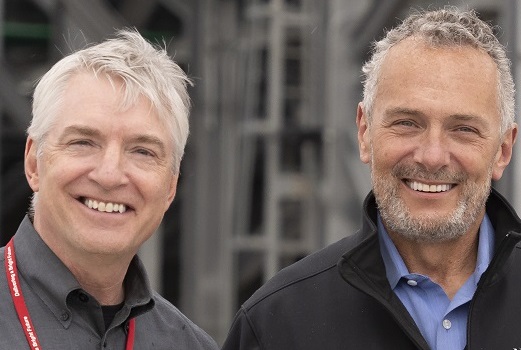
Among the priorities Rowe laid out were sufficient generating capacity, a more flexible grid, better customer service and technology with proven value. These are workmanlike ambitions. Their appeal depends on execution. For Bird, taking over meant carrying forward obligations he had already encountered from two different desks.
A river has a balance sheet, too
One investment from Bird’s CFO years helps explain his view of the business. In 2014, NorthWestern purchased eleven Montana hydroelectric facilities for $870 million. In a 2021 conversation, he described that acquisition as the catalyst for the company’s cleaner generation portfolio and pointed to its role in stabilizing customer rates.
Hydropower joins two concerns that can otherwise be discussed in separate rooms: the environmental character of generation and the economics of owning it. Bird’s account treated both as part of the investment. A river-powered facility could contribute carbon-free electricity while giving the utility a resource intended to serve customers for years.
Bird later described the acquisition as a catalyst for NorthWestern’s cleaner generation portfolio.
His public description of sustainability also includes financial soundness and corporate culture. In 2021, he linked NorthWestern’s governance work to its emergence from bankruptcy. “We were talking about governance long before ESG was a thing,” he said. The acronym came later than the need to regain trust.
There is a community dimension to that outlook. Bird has served as a Feeding South Dakota board member and was the Sioux Empire United Way’s 2021 campaign chair. His professional connections also include Energy Insurance Mutual and utility-industry organizations. Those roles place him in conversations about risk, service and local needs beyond a single company’s earnings call.
On LinkedIn, his public remarks have included praise for NorthWestern’s Missoula team after its storm response received industry recognition. He has also credited the broader employee group. These are small glimpses of his public manner: a finance executive who regularly returns to the people expected to make the plans work.
The cloud arrives with a power bill
The electricity business Bird discussed in 2018 was already entertaining competing stories about its future. By February 2026, he was addressing a more immediate prospect at the Downtown Sioux Falls Rotary Club: data centers requiring substantial amounts of electricity. Computing growth was becoming a generation question.
Bird argued that serving those facilities would require dependable, on-demand power and would extend the role of coal and natural gas. He also discussed nuclear generation as a possible future option. His comments put the tension in plain view. A utility can support a cleaner portfolio while anticipating demand that, in its judgment, will keep fossil-fuel plants working longer.
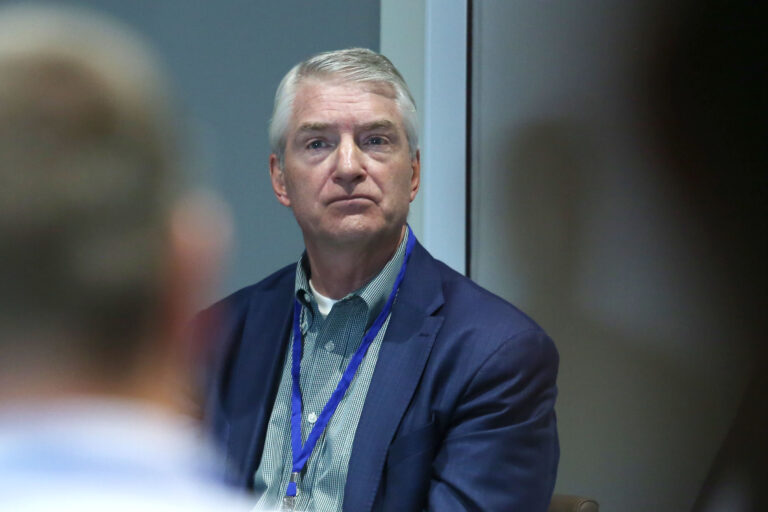
His generation choices have drawn that tension into NorthWestern’s own portfolio. In December 2025, he defended the planned increase in the company’s ownership of Montana’s coal-fired Colstrip plant from 15 percent to 55 percent. He presented the move as a way to secure reliable, cost-effective capacity. The argument rested on availability when customers needed power.
These positions sit alongside the carbon-neutrality commitment Bird helped steer as COO. Holding them together requires judgments about timing, technology and cost. The difficulty becomes visible when an aspiration for 2050 meets a customer seeking electricity much sooner. A long-term target leaves plenty of decisions to make on the way there.
Bird has made the customer-cost argument in more ordinary circumstances, too. In a July 2025 commentary about a Montana rate review, he linked infrastructure spending to extreme weather, wildfire challenges and growing demand. His recurring case is that maintaining service requires investment. For customers, the corresponding question is how that investment reaches their bills.
Finding a new way to be bigger
In August 2025, NorthWestern and Black Hills announced a proposed merger. Bird was selected to become CEO of the combined enterprise if the deal closed. Shareholders of both companies approved the proposals on April 2, 2026; the announcement named the prospective holding company Bright Horizon Energy Corporation. Other approvals and closing conditions remained.
Bird’s explanation of the deal has familiar financial foundations. A larger organization, he argues, can finance investment more effectively and put more resources toward opportunities. By July 2026, he was still making the case that scale mattered in a more competitive utility environment. Those are proposed advantages, with their value dependent on what the combined business actually delivers.
His December 2025 appearance on NorthWestern’s podcast, The Outlet, revealed another part of the problem. Bird described asking an integration consultant about the difference between an acquisition and a merger. Combining two organizations meant considering both cultures and deciding how the resulting company should operate. Even a detailed financial model leaves that work to people.
“You need to come up with our new way.”
Brian Bird, The Outlet, December 2025
The phrase allows for a practice from either organization, or a third approach neither had used. It is an admission that the existing NorthWestern playbook cannot settle every question. For an executive who has spent so much of his career at one company, the next assignment could require deciding which familiar habits to leave behind.
The podcast itself offers a smaller example of change. Host Thomas Glanzer recalled its beginning with Bird in his office and a couple of microphones. A year later, there was a studio, lighting and a season of conversations behind them. Utility leadership had acquired another place to explain itself.
Bird’s career has brought him from the discipline of accounting to the uncertainty of committing an enterprise to the future. The gray-hair joke still fits. He knows a confident forecast can age badly. His job requires him to invest anyway, while remembering that the customer’s expectation is rather less elaborate: when the switch goes on, something should happen.
Continue the conversation
Interviews, public remarks and places to follow the work.
- NorthWestern Energy
- Brian Bird on LinkedIn
- The Outlet on YouTube
- The Outlet on Spotify
- The 2018 conversation
- The 2021 conversation
- 2022 leadership handover
- 2025 CEO fireside chat
- Bird on merger integration
- April 2026 shareholder announcement
- July 2026 earnings conversation
- Reporting from Sioux Falls
- Bird’s Colstrip commentary
- His Montana rate-review commentary
- Merger testimony
- NorthWestern on LinkedIn
- NorthWestern on X
- NorthWestern on Instagram
- NorthWestern on Facebook