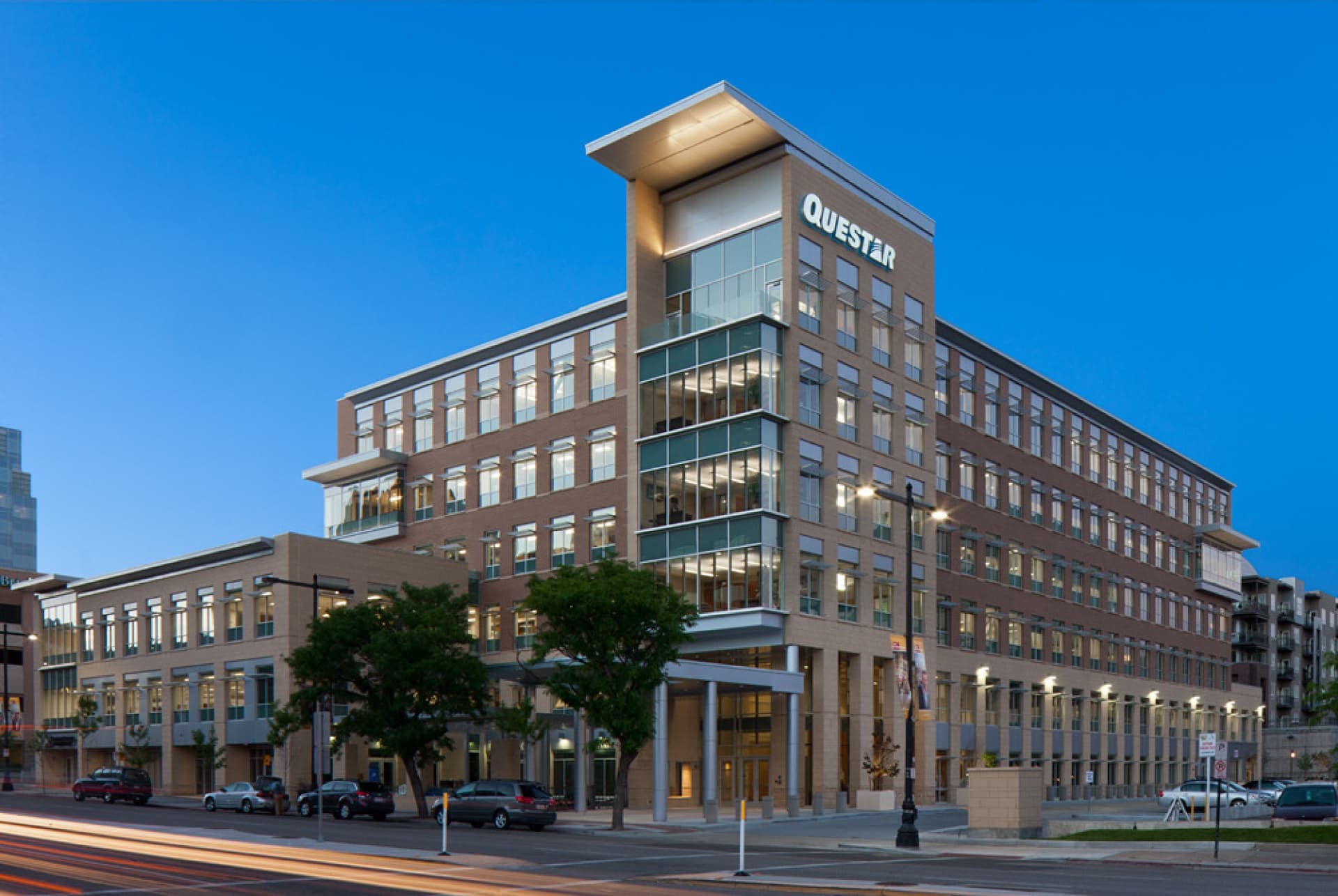
The sign on an office building is a surprisingly poor guide to the business underneath it. In Salt Lake City, Questar’s headquarters became Dominion Energy’s headquarters. Then the gas utility moved into Enbridge’s orbit. Beneath the streets, the job remained recognizable: get natural gas to a furnace when someone turns up the thermostat.
Dominion Questar makes more sense when you follow the gas than when you follow the logo. Its history connects Wyoming production, interstate pipelines, storage and neighborhood distribution. It also poses a useful business question: which parts must you own to keep a promise to your customer?
- Questar combined gas distribution, pipelines and Wexpro production.
- Dominion acquired the group in September 2016.
- The former interstate pipeline business reached Williams in 2023.
- Enbridge acquired Questar Gas and Wexpro in 2024.
A well is only the beginning
The origins reach back to a 1922 natural gas discovery in southwestern Wyoming. A pipeline completed in 1929 carried gas into Utah. That second date matters. Finding fuel and delivering a useful service are different accomplishments. A reservoir becomes valuable to a household only after someone solves the distance between them.
Questar Corporation itself was organized in 1984. Its older predecessor history is sometimes compressed into a 1928 founding date. Mountain Fuel eventually became Questar Gas, taking the parent’s name in 1998. The changing labels can obscure an unusually durable operating idea: connect the source, the route and the customer.
The producer that stayed behind
By 2015, Questar described three complementary businesses. Questar Gas supplied residential, commercial and industrial customers. Questar Pipeline moved and stored gas for shippers. Wexpro developed reserves and produced gas for the utility. The expertise ranged from drilling and reservoir work to pipeline operations and regulatory accounting.
Wexpro is the detail worth slowing down for. Under an agreement dating to 1981, it delivers gas at its cost of service. The arrangement ties production economics to an agreed framework, including investment returns, rather than simply selling every unit at the prevailing commodity price.
In 2010, Questar spun off QEP Resources, its unregulated exploration and production business. It kept Wexpro. That choice drew a boundary between two kinds of drilling: production exposed to commodity markets and production organized around utility supply obligations. Questar reported $11.5 million in separation costs. Reshaping the business was a real transaction with a real bill.
That relationship differs from ordinary retail competition. A household does not select a new network of buried pipes every month. Distribution operates within regulated territories, with rates and service conditions subject to oversight. Electric heating can substitute for some gas uses, while pipeline shippers face a separate question about available routes and capacity. Questar’s position rested on the assets and agreements connecting those markets.
For customers, the promise was access to supply through a framework that could moderate exposure to market swings. For the company, the framework made production part of a longer relationship. Cost-based gas, however, does not automatically beat cheap market gas. The economics still need testing.
The deal that did not close
Dominion completed its Questar acquisition on September 16, 2016. Shareholders received $25 a share, approximately $4.4 billion in equity consideration. Dominion also assumed about $1.5 billion of debt. The attraction included geographic diversity and a greater balance between its electric and gas operations.
The next ownership chapter included a false start. A planned sale of Questar Pipelines to Berkshire Hathaway Energy was terminated in July 2021 because of continuing uncertainty over federal antitrust clearance. The obstacle was the deal’s approval path. Dominion then opened a competitive sale process.
Southwest Gas bought the pipelines that December for $1.975 billion including assumed debt. Renamed MountainWest, the business passed to Williams in February 2023 at a $1.5 billion enterprise value. Those figures concern a pipeline business, not the entire Questar group Dominion had purchased.
A different answer to the same assets
By 2023, Dominion’s stated priorities had changed. Its business review emphasized debt reduction and investment needs at regulated electric utilities. It agreed to sell three gas distribution businesses to Enbridge. Questar Gas and Wexpro accounted for approximately $4.3 billion of transaction value, including debt.
The western sale closed in May 2024 and was announced June 3. At acquisition, the utility served about 1.2 million customers across Utah, southwestern Wyoming and southeastern Idaho. Its portfolio included more than 21,000 miles of distribution and transmission pipelines. These utility assets are distinct from the interstate business already sold.
“stable, predictable cash flows”Michele Harradence, Enbridge executive, on the Questar Gas and Wexpro acquisition, June 2024
Enbridge’s explanation points to the business model. Regulated rates, infrastructure investment and recurring demand can support durable earnings. Customers buy a practical service; investors buy the economics around delivering it. The sale agreements also included employee protections, existing union commitments and local operating leadership. Institutional knowledge belonged in the deal.
Winter still gets a vote
Reliability has physical limits. The successor utility’s Magna LNG facility began operating in fall 2022, storing gas in liquid form for later use. Its 2025 resource plan describes a system that can return gas to the network much faster than it can liquefy replacement inventory. Storage needs preparation before demand arrives.
The supply debate continues. In October 2026, Utah’s commission docket on proposed Piceance III properties under Wexpro II contained testimony and intervention filings. A proposal is not an approval. Long-lived supply commitments require scrutiny when future demand, production costs and market alternatives remain uncertain.
The copyable lesson is to match supply arrangements to service obligations, then keep checking the assumptions. It depends on capable operators, useful assets and regulatory permission. For former Questar customers, the immediate application is simpler: use Enbridge Gas’s Utah, Wyoming and Idaho site for service, billing and tariffs. The name has moved on. The obligation to deliver has an address.