Stephen Westhoven has a fairly literal answer to the question of where the energy business goes next: look down. Beneath New Jersey’s roads and lawns sits a gas network built over decades. He wants that investment to have a place in a future with lower emissions. Above ground, his company owns solar installations, including one that floats on a reservoir. His proposition requires room for both.
It is an argument with a biography attached. Westhoven joined New Jersey Natural Gas as an engineer in November 1990. He became chief executive of its parent, New Jersey Resources, on October 1, 2019. Nearly 29 years separated the first job from the top one. Plenty of business careers involve changing companies to acquire a broader view. His involved changing responsibilities inside the same organization.
The continuity extends beyond work. In an Earth Day post, he described growing up at the Jersey Shore and raising his family there with his wife. For him, the coastline belongs in the discussion of the company’s future. The place where the pipes end is also the place he calls home.
Twenty-nine years to the corner office
Westhoven studied mechanical engineering at The Catholic University of America, earning a Bachelor of Science. He later completed Harvard Business School’s Advanced Management Program. His connection to Catholic University continued through service on its Board of Visitors. The combination puts technical education and executive training on the same résumé, with a long stretch of operating experience between them.
At NJR Energy Services, his responsibilities expanded into the business of managing natural gas supplies, transportation and storage. He became vice president in 2004 and senior vice president in 2010. These are different problems from operating a local distribution network. They involve the movement of energy through markets as well as through physical equipment.
By October 2016, his remit included the chief operating officer role for Energy Services and Clean Energy Ventures. The following November brought promotion to executive vice president and COO of NJR. In October 2018, he became president and COO, adding finance and technology oversight to his responsibilities for the operating businesses. A board seat accompanied the appointment.
That sequence matters to understanding the CEO who emerged from it. Before taking charge of the parent company, he had worked across gas operations, energy markets and renewable investment. His professional history offers a useful explanation for a strategy that keeps several energy businesses in the same conversation.
as an engineer
Energy Services
NJR board member
effective October 1
A succession with a long runway
The handover was planned. In July 2019, Laurence M. Downes announced his retirement as CEO, and the board named Westhoven as his successor. Downes had spent 34 years at the company, including 24 as chief executive. Westhoven was inheriting a business whose leadership already operated on a scale of decades.
There was no need to pretend that the new chief executive had just discovered the organization. He had been there for most of his predecessor’s tenure. The more interesting question was what an insider would do with an industry facing pressure to change. Familiarity could supply the knowledge; it would still take decisions to turn that knowledge into a direction.
Westhoven has publicly argued that ideas should come from beyond senior management. His stated approach is to encourage creativity, welcome suggestions and act when an idea offers a practical benefit. That principle gives employees a role in renewal. It also provides a useful standard against which to read the projects that followed.
His progression also joined businesses with different customer relationships. A local utility serves a defined territory. Energy Services works with natural gas transportation and storage arrangements across a wider market. Home Services handles equipment and service needs inside customers’ homes. Leading the parent means holding those perspectives together, with the solar business adding another set of projects and counterparties. A long résumé inside NJR therefore records several kinds of operating experience.
The experiment in the pipe
In October 2021, New Jersey Natural Gas began producing green hydrogen at its Howell facility. An electrolyzer uses renewable electricity to split water, producing hydrogen that can be blended into the gas supply. For Westhoven, the attraction was the possibility of putting an existing delivery network to another use.
The initial operation was deliberately small. A 175-kilowatt electrolyzer produced about 65 kilograms of hydrogen a day, and the starting blend was below 1 percent. Those numbers describe a demonstration, with an opportunity to learn about operation and integration. They do not describe the wholesale replacement of a utility’s fuel supply.
Explaining the project in 2021, Westhoven emphasized moving an argument into equipment that runs. A working installation creates a different discussion from a diagram: people can examine output, operating experience and the questions that emerge from use.
“This is something you can put into practice.”
Steve Westhoven, on hydrogen blending, 2021
He returned to the infrastructure argument at NJBIA’s 2023 Energy Conference, discussing renewable natural gas and clean hydrogen as possible routes through existing pipelines. These remain proposals for how a system could evolve. His position is clear: money already invested below ground should count when choosing the next investment above it.
Solar panels, with a waterfront address
At Canoe Brook in Short Hills, the same broad concern with useful assets takes a different form. An array of 16,510 solar panels occupies 17 acres of reservoir surface. It entered full commercial operation in January 2023. Floating racks give the panels their unlikely address; the electricity serves the water treatment plant nearby.
NJR Clean Energy Ventures owns and operates the 8.9-megawatt installation. It was designed to provide approximately 95 percent of the Canoe Brook plant’s annual power needs. There is something pleasingly economical about the arrangement: a reservoir does its water-storage job while its surface helps supply electricity for water treatment. The roof, so to speak, has been put to work.
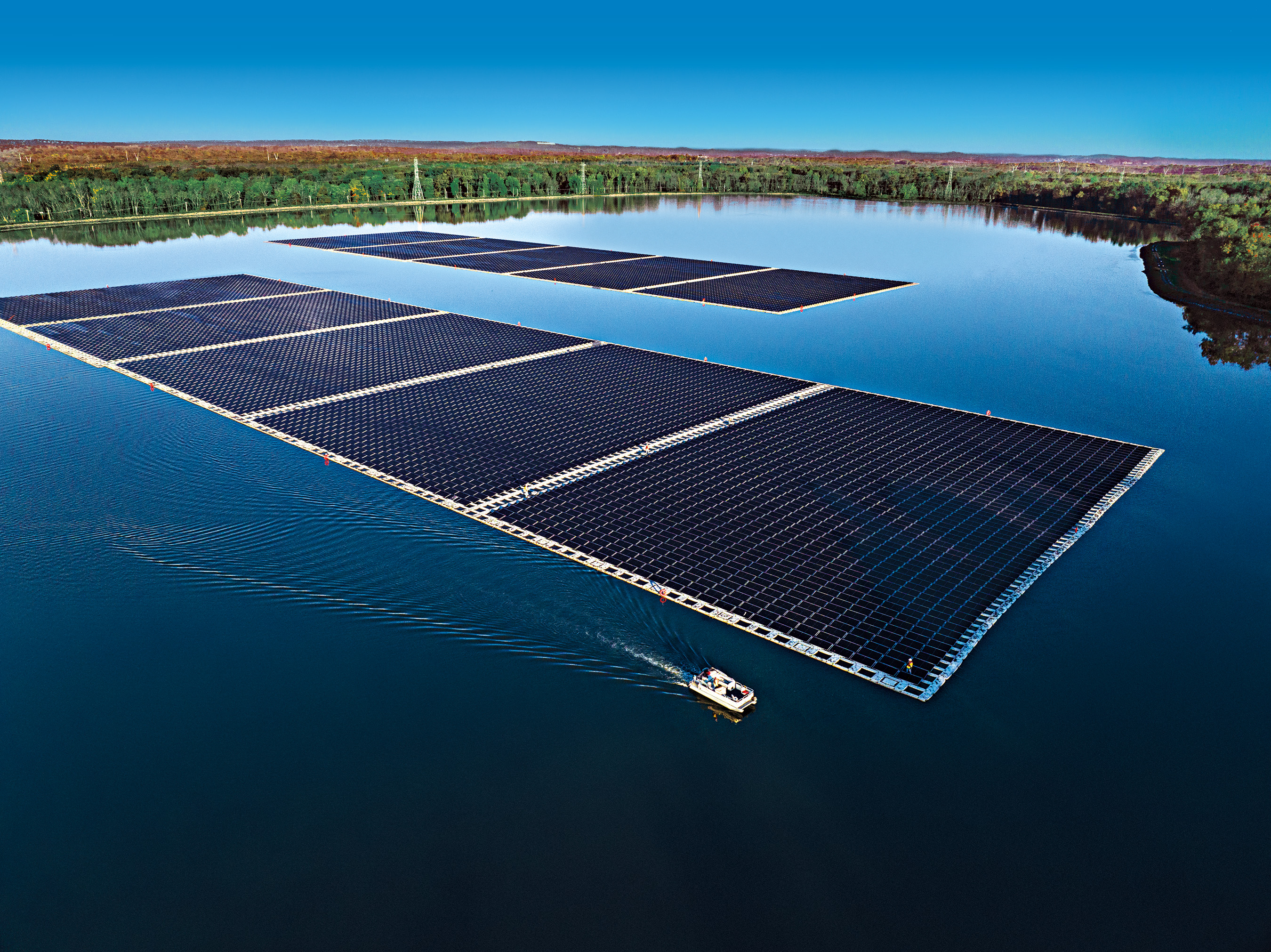
The project also makes the company’s structure easier to understand. Westhoven leads a gas utility parent with a substantial solar business. His portfolio crosses the categories that often organize arguments about energy. At Canoe Brook, the relevant question is wonderfully concrete: can the available surface generate useful electricity for the facility beside it?
That concreteness is a recurring feature of his public case. The argument gains substance from a location, an installation and a customer use. A renewable project can be discussed in terms of where it fits and what it supplies. Canoe Brook makes both visible in a single aerial photograph.
The shoreline is personal
Westhoven’s description of his home offers another way into the business. He has written about the importance of the Jersey Shore to his family and to employees who live there. The connection gives environmental stewardship a recognizable geography. There are actual communities, homes and stretches of coastline behind the corporate vocabulary.
In June 2024, NJR announced a five-year, $500,000 commitment to Monmouth Conservation Foundation for Scudder Preserve in Middletown. The 90-acre property includes woodland, streams, grassland and ponds. The funding supports restoration, planning for public access and education. It is a company commitment, carried out with a conservation organization responsible for the land.
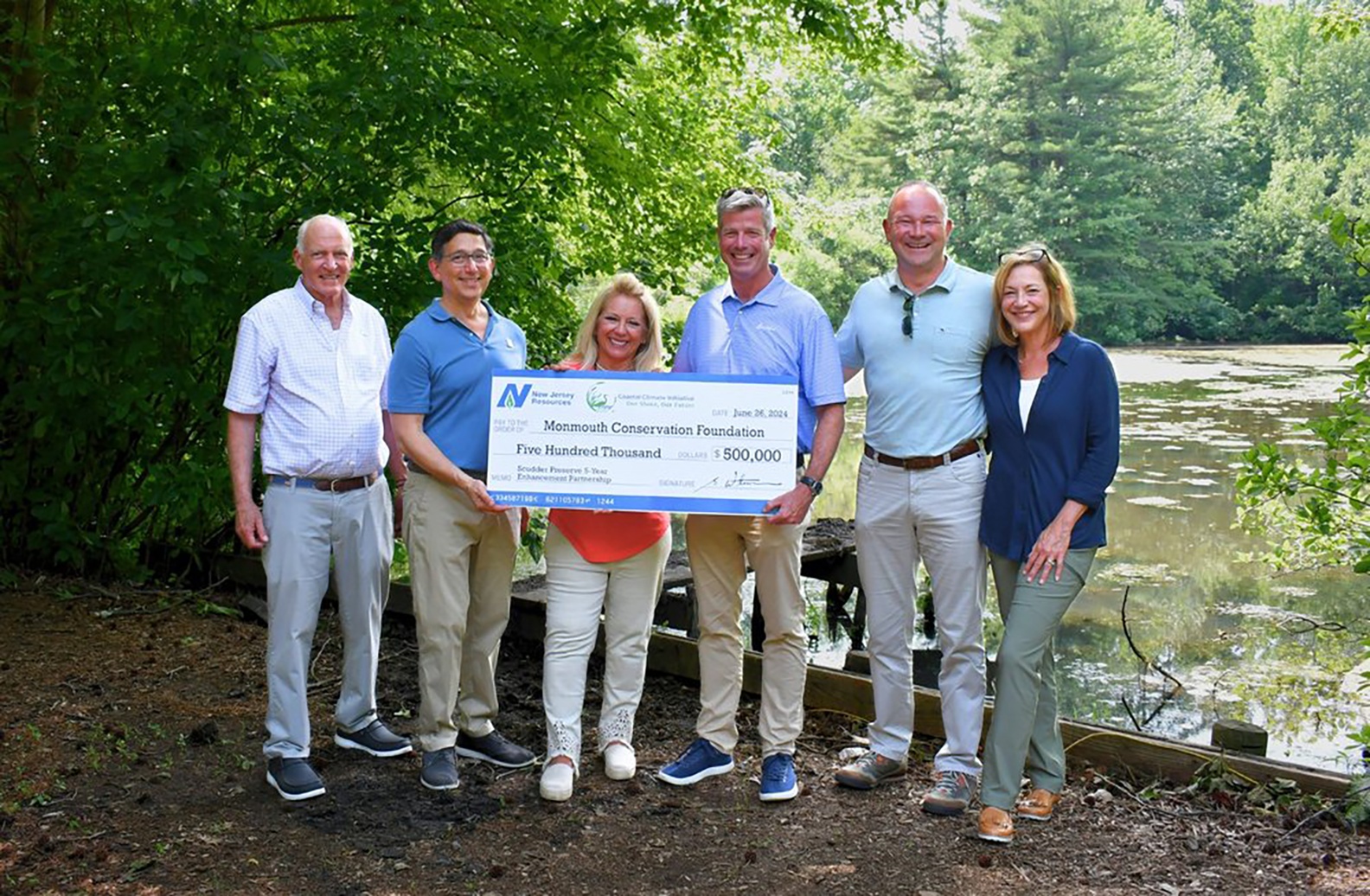
The work gives his local attachment a public expression. It also brings other people into the story: conservation staff, land stewards and communities who may use the preserve. An energy executive’s influence travels through those partnerships as well as through the businesses he directly manages.
The Coastal Climate Initiative continued that work in April 2026 with a $35,000 donation supporting The Nature Conservancy’s marsh-restoration planning. The initial phase involves identifying opportunities with municipalities in Monmouth and Ocean counties. Here the useful existing asset is a salt marsh. Preserving its function requires its own kind of investment and patient coordination.
Three demands on the same decision
Westhoven’s stated priorities bring emissions reduction, reliability and affordability together. It is an appealing combination with demanding practical consequences. Equipment has a cost. Customers have bills. A proposal to change the energy system still has to explain how service will continue and who will pay for the work.
His 2025 sustainability message presents efficiency as one way to address those pressures together: reduce consumption, reduce demand and help households and businesses spend less on energy. That emphasis broadens the task beyond producing or transporting more fuel. The amount customers need is part of the operating problem too.
Affordability
What does the customer pay?
Reliability
Will the energy be there?
Lower emissions
How does the impact change?
His recent record contains both ongoing projects and financial updates. By June 30, 2026, Clean Energy Ventures had approximately 537 megawatts of commercial solar capacity operating across seven states. In September, NJR’s board approved an increase in its quarterly dividend to 50 cents a share, the company’s 31st consecutive year of dividend increases.
The dividend history reaches back well before his time as CEO. That is part of the responsibility of taking over an established company: current decisions sit inside obligations and expectations built by other people. Westhoven’s career has given him a particularly long view of those inheritances.
His story keeps returning to the question of what can remain useful. An engineering education becomes preparation for executive decisions. A career inside one company expands across several businesses. A reservoir accommodates solar panels. A pipeline becomes the site of an experiment. Along the Jersey Shore, a woodland preserve receives support for its next chapter. Westhoven’s public case for change begins with paying attention to what is already there.
Continue the conversation
New Jersey Resources Stephen Westhoven on LinkedIn Watch: his infrastructure argument (YouTube) NJBIA appearance, November 2023 CEO sustainability message Canoe Brook project Scudder Preserve partnership August 2026 business update September 2026 dividend announcementCompany accounts
NJR on LinkedIn ↗NJNG on X ↗NJNG on Instagram ↗NJNG on Facebook ↗