Sunlight falls without sending an invoice. Everything that follows is expensive. The panels, land, permits, substations, lawyers, tax structures and patient years between proposal and power make renewable energy less a miracle of nature than a triumph of paperwork. Jhon Cohen has built his career in that crowded interval. A Colombian-born economist who became a data scientist, consultant, teacher and energy executive, he learned to treat the sun not as scenery but as an asset that must be translated into the languages of engineers, customers and capital.
His public biography can sound almost too assorted: an economics degree from Universidad Externado in Bogotá, an MBA from Hult International Business School, corporate-strategy training at Harvard, advisory work with the University of South Florida's Muma College of Business, leadership of a binational chamber's sustainability committee, and years moving through solar markets in the Americas and Asia. Add his work as a Christian pastor and volunteer and the résumé begins to resemble several lives sharing one name.
There is, however, a clear line through it. Cohen is a translator. His subjects happen to be kilowatts and cash.
The inheritance before the résumé
Cohen locates his beginning one generation before his own. His grandparents were farmers without formal education. His mother became the first in the family to complete secondary school and graduate from university. He has described that advance as something that changed the family's view of what the future could contain. The detail is modest, but it explains more than a list of credentials. Education, for Cohen, was not an ornament. It was proof that a family's horizon could move.
“My grandparents were farmers with no formal education. My mother became the first in our family to complete secondary school and graduate from university.”Jhon Cohen
Economics gave him one vocabulary. Data science supplied another. By 2022, when AmCham Colombia selected him to lead its Business Sustainability Committee, the chamber described a man who had worked across financial services, retail, technology, energy and consumer products, as well as consulting and teaching. It is an unusual apprenticeship for an infrastructure founder, though perhaps a useful one. A solar plant is technology. It is also a balance sheet, a construction job, a sales contract and an argument about the future price of electricity.
A distribution business learns to build
The Colombian chapter began with equipment. Cohen said Klarzen entered the country in 2014 as a distributor, then expanded in 2019 into financing, installation and energy services. That sequence matters. Selling a panel is a transaction. Financing a plant means living with a project long enough to understand whether it actually works.
By 2021, Cohen was vice president of Klarzen America and discussing a 40-megawatt solar installation intended to supply part of the Caño Limón oil field's electricity. The image is full of useful contradiction: a renewable system serving hydrocarbon operations. Purists may prefer their transitions immaculate. Electrical grids have never shown much interest in purity. They change through additions, substitutions and awkward intermediate arrangements.
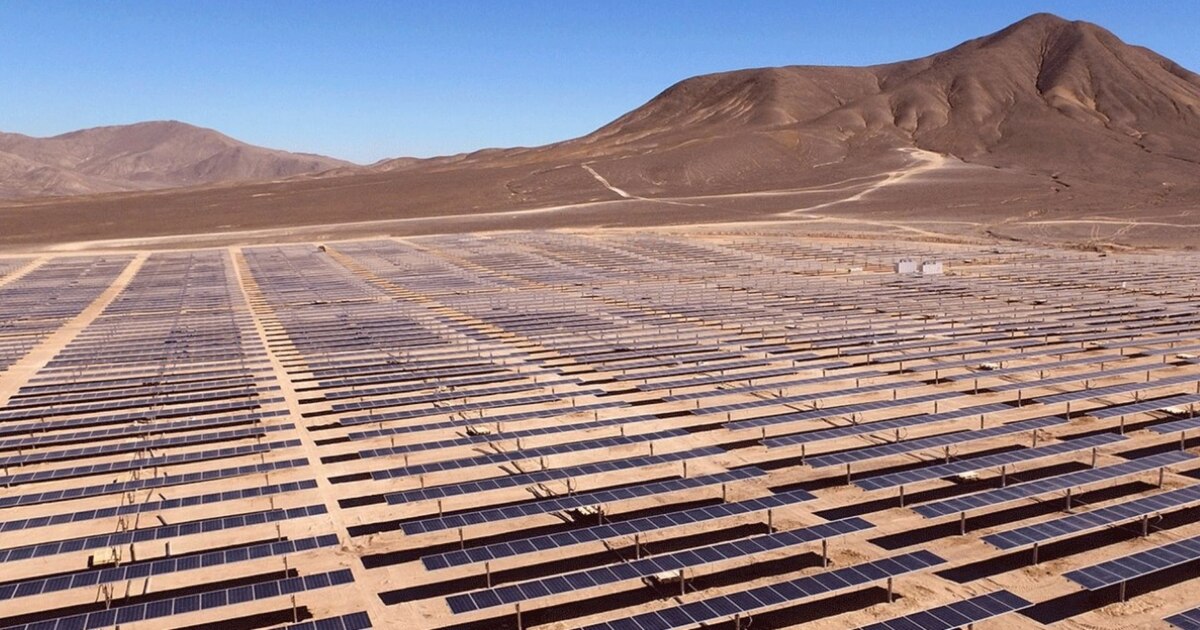
The project was described as providing roughly a fifth of the field's consumption. Around it sat a wider list of proposed and active work: commercial installations for industrial companies, a hospital, local government and smaller businesses. Cohen spoke of “the democratization of Renewable Energies,” a grand phrase attached to a practical idea. Solar should not belong only to utilities or headline projects. It should make sense for the ordinary corporate user who notices the electricity bill before noticing the planet.
The operator becomes an owner
In 2022, Cohen acquired the American Klarzen operation from its Chinese parent and became chief executive, having served as vice president and legal representative. The acquisition amount was not disclosed. The quieter significance was control: the operator now owned the vehicle. A proposed Canadian public-market transaction followed in 2023, with Cohen named as a prospective board nominee. It was later cancelled. Careers in project development contain reversals as naturally as blueprints contain revisions.
ArtIn Energy became the next and more visible identity. The company presents Cohen as founder and chief executive, developing solar, battery storage, green hydrogen and e-methanol projects. A 2024 federal securities filing gives the corporate story a firm point on the map: Cohen signed as CEO, and the company listed its principal office in Tampa, Florida. In a field fond of rendering distant futures, the filing is refreshingly plain. A name. A title. An address. A signature.
That same year, ArtIn announced an investment partnership with Initiative Equity Partners and said the investor had acquired a 16 percent interest. Cohen's statement paired environmental impact with financial returns, the two constituencies he has spent years trying to keep in the same room. It was also the year his byline appeared on a run of unusually practical explainers: solar depreciation, federal tax-credit choices, panel economics and battery-storage land leases. They are not glamorous subjects. Glamour has never connected a project to the grid.
The footnotes are the business
Read together, Cohen's 2024 articles form a curious little bibliography of the energy transition. One asks whether a commercial solar installation is worth its cost. Another compares the Investment Tax Credit with the Production Tax Credit. A third explains accelerated depreciation. There are guides to efficient panels and to the terms a landowner might expect when leasing acreage for battery storage. None offers the instant gratification of a ceremonial ribbon and a row of hard hats.
Yet this is where Cohen's economics training becomes visible. The central question is seldom whether solar technology functions. It does. The stubborn question is who pays, when the return arrives, which incentive applies and how risk is divided before construction begins. A developer who cannot answer those questions owns little more than an attractive rendering.
Cohen's range can look restless from a distance: data, marketing strategy, investment banking, business intelligence, project management. Up close, those pursuits converge. Renewable power is an engineering product sold through a financial model to an organization with its own operational habits. His career has accumulated the necessary dialects. Even the teaching matters. A complicated proposal is useless if the customer, investor or public official cannot understand it well enough to say yes.
A solar panel is a simple object. A solar project is paperwork with weather attached.
Big numbers, carefully handled
Renewable infrastructure eventually produces numbers large enough to lose their edges. ArtIn's recent announcements contain several. In March 2026, the company said it had reached a definitive agreement for a $255 million strategic investment from Agila Investments. It said the capital would support a U.S. portfolio spanning utility-scale solar, storage and green-fuel infrastructure, and reported an implied company valuation of $14.58 billion.
Those figures are company-announced, not a public-market price, and deserve to be read in that frame. The distinction is not pedantry. It is the grammar of serious infrastructure. A pipeline is not a finished plant; an agreement is not cash already spent; a valuation is not money in the founder's pocket. Cohen himself used the language of institutional discipline, governance and risk management when describing the partnership. Ambition becomes more credible, not less, when its nouns are kept precise.
The arc is still striking. Equipment distribution became project services. Project services became operating leadership. Operating leadership became ownership and then a U.S.-based development platform. Each move enlarged both the opportunity and the burden of proof.
A second kind of conversion
Cohen's life outside the boardroom changes the temperature of the story. He serves as a Christian pastor and volunteer. When asked about his personal aspiration, he did not answer in megawatts. He said he wanted to inspire immigrants to remain resilient and never surrender their dreams to difficulty.
That answer returns the story to his mother and grandparents. It also reveals a second form of conversion running beside the conversion of sunlight into electricity: inherited possibility turned into permission for somebody else. The farmer's grandson becomes an economist; the economist crosses borders; the executive tells other immigrants that the border need not be the end of the sentence.
“One of my greatest aspirations is to inspire immigrants to remain resilient and never give up on their dreams.”Jhon Cohen
There is no tidy founder myth here, and that is its virtue. The record contains projects completed and projects proposed, a transaction pursued and cancelled, corporate names inherited and remade. It contains the spiritual and the financial without pretending they are the same thing. Cohen's personality emerges less through confession than through pattern: cross-disciplinary, persistent, comfortable with scale, and drawn to institutions that can carry an idea farther than one person can.
The sun, of course, remains indifferent. It shines on farms, office towers and oil fields alike. The work is deciding what to build beneath it, arranging the capital, and staying long enough to see whether the current flows. Jhon Cohen has spent his career learning that difficult middle. His subject is renewable energy. His craft is making different worlds agree.