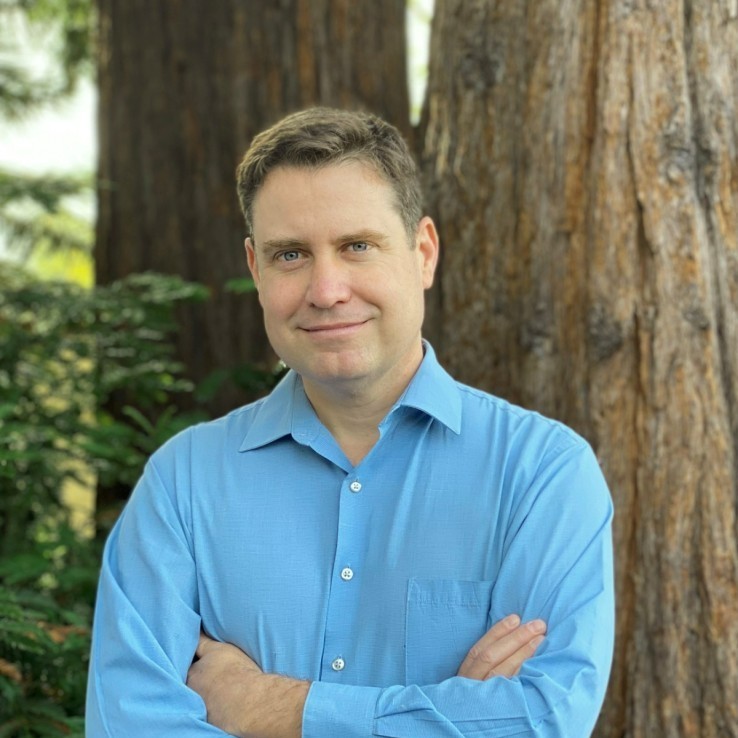
A Basement. A Pandemic. An 800 MW Project in Qatar.
In 2019, SunPower - one of the world's largest solar companies - made a strategic pivot. It was stepping back from utility-scale solar projects, the massive multi-hundred-megawatt installations that represent the future of clean energy at grid scale, and refocusing on residential installations. For Matt Campbell, who had spent 15 years building that exact utility business, it was the wrong call at the worst possible moment. He said so publicly. Then he left.
Within months, he had a small team and no office. The pandemic arrived. The team worked from Campbell's basement in Berkeley. Three months in, they landed an 800 megawatt project in Qatar. That is not a typo. Eight hundred megawatts from a company that did not yet have a real address.
That company is Terabase Energy. Today it has raised $207 million from SoftBank Vision Fund 2, Breakthrough Energy Ventures (Bill Gates' climate fund), Prelude Ventures, Fifth Wall, SJF Ventures, and EDP Ventures. Its Construct platform manages over 14 gigawatts of solar projects. Its Terafab robotic assembly system installs solar panels at a 2-minute cycle time - one tracker every two minutes, day or night, without stopping.
Campbell had spent those 15 years at SunPower overseeing more than 200 projects in 20 countries totaling over $10 billion in investment. He joined SunPower when it had 40 employees and $3 million in revenue. He watched it grow. He understood utility-scale solar at a granular level - the logistics, the labor, the waste, the speed constraints. And he saw something that nobody else seemed to be building a company around.
When you go to a solar site, the means and methods were all available in the 1950s. We saw an opportunity as the plants get bigger, as the globe scales up. There's a real need to speed things up and do things more efficiently.
- Matt Campbell, CEO, Terabase EnergyThe irony is hard to miss. Solar panels themselves are cutting-edge technology. The factories that make them are marvels of precision manufacturing. But the moment those panels arrive on a job site, construction typically reverts to methods that would be familiar to anyone who built infrastructure in the mid-20th century: workers with hand tools, manual lifting, no real-time data integration, no digital twin, no automation feedback loop. Campbell decided to fix the other half of the equation.
Terabase started as a software company - design optimization tools, digital modeling, project planning platforms. The Construct platform emerged from this: a digital project management system that tracks quality, safety, and productivity across the full construction lifecycle. Before Terafab was a physical machine, Terabase was already helping plan and manage gigawatts of capacity.
But software alone was never the plan. "Our plan was robotics from the beginning," Campbell has said. And he acknowledges why it took longer than expected: "Any sort of outdoor autonomy is uniquely hard. I think it's taken us longer than we would have liked." Outdoor robotics - real terrain, changing weather, imprecise ground conditions - is categorically different from factory automation. The variables are unpredictable. The stakes are high.
The result is Terafab V2, launched commercially in March 2026 after completing field testing. Terabase calls it a "physical AI" system - autonomous outdoor robotics that use advanced sensors, real-time decision-making, and machine learning to adapt to site conditions. A single Terafab line runs at 2-minute cycle times. Running 24/7, that translates to over 20 megawatts installed per week, or roughly 1 gigawatt per factory per year.
The Robot That Builds Solar Farms
From Adaptive Optics to Terawatt Solar
Before Terabase, before SunPower, Campbell was building optical systems at a startup called Iris AO. His career has always run at the intersection of engineering and entrepreneurship - with a fifteen-year stint at a major corporation in between that turned out to be the most valuable research project of all.
At a company offsite, Campbell drove a rover into waterlogged terrain. He bought replacement clothes at Target and kept going. His team doesn't find this surprising.
"AI can't build things. It needs arms and eyes."
Straight from the Field
I have a dream, and that is 24/7 solar construction with robots.
You've got to take a risk and not be afraid of failing.
Our plan was robotics from the beginning.
It was exactly the wrong time to exit utility.
Eventually solar power plants will be built with robots - to build faster, to build with higher quality, to build with lower cost, and to really achieve terawatt scale.
SoftBank Vision Fund's investment reflects our shared commitment to leveraging advanced technology to drive the future of renewable energy.
75 Terawatts. One Cent per Kilowatt-Hour.
Campbell talks about 75 terawatts of utility-scale solar as if it were a project plan rather than a science fiction number. The current global installed capacity of all electricity generation - coal, gas, hydro, nuclear, wind, solar combined - is around 9 terawatts. Campbell's target is roughly eight times that, from solar alone.
The math requires a fundamental change in how solar gets built. Today's methods, rooted in what Campbell describes as 1950s-era construction, cannot scale fast enough. Labor shortages are already a binding constraint - not just for field workers but across the entire professional ecosystem of solar project development. The construction industry globally does not have enough people to build the solar capacity the world needs using the methods the world currently uses.
This is Terabase's core argument for why the company exists. It is not a pitch about slightly better software or marginally more efficient tools. It is a claim that the only way to achieve terawatt-scale solar is to fundamentally change the means and methods of construction itself - to bring manufacturing-style efficiency and automation to outdoor project sites.
Labor is a major limiting factor - shortages across field labor and various professional roles across the industry.
- Matt CampbellTerafab V2 is the physical embodiment of that argument. The system treats an outdoor solar construction site like a factory floor. Robotic arms handle the heavy lifting - literally eliminating the manual handling of large, heavy tracker components that has historically been a source of both labor intensity and workplace injuries. The digital twin tracks every component. AI assists with real-time management decisions. The system can run at night, in conditions where human crews cannot.
The cost target - one cent per kilowatt-hour - is not an arbitrary round number. It represents the point at which solar becomes cheaper than virtually any alternative source of energy across virtually any market globally. At that price, the economic case for coal, gas, and even nuclear shifts fundamentally. It is the price at which the transition becomes irreversible.
Campbell is not alone in this pursuit. The clean energy robotics space has attracted multiple approaches - off-site prefabrication, on-site prefab factory systems like Terafab, and roving module robots that move between positions. Campbell describes these as complementary strategies with different tradeoffs, not a winner-take-all contest. The industry needs all of them to reach scale.
Terabase secured an 800 MW project in Qatar within three months of founding - while operating from Campbell's basement during a global pandemic. The project size was larger than most established developers had ever handled in a single contract.
Details That Tell the Story
Campbell joined SunPower when it had 40 employees and $3M in revenue. He left 15 years later having overseen $10 billion in project investment across 20 countries.
Terafab's 2-minute cycle time means a single robotic line can install the equivalent of a small power plant every week - running day and night, without stopping.
Before solar, Campbell co-founded Iris AO, an adaptive optics company spinning out of UC Berkeley - technology that corrects for atmospheric distortion in telescopes and laser systems.
Terabase's first major project (800 MW in Qatar) was larger than many established solar developers had secured in a single contract. The company had been in existence for three months.
Terabase is backed by both Bill Gates (via Breakthrough Energy Ventures) and SoftBank - two of the highest-profile deep-tech investors in the world, in the same cap table.
The Terafab V2 is classified as a "physical AI" system - it uses real-time sensors and autonomous decision-making to adapt to uneven terrain, changing weather, and site variability.