A gas well can work perfectly and still have a problem. The gas comes up. The equipment runs. Somewhere beyond the wellhead, however, the route to a buyer becomes uneconomical. In the Delaware Basin, the western part of the Permian, that gap between producing something and selling it is Kinetik’s business. Its product is partly steel and partly coordination: getting each stage ready for the next.
- The customer: approximately 90 oil and gas producers.
- The job: gather, process and move production to market.
- The wager: connected infrastructure makes each new connection more useful.
That makes this an energy story with an unusually practical question at its center. Forget, for a moment, how much gas is underground. Can the gas above ground reach a plant? Can the plant handle it? Can the processed gas reach a market whose price justifies the trip? A producer needs all three answers to be yes. A bigger answer to one question does little good when another answer remains no.
A well needs an exit
Kinetik occupies the middle of that journey. It gathers gas from producers, compresses it, treats it and processes it. Processing separates natural gas liquids from the residue gas that continues through the network. Crude gathering, stabilization and storage, along with produced-water handling, extend the service around the same customer’s operations. The offer is especially useful to producers whose development plans require several pieces of infrastructure to arrive together.
The engineering details matter. Kinetik describes large-diameter steel gathering lines and field compression designed for continued basin growth. Interconnection provides routes between assets; redundancy provides alternatives when an individual piece is unavailable. Its expertise lives in these unglamorous transitions: pressure, treatment, recovery, transportation. A customer buying the service is buying a better chance that production keeps moving.
Built by joining the pieces
The company’s roots reach back to EagleClaw’s formation in 2012, backed by a $100 million equity commitment from EnCap Flatrock Midstream. Its original three executives had worked together in various capacities for more than 25 years. This was a familiar team entering familiar territory, looking for both new construction and acquisitions in West Texas and southeastern New Mexico.
The present Kinetik platform arrived in February 2022, when Altus Midstream and BCP Raptor combined. Jamie Welch became president and chief executive. Bringing operations and transportation interests together gave the company more of the journey to coordinate. The name changed; the commercial logic remained rooted in connecting producers with the infrastructure beyond their leases.
In 2024, Kinetik pushed north through Durango’s New Mexico gathering and processing business. The announced purchase price was $765 million in cash and equity, with contingent consideration. To help finance that move, it sold its 16% Gulf Coast Express pipeline stake for $540 million. The revealing detail is the exchange: monetizing one position to expand another, rather than treating every existing asset as permanent.
Kings Landing meets the bottleneck
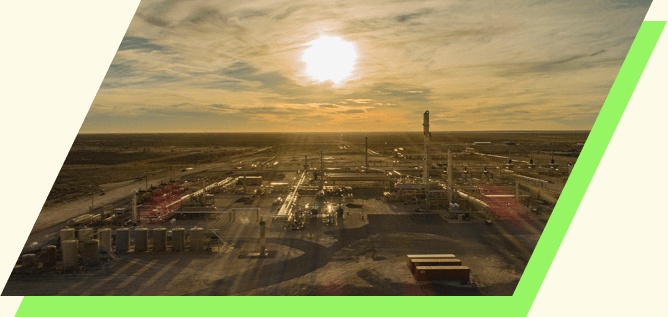
Then came a processing complex with a name that refuses to sound industrial: Kings Landing. It entered full commercial service in September 2025. Welch said the added New Mexico capacity brought back volumes that had been curtailed for up to two years and allowed customers to resume development. Here was a concrete constraint, followed by a concrete response: build the processing step that customer production had been waiting for.
Yet another constraint remained. Weak Waha gas pricing encouraged producers to shut in volumes. Kinetik reported that fourth-quarter 2025 volumes were more than 8% below its expectations. Physical capacity could not, by itself, make every sale attractive. The episode explains why the company talks about transportation and pricing alongside processing. A functioning plant still needs a commercially useful destination.
“2025 was a year of challenges and strategic progress for Kinetik as we navigated a difficult operating environment.”
Jamie Welch / President & CEO / February 2026
Its response also included contracts. The two largest legacy Durango customer agreements were extended into the mid-2030s with fixed-fee structures and added treating fees. That is an observable adjustment to the business, without needing a story about a private change of heart. The company altered the terms under which infrastructure earned its money.
A route is also a price
For producers, the benefit can extend beyond getting gas out of a plant. A five-year agreement with INEOS, announced in November 2025 and scheduled to begin in early 2027, links designated gas deliveries to European TTF netback pricing. It represents approximately half a million tonnes annually of LNG-equivalent volume. Kinetik is offering another pricing route for Permian production, using commercial arrangements alongside physical connections.
That helps explain its position among alternatives such as Targa, Western Midstream and Energy Transfer. Kinetik’s pitch rests on a concentrated Delaware Basin network connected to downstream markets. For an individual producer, the useful comparison is local: which system reaches the acreage, accepts the gas and offers workable terms? A company’s national footprint alone cannot answer those questions.
The bill arrives before the gas
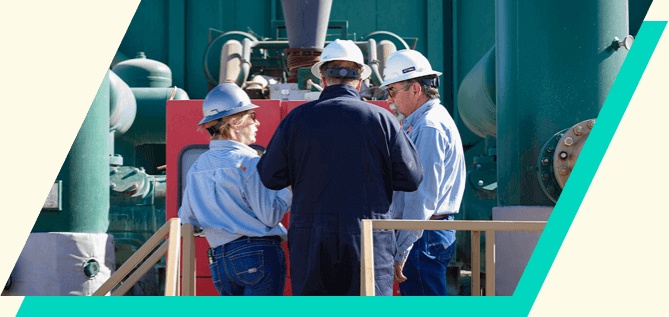
Kinetik earns through volume-based fees, sharing arrangements and product sales, alongside pipeline investments. These arrangements spread the ways it gets paid, but still depend on customer activity. Its own culture statements emphasize safety, teamwork and employee development. In a business of operating plants and pressurized systems, those commitments have a practical test every working day.
The next stage requires substantial spending. In August 2026, Kinetik put expected Kings Landing II capital at approximately $260 million, targeting completion in mid-2028. It also reported the ECCC connecting pipeline in service. These are different milestones: one operating connection, one planned expansion. The distinction matters when judging how much additional capability customers can use today.
Expected Kings Landing II capital.
Target completion: mid-2028.
Company estimate announced August 2026.
There is a useful lesson here for businesses far from an oilfield: locate the binding constraint, secure demand, then connect the added capacity to an outlet. The approach depends on financing, permits, sustained production and safe execution. Kinetik’s experience shows why the destination belongs in the original plan. More supply becomes useful when somebody can receive it.