In September 2025, Jamie Welch was talking about possession, pressing and the merits of a new playing surface. These were unusually grassy subjects for the president and chief executive of a Texas midstream energy company. His other job supplied the explanation. Welch was also the owner and president of Yverdon Sport FC, and the Swiss club had been relegated. A change of scenery had brought him a very familiar management problem: what to do when an investment needs rebuilding.
He had gone to Yverdon-les-Bains for meetings on September 10. In the interview published the following day, he described a club trying to establish a coherent way of playing, then make its coaching, recruitment and academy fit that choice. The detail was revealing. The owner was discussing the machinery of improvement, right down to the turf. Football, as it happens, offers rather limited opportunities to hide behind a quarterly presentation.
Welch's public career is full of systems that depend on other systems. Legal agreements underpin financing. Financing pays for infrastructure. Infrastructure needs customers, and customers need somewhere to send their product. A football club adds supporters, a league table and the occasional ball that refuses to go where an expensive plan says it should.
A lawyer takes the long way to Texas
Before the pipelines and the green seats, there was a legal education at Queensland University of Technology: a Bachelor of Laws and a Diploma of Legal Practice. Welch worked as a barrister and solicitor at Minter Ellison in Melbourne, then as an attorney with Milbank, Tweed, Hadley & McCloy in New York. His route into energy leadership began through the professions that arrange and document transactions.
Banking followed. At Lehman Brothers in New York, he became a senior vice president in the global utilities and project finance group. He joined Credit Suisse First Boston in 1997 and eventually led Credit Suisse's global energy group and its investment banking department for Europe, the Middle East and Africa. Those roles placed energy and capital on the same desk, years before he would be responsible for operating an energy company.
In June 2013, Welch moved to Energy Transfer Equity as group chief financial officer and head of business development. He also served on the boards of Energy Transfer Equity, Energy Transfer Partners and Sunoco Logistics. That chapter ended in February 2016. A senior advisory role at Blackstone Energy Partners began that July; leadership at the business behind EagleClaw followed.
- 1997Joins Credit Suisse First Boston
- 2013Moves to Energy Transfer Equity
- 2016Becomes a Blackstone senior adviser
- 2022Becomes Kinetik president and CEO
- 2023Takes control of Yverdon Sport
The business between the well and the buyer
Kinetik took its present name through the February 2022 combination of EagleClaw Midstream and Altus Midstream. Welch became its president, chief executive and a director. On February 25, he and other senior leaders were in New York for the company's first day of trading as Kinetik. A bell ceremony gives a business an admirably clear beginning. The work that follows is usually less tidy.
The combined business linked gathering and processing operations in the Delaware Basin with access to long-distance transportation toward the Gulf Coast. Gathering brings production into a system; processing separates a raw gas stream into useful products; transportation gets those products closer to their markets. Welch's proposition depended on the connections between those activities. A well can produce gas without producing a convenient route to a buyer.
It is a business with a rather literal geography. Pipelines must connect actual places. A processing plant must be close enough, large enough and equipped for the gas that arrives. Contracts must make those physical arrangements worth paying for. Welch's background in project finance belongs in this story because the operational questions continually lead back to commercial ones: who needs the capacity, for how long, and on what terms?
In 2022, EY named him a Central South regional Entrepreneur Of The Year winner. The recognition arrived in the year Kinetik was created, but his route there had involved years inside established institutions. His version of entrepreneurship had emerged through assembling and running infrastructure businesses, with their contracts, partners and substantial existing obligations.
New Mexico, and the cost of getting ahead
In May 2024, Kinetik agreed to acquire Durango's Permian business, extending its interests in New Mexico. The transaction closed that June. For Welch, it added another set of assets to a strategy concentrated on the Delaware Basin. Buying a business also buys the next list of decisions: which connections to build, which facilities to expand and which customer commitments justify the expense.
The opportunities came with difficult conditions. Looking back on 2025, Welch described a year of commodity price pressure, uncertainty and rising operating costs. Kinetik brought the Kings Landing Processing Complex into commercial service and continued work on the ECCC Pipeline. It also sold its interest in EPIC Crude. The portfolio was changing while the operating environment was testing it.
“2025 was a year of challenges and strategic progress for Kinetik,” he said in February 2026. The pairing mattered. Construction milestones can coexist with disappointed expectations. A company can have assets ready for more production while customers reduce production because local gas prices make it unattractive. Capacity and demand are related, but their calendars can be frustratingly independent.
That tension gives Welch's job its particular difficulty. Spending too late risks leaving a customer without a service. Spending early leaves capital waiting for the customer to catch up. His decisions must anticipate activity without assuming that every development schedule will survive contact with prices, costs and competing priorities. An infrastructure plan has to account for several businesses' plans at once.
A recipe that keeps changing
By August 2026, the tone had improved. Kinetik reported second-quarter adjusted EBITDA of $280.8 million and raised its full-year forecast. It also increased its capital expenditure guidance, including maintenance, to about $560 million. Welch was again committing resources ahead of anticipated customer growth. The improved outlook remained a forecast, with the attendant dependence on prices, production and completion dates.
The projects had tangible names and destinations. ECCC had entered service, connecting Eddy and Culberson counties across the western part of the system. Kings Landing II was expected in mid-2028. Diamond Volt, a 40-megawatt power project at the Diamond Cryo Complex, was expected in the second quarter of 2027. Each date represented work still to be executed, rather than an achievement to collect in advance.
During the August earnings call, a discussion of plant optimization brought out a less corporate analogy. Welch described the process as a chef repeatedly refining a recipe. It is an appealing image for a business usually illustrated with steel and acreage. The equipment may be installed, but the operating team keeps looking for ways to improve what comes through it.
“a constant refinement of a recipe for a chef”
Jamie Welch · August 2026 earnings call
The remark also gives a glimpse of how he explains the work. Instead of treating a completed facility as a finished argument, he described repeated adjustment. It was a modest metaphor in a conversation about large sums. A recipe can be written down. Getting the next batch right still requires attention.
The second scoreboard
Welch's football investment became public in June 2023, when he took control of Yverdon Sport after its promotion to Switzerland's top division. Jeffrey Saunders became club president, with Welch chairing the board. By October 2024, Welch had also taken the presidency. He was now publicly accountable for a club whose results could be inspected every weekend.
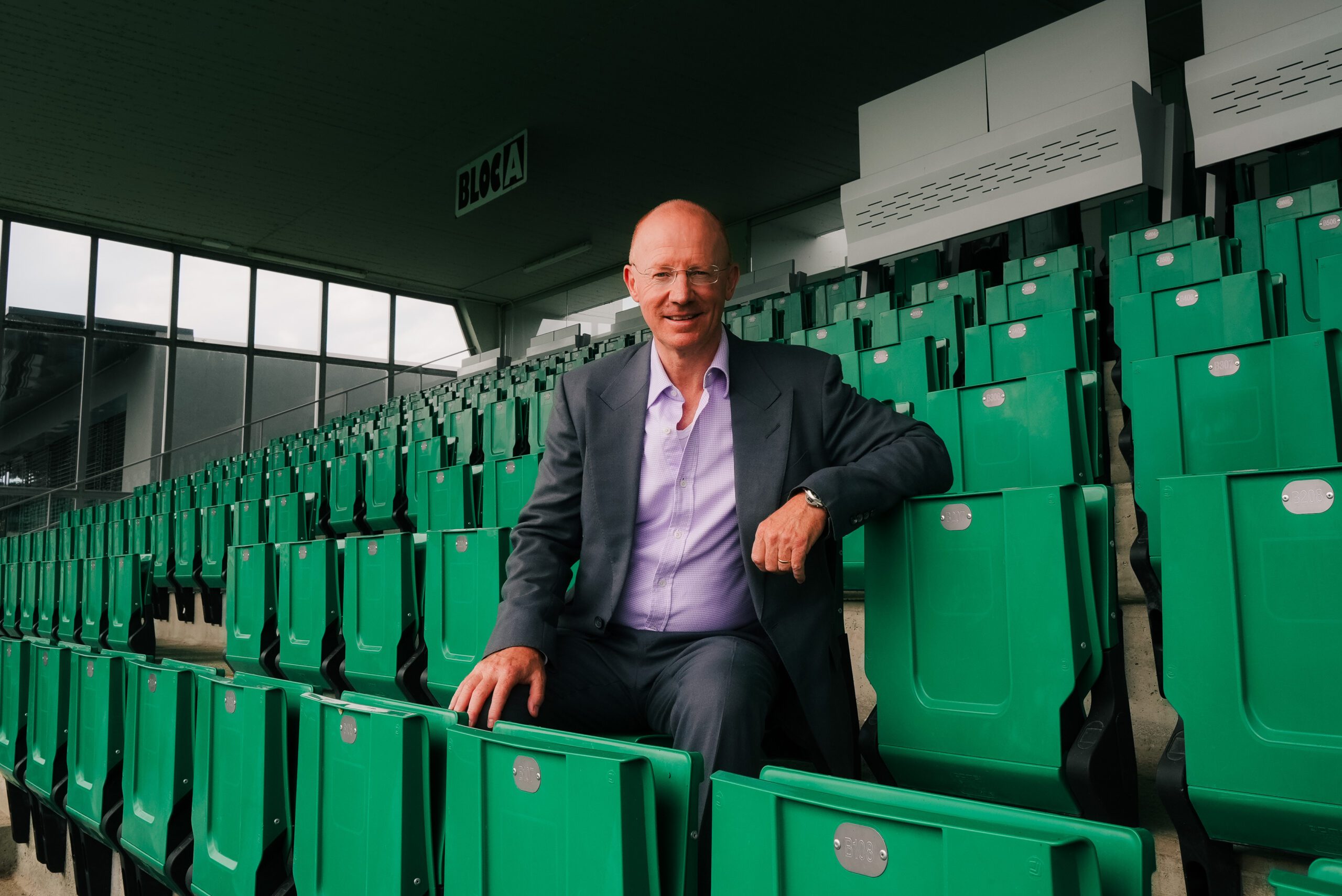
The 2024-25 season ended with relegation to the Challenge League. In his May 2025 message to supporters, Welch accepted the leadership's share of responsibility. He said an examination of the sporting department was under way and reaffirmed ambitions for the men's and women's teams. The statement acknowledged that the club had fallen short of the requirements of the highest level.
By September, the rebuilding had become specific. Welch wanted controlled possession and intelligent defending high up the pitch. Adrian Ursea had been selected as head coach after the leadership team drew up a shortlist. The club had also recruited Martin Andermatt as technical director and invested in a hybrid pitch. Welch described an intended identity that would run through the academy and senior teams.
These were football decisions, with football consequences. A playing philosophy affects the players a club recruits and the time they need to adapt. The resemblance to Welch's energy work lies in the coordination required: individual purchases need to fit a larger operating plan. The supporters, quite reasonably, also want to enjoy the match.
Plans have to earn another season
In June 2026, Welch addressed the club community again. His letter welcomed the women's return to the top division and restated the men's ambition to regain it. He asked supporters to attend, invite others and wear the club's colours. He also appealed to regional businesses and partners. An owner can finance improvements; a living club requires people who choose to turn up.
That appeal adds something to the banker-and-pipelines biography. Welch was talking about belonging, volunteers, families and the relationship between a town and its team. The investments in infrastructure were part of that account, alongside the less purchasable business of sustaining attachment. There is no useful construction timetable for making somebody care about a football club.
Back at Kinetik, the next public checkpoint was already set. On October 13, the company announced that third-quarter results would be released on November 4, followed by a call on November 5. For the moment, the August numbers were the latest reported quarter. Another round of questions was approaching.
Welch's career has moved through law, banking, energy and football, but the interesting moments come when the plan needs another answer. A plant can be optimized. A team can learn a new system. A forecast can be revised. The next quarter and the next match both arrive on schedule, carrying their own opinions.