In 1955, Apache drilled a well in Cushing, Oklahoma, that produced seven barrels of oil a day. Its second well produced 700. Imagine building a budget around those two results. The hundredfold difference contains a problem that has followed the company ever since: finding hydrocarbons is only the beginning of figuring out what they are worth.
- Apache produces crude oil, natural gas and natural gas liquids for wholesale markets.
- Since 2021, it has operated beneath publicly traded parent APA Corporation.
- Its story connects a costly Texas disappointment with a partner-funded offshore opportunity.
That distinction matters when reading the numbers. Apache Corporation is an operating subsidiary. APA reports consolidated financial results and holds other subsidiaries, including the Suriname business. The names share a history, but treating them as interchangeable obscures who owns the next big bet.
Seven barrels. Then seven hundred.
Truman Anderson, Raymond Plank and Charles Arnao founded the business in Minneapolis in December 1954 with six employees and $250,000. Their initials supplied A, P and A. Employee Helen Johnson suggested adding “che.” Her reward was a $25 savings bond. Corporate naming has since become a considerably more expensive occupation.
Apache eventually found its way to Houston. Its trade is exploration and production: acquiring acreage, interpreting seismic data, drilling wells and selling the output. The customers are refiners, gas purchasers and other wholesale counterparties. Drivers and households encounter the resulting energy much farther down the chain. There is no Apache subscription to buy.
The expertise sits between geology and execution. A promising seismic image must become a productive well; a productive well needs processing and transport; the selling price must cover the whole undertaking. Rival producers sell substantially similar commodities. Competition turns on acreage, costs, access to markets and the allocation of capital.
For a potential business partner, that makes Apache a source of physical supply and technical operating experience. For an investor, access comes through APA’s listed shares, bringing exposure to the broader group rather than a chosen well. Those are different relationships with different questions. A purchaser cares about dependable delivery and contract terms. A shareholder must weigh spending today against uncertain future cash. Neither can substitute a map of discoveries for an understanding of the costs between the reservoir and the sale. That is where an apparently simple commodity business becomes an exercise in judging a long sequence of dependent decisions.
The gas was there. The economics slipped.
In 2016, Apache announced Alpine High in the Delaware Basin of West Texas. It offered the enticing possibility of a large new development within an established producing region. But gas requires more than a reservoir. It needs somewhere to go, and a price that makes sending it worthwhile.
By April 2019, weak pricing at the Waha hub led Apache to temporarily defer some Alpine High gas production. Later, the company identified deteriorating natural gas and natural gas liquids prices alongside disappointing multi-well development-pad tests. The selling conditions and development results had weakened the investment case.
“The goal was not achieved.”Apache’s assessment of its 2019 Alpine High objective
The financial consequences were substantial. In the fourth quarter of 2019, Apache recorded $1.4 billion of impairments on Alpine High proved properties and upstream infrastructure. Altus separately recorded $1.3 billion against gathering, processing and transmission facilities. These were accounting write-downs, not a single cash bill arriving in the mail.
The company’s own assessment said Altus infrastructure had been overbuilt relative to Alpine High production. Some equipment performed well. That made the lesson more uncomfortable: technical delivery could coexist with a poor investment. Building the plant correctly could not repair the assumptions supporting its scale.
A smaller check for a very large ship
Offshore Suriname, the parent company has taken a different route. GranMorgu combines the Sapakara and Krabdagu discoveries in Block 58. TotalEnergies operates the development; its current project page lists interests of 40% each for TotalEnergies and APA, with Staatsolie holding 20%.
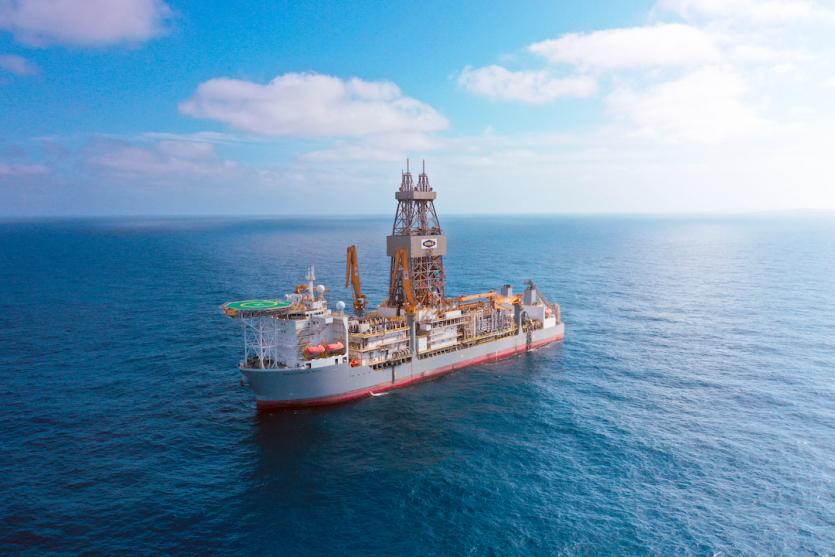
At the October 2024 investment decision, the partners estimated total investment at about $10.5 billion. The plan called for a floating production, storage and offloading vessel with capacity of 220,000 barrels a day, with first oil expected in 2028. Capacity is a design specification, not today’s production.
The consequential detail is the carry agreement: TotalEnergies funds a portion of APA’s appraisal and development capital. APA keeps exposure to the discovery while reducing the capital it must supply itself. This also means sharing ownership and relying on another company’s execution. A partnership changes the distribution of risk; the offshore project still has to work.
Egypt offers a second lesson in price
Apache’s Egyptian operation shows the same commercial logic from another direction. Through Khalda Petroleum Company, its partnership with the Egyptian General Petroleum Company, it combines local operations with exploration experience and extensive three-dimensional seismic coverage. The company says its surveys cover more than three million acres.

A new gas sales agreement in late 2024 improved the case for gas-focused drilling. Apache described prospective gas returns as comparable with oil. The rocks had not suddenly learned a new trick. The commercial terms changed what management could justify spending to reach them.
This is why geography alone gives an incomplete picture of the portfolio. A gas prospect near existing infrastructure, under workable sales terms, presents a different decision from one requiring a new processing system. The relevant unit of comparison is the complete project: reservoir, facilities, contract and schedule. Counting undeveloped acres cannot tell a reader which of those acres deserves the next well.
The next barrel has to earn its place
APA also bought Callon Petroleum in April 2024 in an all-stock transaction valued at approximately $4.5 billion including debt. That expanded its Permian position. Against geographically concentrated shale competitors such as Diamondback and Permian Resources, the broader group combines American development with Egyptian operations and offshore exploration exposure.
By the second quarter of 2026, APA reported approximately 410,000 barrels of oil equivalent a day and $738 million of free cash flow. Adjusted production was lower, at 347,000, excluding Egyptian noncontrolling interests and tax barrels. Keeping both figures visible prevents a large headline number from doing more explanatory work than it deserves.
The transferable idea is to test the commercial chain before scaling the machinery. Ask who buys the output, how it reaches them, and who finances the wait. Apache’s experience also shows the limits: weak prices, disappointing well performance or an oversized infrastructure commitment can overwhelm operational competence. Seven barrels and seven hundred belong in the same spreadsheet.