An oil well has an inconvenient habit: it brings up things nobody ordered. Alongside the hydrocarbons comes produced water, a stream that needs gathering, transport, treatment, or disposal. The oil earns the applause. The water needs somewhere to go. For Western Midstream, that awkward companion has become a reason to buy a company, build a pipeline, and reconsider what an energy infrastructure business can sell.
- WES handles gas, liquid hydrocarbons, and produced water.
- The Aris acquisition added water infrastructure at roughly $2 billion in enterprise value.
- Its advantage depends on connected assets, committed customers, and reliable operations.
01 / Three exits from one well
Midstream is a wonderfully literal name. Producers extract hydrocarbons; downstream businesses turn them into useful products. Western Midstream occupies the space between. It gathers gas, compresses and treats it, processes it, and moves it onward. It also gathers and transports crude oil, condensate, and natural-gas liquids. Its water business handles the troublesome third stream.
The customer is a producer planning wells and needing dependable routes away from them. Occidental is WES’s largest customer; ConocoPhillips also has a named gathering and processing agreement. Core operating areas include the Delaware Basin in Texas and New Mexico, Colorado’s DJ Basin, and Wyoming’s Powder River Basin. A household cannot order a WES subscription. A producer can negotiate access to infrastructure its development plan depends on.
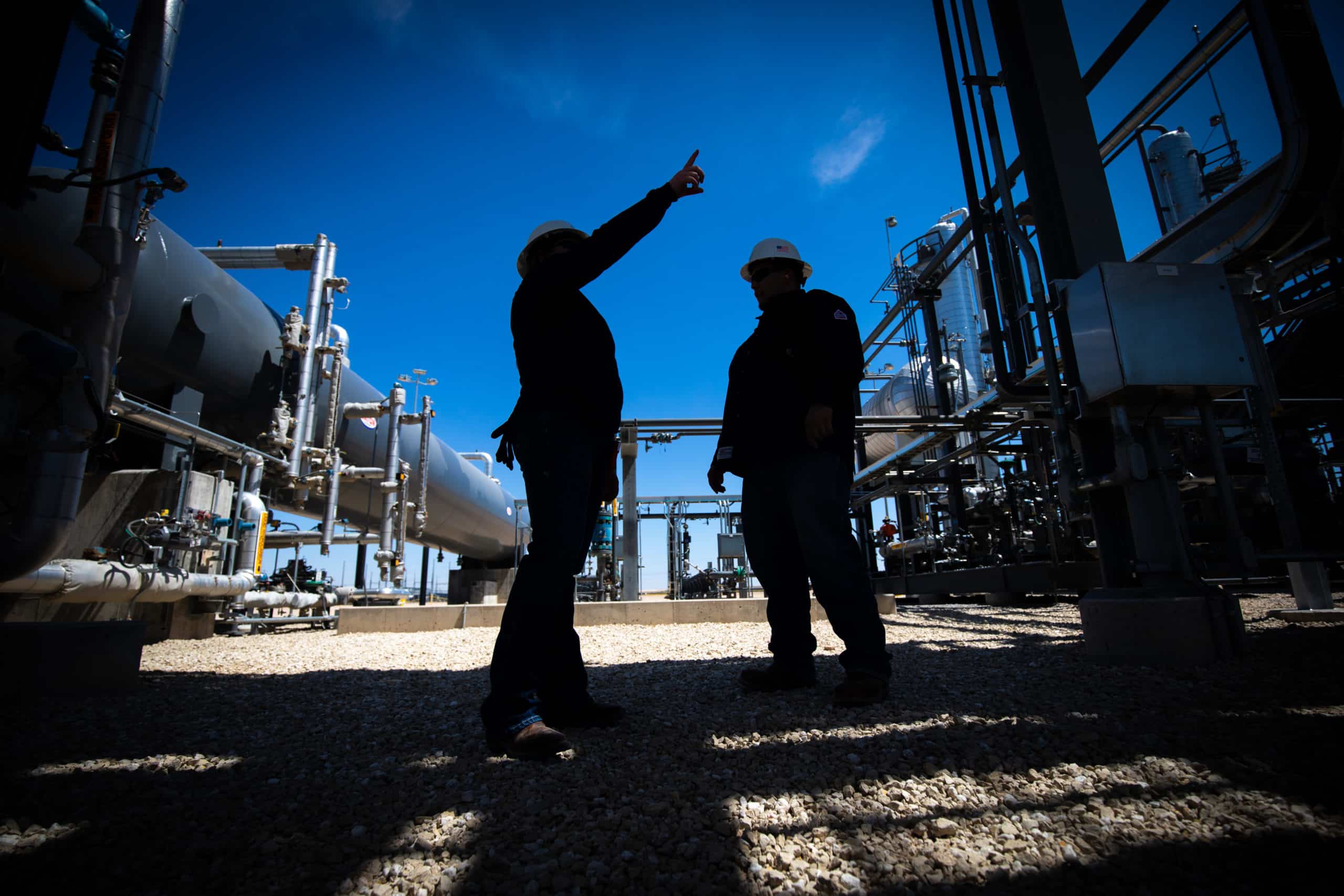
Think of its service network as three coordinated departures from the same acreage. That makes the commercial pitch unusually practical: help customers keep producing by arranging what happens next.
02 / A $2 billion answer to an awkward problem
In October 2025, Western Midstream completed its Aris Water Solutions acquisition. The announcement valued the transaction at approximately $2 billion including debt, with roughly $1.5 billion for Aris equity. This was an acquisition of infrastructure and customer relationships, with pipes and contracts extending its reach into New Mexico.
The purchase announcement described about 790 miles of produced-water pipeline and 625,000 dedicated acres. It also targeted $40 million in annualized cost savings. That last number was a management estimate, a useful reminder that the purchase price is paid before the integration benefits are proven.
WES already had a water business. Aris added gathering, recycling, and disposal capabilities to a system also developing long-haul transport. The interpretation is straightforward: serving more of a producer’s needs on connected acreage can make the network more useful. Competing gas processors, including Targa, have substantial networks too. WES’s particular pitch combines gas, liquids, and water services.
It kept buying. In June 2026, WES closed the approximately $1.6 billion Brazos Delaware transaction, split roughly equally between cash and WES units. That deal expanded gathering and processing in the Delaware Basin. The recurring idea is to deepen an existing operating footprint.
Total revenues and other, FY2025.
Scale is useful. Contract terms explain how it earns.
By the second quarter of 2026, the business was reporting larger numbers: adjusted EBITDA of $736.5 million and operating cash flow of $534.7 million. These measure different things. Adjusted EBITDA is a company-defined non-GAAP earnings measure; operating cash flow tracks cash generated by operations. Anyone assessing an infrastructure operator needs to keep that distinction in view. Steel has to be maintained, construction paid for, and debt serviced before a growing earnings figure becomes money available to distribute.
03 / The contract grows up
Much of the business rests on fees. Contracts can dedicate acreage to a system or require minimum volumes, giving the operator grounds to invest before every future barrel arrives. In 2025, fee-based service revenue represented approximately 90% of total revenues and other. Commodity-related revenue still exists; protection has limits.
One revealing change arrived in January 2026. WES replaced a major Occidental gas-gathering cost-of-service arrangement with fixed fees. Occidental agreed to transfer approximately $610 million of WES units for redemption in exchange for economic concessions. Lower operating cash flows were part of the bargain; distribution savings from fewer units helped offset them.
“As the basin has matured, transitioning to a simplified, fixed-fee structure is both logical and timely.”
Oscar K. Brown / January 2026
Brown’s explanation supplies an actual reason for changing course: a maturing basin. An arrangement that protected cash flows while the gathering system was being built gave way to one intended to improve producer economics and alignment. The contract changed because the stage of the business changed.
04 / A thousand barrels, carefully
Near Red Bluff Reservoir in Reeves County, Texas, WES and Chevron, ConocoPhillips, Devon, and ExxonMobil are testing a different destination for produced water. Their JIP 2 demonstration facility is designed to receive 2,000 barrels daily and produce about 1,000 barrels of reclaimed freshwater. Potential applications include industrial cooling and irrigation.
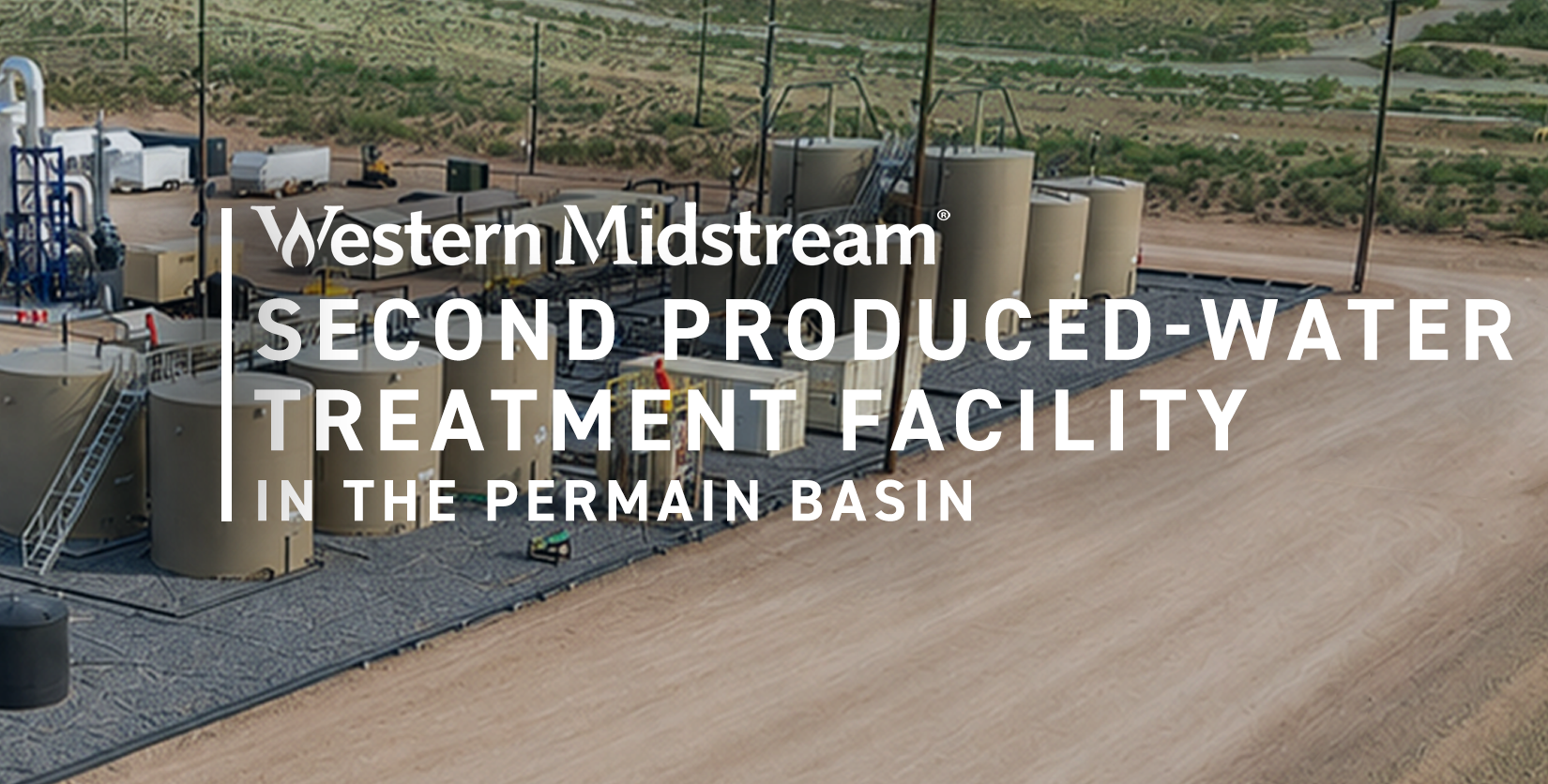
The first pilot ran for 24 months and collected more than 50,000 water-quality data points. JIP 2 increases output tenfold while testing operating reliability and costs. That sequence matters: demonstrate treatment, then evaluate whether a larger facility makes commercial sense. A demonstration plant is evidence of progress; commercial economics remain the next test.
05 / Copy the sequence, not the pipeline
The transferable lesson is to identify the adjacent constraint your customer must solve, secure commitments, and expand in stages. WES’s HSE&S policy also calls for analyzing incidents and near misses and sharing lessons. In an infrastructure business, learning includes the equipment that almost failed.
The approach depends on producer activity, reliable counterparties, permitted disposal or reuse routes, and enough throughput to justify fixed assets. Weaker drilling economics can undermine volume growth. Treatment that costs too much can remain a demonstration. Networks cannot be moved to a better neighborhood when demand disappoints.
WES is also planning farther ahead: its 7.5% stake in the Solitude pipeline venture supports gas takeaway, with initial capacity expected in late 2029. The underlying question remains pleasingly concrete. When the next well starts producing, where will everything go?