An oilfield is an awkward place to discover that a good idea needs translating. A tool can work beautifully in a laboratory and still need different chemistry, different handling or a crew that understands the reservoir. NESR has built its business around that gap. Its proposition begins with a practical question: who will make the technology work here?
- Buy regional operating experience; connect it to outside technology.
- Build laboratories and train people close to the customer.
- Apply the network to new problems, including water and lithium.
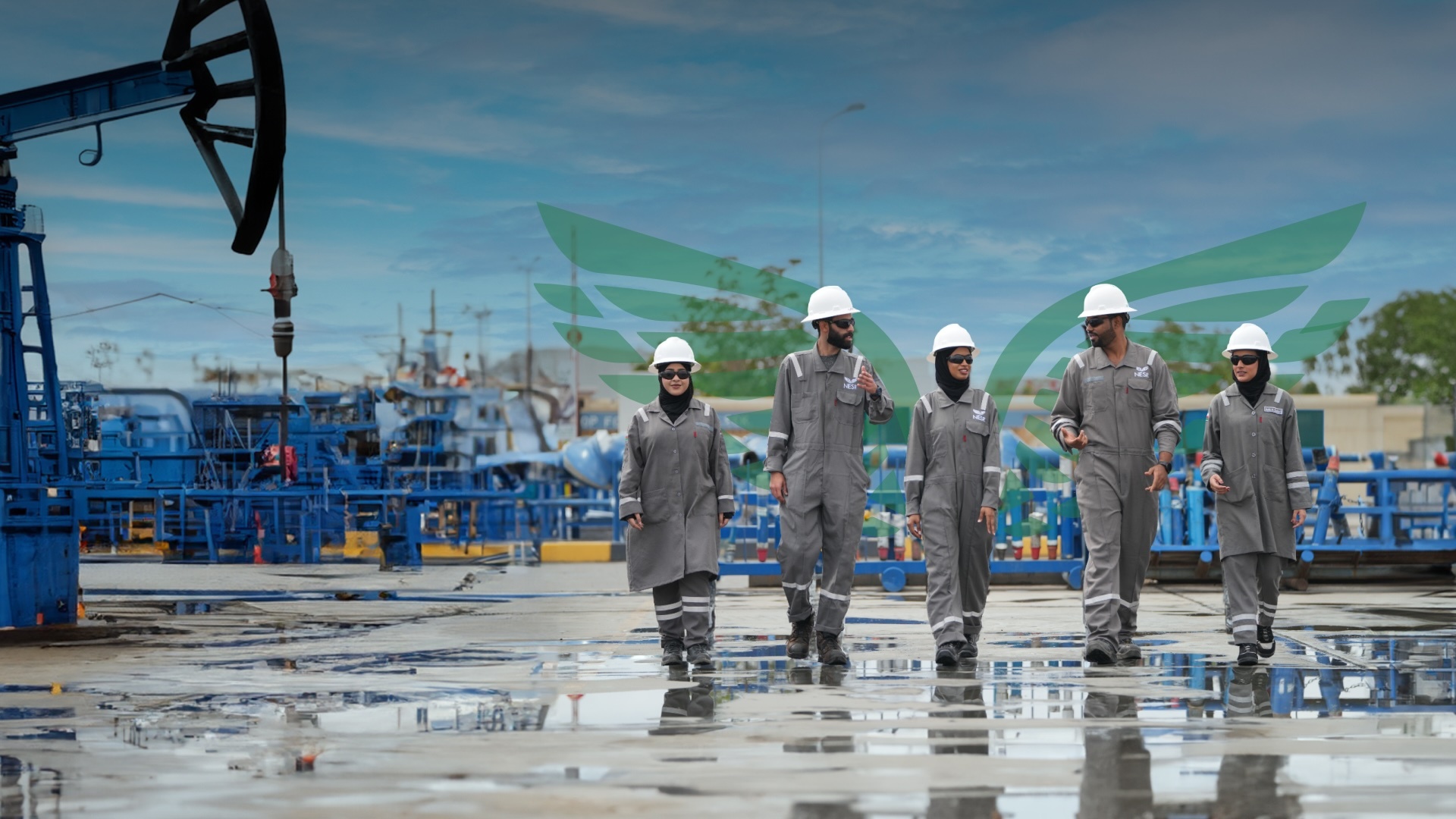
National Energy Services Reunited supplies the work that helps oil and gas operators reach reservoirs, understand them and keep production moving. Think cementing, hydraulic fracturing, coiled tubing, well testing and directional drilling. The customers are energy companies with complicated wells and expensive schedules. Aramco and Kuwait Oil Company are among the publicly named relationships. An operator might need a well evaluated, an existing well serviced or a treatment designed for a particular reservoir. NESR can supply several of those jobs through one regional service network. That breadth explains why its business resists a neat description as a single product. The product is a combination of equipment, technical judgment and people who can turn up and execute.
A company assembled, then built
Sherif Foda came to the problem from Schlumberger, where his career included senior production and regional leadership roles. In 2017, he started NESR as a special purpose acquisition company. At first, the enterprise was a vehicle for buying businesses. Its initial public offering raised $210 million before the partial exercise of an over-allotment option.
The operating foundation arrived through National Petroleum Services and Gulf Energy. Announced in November 2017 at an aggregate purchase price of approximately $1.1 billion, the combination closed in June 2018. NESR acquired an existing regional footprint rather than building every service organization from scratch. That distinction matters: equipment can be shipped. A functioning organization is harder to deliver in a crate.
NESR’s emphasis is the Middle East and North Africa. Its alternatives include global service providers such as SLB, Halliburton and Baker Hughes, alongside regional specialists. Its pitch combines local operating capacity with an open technology platform. The interesting competitive question is whether that combination solves a customer’s particular problem well enough to win the next job.
The laboratory needs a field crew
Consider NORI, the NESR Oilfield Research & Innovation Center in Dhahran Techno Valley, Saudi Arabia. Its remit includes reservoir development, fluid chemistry, decarbonization and operational intelligence. These are connected problems. A reservoir’s rock affects the treatment it needs; the treatment affects water use; operating data can help assess what happened.
“Open Platform for Innovation”
NORI’s description of its approach
The center’s collaborations include W. D. Von Gonten’s reservoir characterization expertise and Intelie’s operational intelligence capabilities. For a technology supplier, NESR offers a route toward regional applications. For an operator, it offers a service organization that can help adapt and deploy a solution. The value depends on the connection between the two working in practice.
Training belongs in this picture. NESR’s Global Wireline School opened in Saudi Arabia in October 2024; a Global Advanced Hydraulic Fracturing School followed in February 2025, developed with Aramco. Schools make the localization argument tangible. Someone must learn to operate the equipment, interpret the measurements and manage the job safely.
The business earns money through contracted services, related products and equipment rental. It needs customers to keep commissioning work and fleets to remain productive. Growth also consumes capital: NESR reported $143.5 million of capital expenditure in 2025. Local capability takes investment, even when the invention comes from a partner.
The expensive lesson in the ledger
The combination also exposed a serious organizational weakness. In 2022, NESR identified accounting errors and said its 2018-2020 annual financial statements should no longer be relied upon. The SEC later found systemic accounting and control deficiencies affecting liabilities, expenses and warrants. Restated results reduced previously reported net income.
Nasdaq delisted the securities in April 2023. In August 2024, NESR settled the SEC charges without admitting or denying the findings, agreeing to a $400,000 penalty and remediation undertakings, with another $1.2 million conditional on failing those undertakings. It returned to Nasdaq in October 2024.
The repair involved governance training, revised reporting lines, standardized controls and more accounting support. Management concluded that financial reporting controls were effective at December 31, 2025. For anyone copying the acquisition strategy, the lesson is practical: build the shared financial system alongside the operating network. Integration includes the ledger.
The next thing in the brine
NESR introduced the NEDA environmental and decarbonization brand in 2024, building on its earlier ESG Impact effort. The work includes produced-water treatment, flare and methane management, emissions detection and geothermal applications. These activities extend its access to field operations into the waste streams and resource problems those operations create.
In October 2026, that extension reached lithium. NESR announced an Aramco demonstration project using its LiThara platform, which combines brine pre-treatment, direct lithium extraction and carbonation. The agreement carries an approximately $200 million contract value over up to five years. It targets 2,000 tonnes annually of battery-grade lithium carbonate, with commissioning and production planned for late 2027.
Target lithium carbonate capacity.
Production planned for late 2027.
Those dates matter. The announcement describes an assignment and a target; it does not establish commercial output. Meanwhile, NESR’s existing business reported $520.8 million in second-quarter 2026 revenue, up 59.1% year over year. August’s Kuwait announcement added $300 million of five-year awards covering services and technology. The Kuwait package includes a Master Technology Agreement intended to bring the open platform into an in-country research hub, alongside intervention and surface well testing work. It is a useful illustration of the model: the same customer relationship can encompass routine field delivery and a path for introducing new tools. Contract value, of course, arrives over time; it is different from a quarter’s recognized revenue.
The transferable idea is to organize around a customer’s problem, test possible answers nearby and build the people who can deliver them. It requires patient capital, customer access and reliable execution. Spending cuts, idle equipment or technology that disappoints in the field can upset the economics. NESR’s next test is whether its regional network can make the next unfamiliar assignment feel familiar.