The electric pump was supposed to be the clever part. In 2019, ProPetro tested its DuraStim equipment at a customer wellsite. The pumps missed the manufacturer’s specifications and the company’s expectations. Improvements followed. The performance customers needed did not. By the second quarter of 2022, ProPetro recorded an impairment of approximately $57.5 million.
There is a useful place to begin a company profile: with the equipment that disappointed. ProPetro’s subsequent move into electricity looks different once you know that its first electric experiment came with an expensive correction.
- Complete the well: pumping, wireline, cementing and sand services.
- Electrify the equipment: FORCE fleets replace diesel-driven pumping with electric motors.
- Sell the power: PROPWR takes gas-fueled generation to customers beyond the wellsite.
The pump that missed the mark
ProPetro began in 2005, founded by Dale Redman and Jeffrey Smith. Its current company history dates the concentrated push into Permian Basin hydraulic fracturing to 2010. That geography matters. A service company working repeatedly in one producing region can organize equipment, maintenance and customer relationships around a relatively compact operating territory.
Hydraulic fracturing uses pressure to create pathways through which oil and gas can flow. ProPetro supplies the machinery and crews that perform that work. Its customers include large producers such as ExxonMobil, Occidental, EOG Resources and Permian Resources. These are industrial purchasing decisions, shaped by schedules, price and whether the equipment keeps working. A producer needs a contractor that can finish one stage, move to the next and keep the rest of the operation supplied. A cheaper pump is little comfort if the crew spends the afternoon waiting for it.
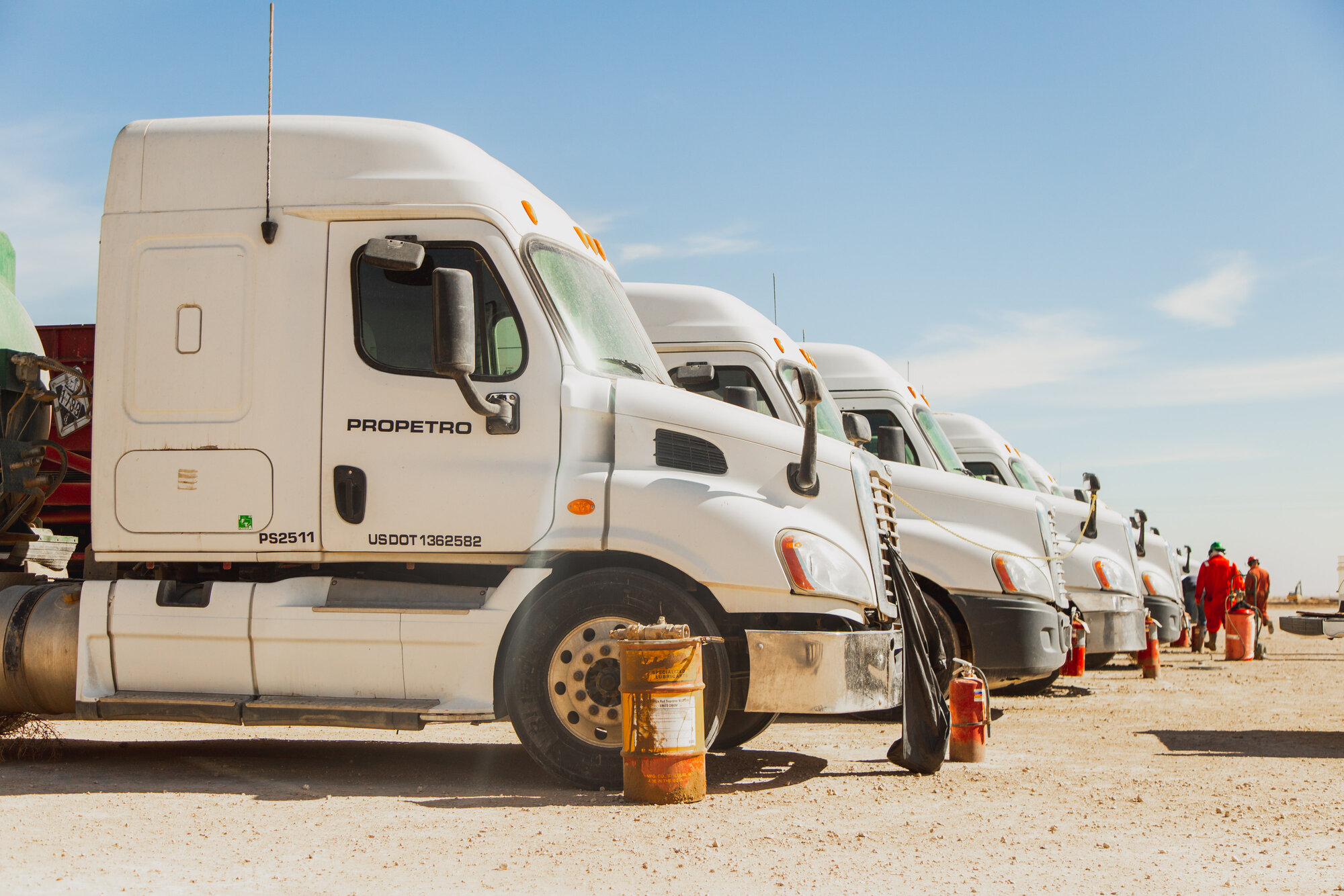
DuraStim ran into that last requirement. ProPetro’s 2022 filing describes tests in 2019, 2020 and 2021, followed by a decision against deploying the equipment in its existing form. Development costs, inflation and supply-chain problems added to the difficulties. The filing supplies the explanation; there is no need to invent a private change of heart.
“the timely commercialization of its DuraStim® assets ... is no longer reasonably certain”ProPetro’s second-quarter 2022 filing
Make the wellsite easier to run
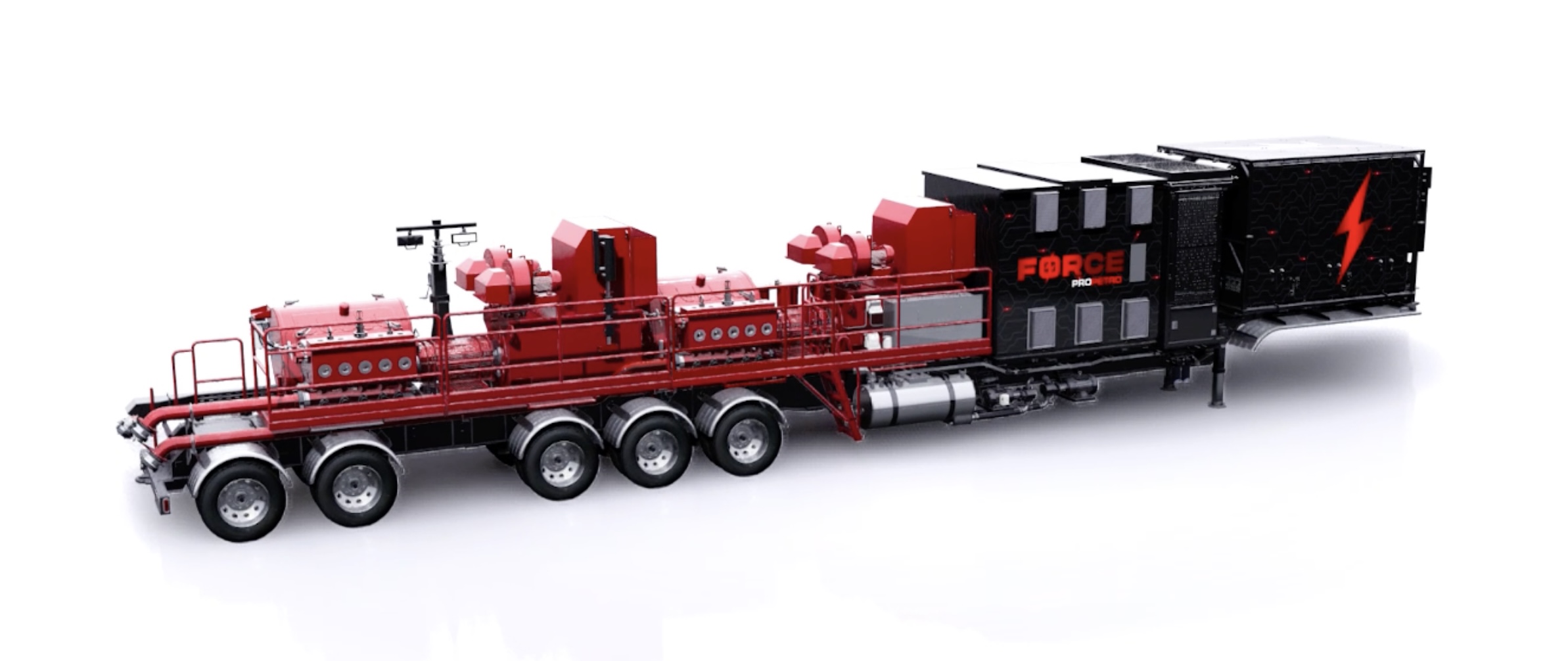
The later FORCE fleet kept electrification on the agenda. Its pump trailer carries two independently controlled 3,000-horsepower systems. The broader setup includes a blender, a data van and power-distribution equipment. The practical attraction is a different arrangement of motors, controls and maintenance requirements, with potential fuel and operating-cost benefits.
ProPetro also bought adjacent capabilities. The 2022 Silvertip transaction, announced at approximately $150 million, added wireline and pumpdown. Those services help position perforating equipment and prepare wells for fracturing. Aqua Prop, acquired in 2024 at an initially announced value of $35.6 million, added wet-sand handling and logistics. Cementing rounds out the completions offering.
The proposition is straightforward: let a producer buy more of the sequence from one supplier. ProPetro’s standardized equipment also aims to simplify repairs and reduce downtime. Its preferred culture, “Customer Focused. Team Driven.”, becomes meaningful when procurement, maintenance and field crews can actually coordinate a job.
Electric equipment alone does not establish a competitive moat. Liberty Energy and ProFrac market electric fracturing too; Liberty also operates a distributed-power business. ProPetro has to earn the work through execution, customer relationships and the economics of its service package.
The power supply becomes the product
An electric frac fleet introduces another purchasing question: where does its electricity come from? PROPWR, launched in late 2024, takes power generation itself to market. It uses natural-gas equipment to supply electricity behind the meter, at customer sites. Buyers include oil and gas operators, industrial facilities and data centers facing long waits for grid connections.
The power contracts can take several forms: a fixed monthly service charge, an energy-based arrangement, a power-purchase agreement or a capacity agreement. Customers are buying access to generation and its operation. They need not assemble the entire power business themselves.
By July 2026, ProPetro reported assets operating at a Midwest hyperscaler data-center site. In September, it announced approximately 230 megawatts of Targa contracts supporting Permian gas-processing infrastructure. Total PROPWR capacity committed under contract reached roughly 510 megawatts, after changes to earlier commitments. Full Targa deployment was expected in early 2028.
Approximately committed under contract
Contracted capacity includes future deployments. It is not a measure of operating capacity.The bill comes due in steel
This expansion requires machinery and financing. In April 2026, a Caterpillar framework committed PROPWR to at least 1.5 gigawatts of additional generation purchases, with options taking the increment to about 2.1 gigawatts. Those are future equipment commitments, not electricity already reaching customers.
For 2026, July guidance put PROPWR capital expenditures at $400 million to $450 million. ProPetro raised equity, arranged equipment financing and issued convertible notes. On the frac side, three-year FORCE leases deferred upfront spending; planned buyouts would move equipment into ownership. Financing changes when the cash leaves. It does not remove the bill.

Copy the discipline, then check the conditions
The transferable lesson is operational. Standardize equipment so repairs are easier. Test a promising technology against customer requirements. Bring related services together where coordination costs money. Match equipment commitments to credible demand. These practices are useful far beyond an oilfield.
Their success still depends on conditions. A fleet without work earns poorly. A generator needs fuel, permits and reliable operation. An available grid connection or customer-owned plant may offer better economics. Electric pumping also carries no automatic zero-carbon guarantee: the source of its electricity matters.
One final distinction: ProPetro Services, Inc. sits within listed parent ProPetro Holding Corp. Public financial results cover the consolidated group. The company that learned an expensive lesson about pumps now has operating power assets and larger promises to fulfill. Its next test is familiar: delivering what the customer contracted to receive.