An oil well can be almost finished and still have a very expensive problem. The equipment has travelled thousands of feet underground. The operator has paid for the work. Yet the tool may stop short of the place it needs to reach. For Legend Energy Services, those remaining feet were a reason to exist: a small distance, relative to the whole well, with consequences that were anything but small.
- Coiled tubing, pumping and field expertise for U.S. oil and gas operators.
- A $25 million equipment loan facility supported a 2017 expansion.
- Technical successes preceded asset sales and a 2021 Chapter 7 filing.
01 A business at the end of the pipe
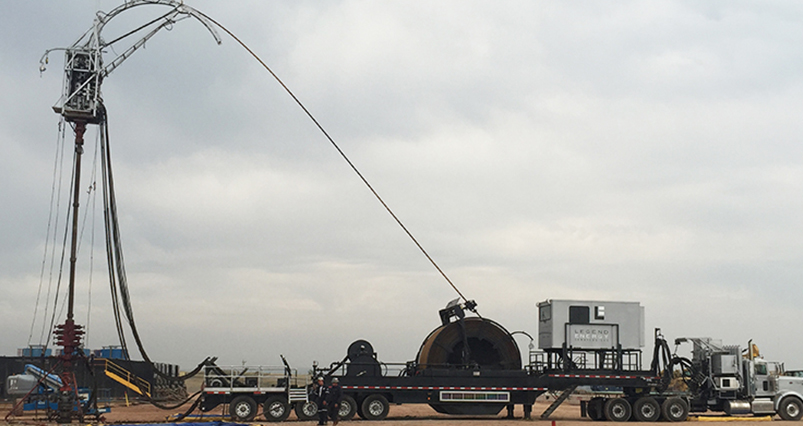
Founded in 2010, the Oklahoma City contractor worked in the practical middle of the shale business. Producers needed wells completed and existing wellbores serviced. Legend brought crews, coiled tubing, nitrogen pumping and fluid pumping equipment. Its historical network included locations in Texas, Oklahoma, Colorado and North Dakota. This was a business organised around getting equipment and experienced people to the places where operators were spending money.
Its public pitch paired large-diameter tubing and capable machinery with experienced specialists. That combination matters. A customer buying a field service is buying somebody’s judgment about how to use the equipment, as well as access to the equipment itself. The relevant comparison is another contractor’s ability to execute a particular job in a particular basin. A bigger fleet alone does not answer that question.
02 Two wells. One stubborn limit.
An undated Mountain Supply and Service case study describes the challenge. A Bakken operator was struggling to reach total depth. Legend’s simulation predicted that two wells could lock up before the end. The response combined its custom “Super String,” selected completion fluids and operational monitoring. Both wells reached their intended depths. The partners reported less job time and chemical consumption.
The same account offers a useful wrinkle: faulty pressure-gauge readings. The crews monitored wellhead pressure through communication with the flowback company. A successful operation could contain unreliable data. The sensible response was to find another way to check the condition.
The transferable idea is to model the constraint, coordinate the inputs and keep checking the measurements. A recipe that worked in these wells would still need checking against another well’s geometry, water and operating conditions. Two successful outcomes are evidence of a solution in context, not permission to stop asking questions.
03 The price of moving next door
In May 2017, Great American Capital Partners announced a $25 million delayed-draw senior secured term loan for Legend. The purpose was machinery and equipment, supporting expansion into pressure pumping. Chief executive Trey Ingram described the benefit as “additional financial flexibility as we expand into the pressure pumping market.” The language was measured. The commitment behind it was substantial.
“Additional financial flexibility as we expand into the pressure pumping market.”Trey Ingram · CEO · 2017
Pressure pumping was an adjacent service, but adjacency can be expensive. A July 2021 auction listing for Legend equipment advertised three 2018 frac pumps at original purchase prices of $1.4 million each. A hydration unit was listed with an original purchase price of $770,000. Those figures describe acquisition costs cited by the auctioneer, rather than auction proceeds. They give the expansion a physical scale: the growth plan arrived on heavy trailers.
There was logic in the supplier choice. NOV told investors in 2018 that Legend had standardised its coiled tubing equipment on NOV and returned to the same manufacturer for pressure pumping. Familiarity offered a way to extend an existing relationship into a new service. It also illustrates a distinction in the market: Legend operated the equipment; NOV supplied it.
04 The machine keeps sending bills
NOV’s presentation also explained the attraction of this market to a manufacturer. Pumping sand through steel under pressure creates wear and recurring demand for replacement parts. Read from a service contractor’s side, the same observation describes a continuing expense. Purchasing the machine is only the opening transaction. Keeping it available for paid work is the ongoing task.
Legend experimented with that second task. Puradyn’s 2018 quarterly filing reported that the company tested bypass filtration on pressure pumping equipment, then made it standard across its pressure pumping engine fleet within months. This is the supplier’s account of adoption. Its useful lesson is the sequence: try an operational change, examine the results, then extend it. Maintenance decisions deserve that discipline just as much as expansion decisions do.
Other public details complicate the picture of a company composed entirely of pumps. Texas Parks and Wildlife recognised Legend, represented by Ingram, among supporters of the Balmorhea pool restoration campaign in January 2019. The contractor belonged to a wider network of energy businesses and communities. Its work had a location, and so did its relationships.
05 The cycle reaches the company
The later record changes the meaning of the earlier optimism. A securities filing describing former board chair Bryan Begley’s history says Legend worked with its secured lender to sell assets following an industry downturn. On October 26, 2021, it filed a voluntary Chapter 7 petition in the Eastern District of Texas. Equipment and expertise had not insulated the company from the market around it.
Employees experienced the ending differently from equipment buyers. Former workers brought claims alleging inadequate notice of 2021 mass layoffs. Some assets went to Grappler Pressure Pumping. In February 2025, the Fifth Circuit affirmed dismissal of successor-liability claims against Grappler on the facts presented. The decision did not establish a universal rule about every asset buyer or resolve every question about Legend’s conduct.
Legend’s history leaves two questions worth keeping separate when evaluating any contractor: can its people solve the job, and can its business sustain the commitment? The first calls for field evidence. The second calls for attention to financing, maintenance and demand. Getting the last few hundred feet right can be valuable. The company still has to make the rest of the arithmetic work.