An oil well has an awkward retirement plan. Even after the useful production has gone, there is work to do, equipment to manage and a bill to settle. Mike Jardon had spent much of his working life helping the industry at the other end of that story. By 2017, the Expro chief executive was making a case for paying closer attention to the ending.
He had been working in the industry for 25 years, largely around exploration and appraisal. Now he was writing about abandonment and decommissioning. The shift was practical: older fields needed attention, and the expertise accumulated in opening wells could also help close them. There was an engineer's appeal to the reversal. The last chapter deserved as much thought as the first.
That wider view offers a useful way into Jardon's career. Based in Greater Houston, he runs a company whose work extends across a well's life. His own years at Expro have included a financial restructuring, a merger and successive acquisitions. Keeping the machinery working has repeatedly required changing the business around it.
A career with several kinds of pressure
Jardon studied mechanical engineering and mathematics at Colorado School of Mines. His working geography soon extended well beyond Colorado. From 1992 to 2008, he held roles at Schlumberger in wireline, completions, well testing and subsea operations, with assignments across North America, South America and the Middle East.
These are businesses where the detail matters. Testing establishes how a well behaves; completions prepare it for production; subsea work puts equipment and operations beneath the sea. Jardon's responsibilities eventually included well testing and subsea activities across both American continents. He then spent three years as Vallourec's president for North America, with commercial, research and development, sales and strategy responsibilities.
Expro brought him in as chief operating officer in 2011. Five years later, he succeeded Charles Woodburn as CEO. The appointment was announced in February 2016 and took effect in April. Chairman Sir George Buckley praised his contribution to operations and his knowledge of the business. The promotion came after years inside the organization, with its strengths and complications already familiar.
Technical and leadership roles
Chief operating officer
Chief executive officer
President, CEO and director
In February 2026, Jardon referred to having lived and worked in Venezuela earlier in his career. He connected that experience to the country’s geological, reservoir and production challenges. The remark supplied a concrete location inside the broader list of international assignments. It also showed how an early posting could remain useful decades later, when investors asked about the company’s prospects in a particular market.
There is a difference between being handed an organization chart and having spent five years finding out where its lines become tangled. Jardon's succession gave Expro continuity at the top. It also left him responsible for making choices through a difficult industry cycle, when saving money immediately could damage the ability to do the next job.
The wedding and the restructuring
In a 2017 interview, Jardon described an effort to bring a more consistent operating model to a business that had historically been decentralized. A shared language did not automatically mean a shared way of working. He also argued for protecting employees with scarce technical skills, rather than cutting so deeply that the company would have to chase the same expertise when activity recovered.
Asked about navigating a change in ownership, he added that his daughter had married during the same period. His verdict on managing both occasions was dryly cheerful.
“I'm very proud that I successfully navigated both.”
Mike Jardon, 2017
The following year brought a larger financial reset. In January 2018, a court confirmed Expro's prepackaged Chapter 11 reorganization plan. It converted approximately $1.4 billion of secured debt into equity and provided for a $200 million equity rights offering. Those figures describe the company's restructuring, rather than a personal financial achievement.
By February, Expro had emerged from the process. Its roughly 600 employees in northeast Scotland remained in place. Jardon said the company had worked to prevent disruption to employees, customers and suppliers. For an operating business, that continuity was consequential: a revised capital structure still needed people who knew how to deliver the work.
The contrast between those two kinds of responsibility is striking. A debt agreement can change on a closing date. Technical experience takes years to accumulate. Jardon's public comments put the two on the same page: financial repair had to leave an organization capable of earning its way forward. The wedding joke supplied a brief release from the balance-sheet vocabulary.
Giving the well a longer biography
In his 2017 writing on decommissioning, Jardon made another distinction with commercial consequences. An operator needed the lowest overall cost of abandoning a well; selecting the cheapest individual service could be a poor route to that result. He called for cooperation among suppliers and more flexible arrangements with clients.
He also offered a pleasingly unfashionable example. On one low-pressure project, Expro had brought older tools back into use because they suited the application. The point was the fit between equipment and task. Novelty could wait its turn.
“Ultimately, it is about using the appropriate technology that is best suited to the project.”
Mike Jardon, 2017
That argument helps explain why a business serving wells can keep finding work after the excitement of discovery has passed. Production needs monitoring. Existing assets need intervention. Eventually, abandonment needs planning. Jardon's interest in that sequence expanded the frame around the exploration and appraisal work that had occupied much of his career.
- 01ExploreTest and appraise
- 02BuildConstruct and complete
- 03ProduceMonitor and intervene
- 04ClosePlug and abandon
Two companies, one longer job
In March 2021, Expro and Frank's International announced plans to combine. Their specialisms were complementary: Expro brought well access and flow expertise, while Frank's brought drilling and completions capabilities. The proposed ownership split was approximately 65 percent for Expro shareholders and 35 percent for Frank's shareholders.
The merger completed in October. Jardon became president, CEO and an executive director of the combined company, while Frank's former CEO Mike Kearney became chairman. The business took the Expro name and established its operational headquarters in Houston, retaining an operating presence in places including Lafayette and Aberdeen.
The transaction made the full-well-life idea more tangible. More stages could sit within one service portfolio. It also changed the setting for Jardon's leadership: the combined business was publicly traded, with investors able to follow its performance under the XPRO ticker.
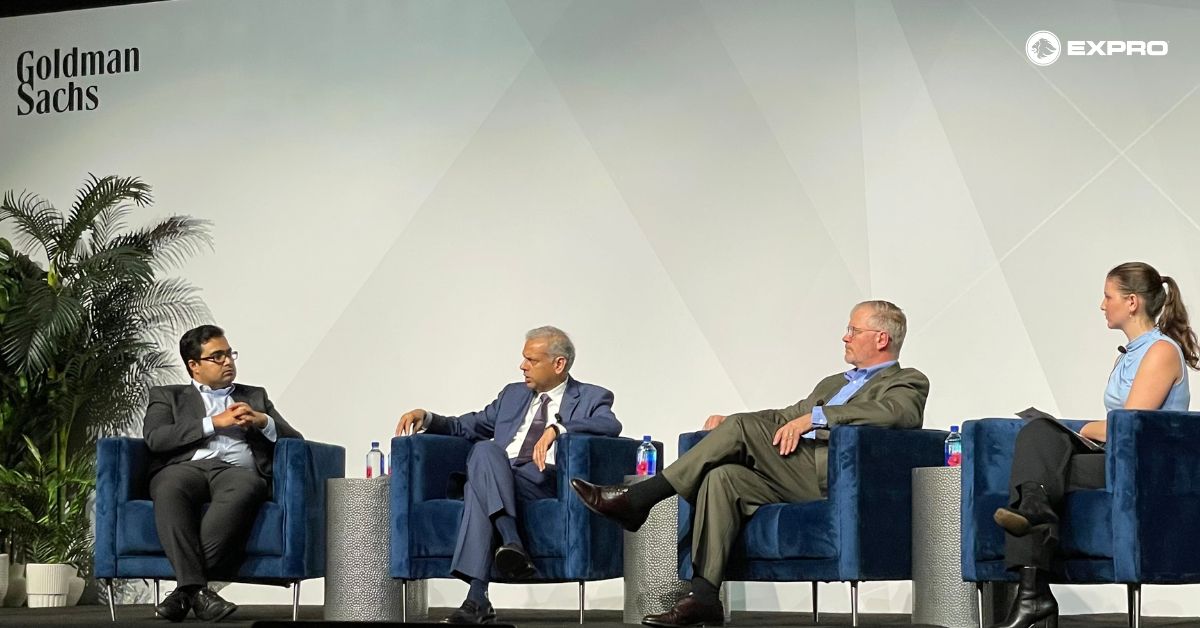
At a Goldman Sachs energy conference, Jardon joined other executives to discuss differentiation through specialized services. That is a useful description of the competitive question he faces. Customers have specific problems in particular wells. A larger portfolio earns its keep when those individual capabilities make a job easier to execute.
Buying a place earlier in the plan
Expro's acquisition of Aberdeen-based Coretrax, completed in May 2024 with an effective closing date of May 1, added drilling tools, wellbore cleanup, well integrity and production optimization capabilities. Jardon described the opportunity as taking those technologies through Expro's existing international footprint.
The deal followed a recognizable logic: combine a specialist's equipment and expertise with a wider route to customers. Coretrax's John Fraser and his colleagues joined a business already working across multiple well services. Whether such combinations deliver their promise depends on the work that follows the announcement: making the additional capability useful in the field.
In July 2026, Expro completed another acquisition, Norway-based Enhanced Drilling, for approximately two billion Norwegian kroner in cash. It added managed pressure drilling and riserless mud recovery. The company said these capabilities would allow earlier participation in well construction design and planning, especially where complex formations make conventional approaches less effective.
Earlier involvement is a meaningful ambition. A supplier brought in while a well is being designed has a different opportunity from one called only after a problem appears. Jardon linked the acquisition to efficiency, risk management and greater certainty in delivery. Expansion into additional regions remained an objective, with execution still ahead.
The next well, and the one left behind
The figures beside that strategy resist a frictionless growth story. Expro reported second-quarter 2026 revenue of $393 million and net income of $2 million. Adjusted EBITDA was $76 million, and adjusted free cash flow was $56 million. The adjusted measures are separate from reported net income and operating cash flow.
EXPRO · THREE MONTHS ENDED JUNE 30, 2026
Adjusted free cash flow is a company-defined non-GAAP measure.
Jardon said disruption in the Middle East had lasted longer than anticipated. Alongside that near-term difficulty, he pointed to offshore activity and demand for technology that could improve customers' efficiency. His task involved working on what the business could control while acknowledging conditions it could not schedule.
During the July earnings discussion, Jardon also reached for a baseball comparison, describing an ability to work from either side of the plate. Expro could work directly for customers or provide services through other suppliers, depending on the project. He framed adaptability as a requirement for a smaller business competing with larger providers. It was a conversational way to describe a serious constraint: the company had to make its technology useful through more than one commercial route.
Meanwhile, the ending of the well's story kept producing work. In August 2026, Expro announced a North Sea abandonment contract covering six firm wells and six optional wells. Its subsea safety system would support the campaign. The old assets that Jardon had urged the industry to take seriously in 2017 were still part of the commercial picture.
His career now connects those two ends: equipment that helps shape a new well and services that help retire an old one. Between them sit decades of operating experience, difficult financial choices and an expanding collection of technical capabilities. An oil well may stop producing. It is considerably less obliging about becoming somebody else's problem.
Keep reading, above ground
Explore Jardon’s work, the company’s news and its technical films.
- Mike Jardon on LinkedIn
- Expro executive biography
- Jardon on decommissioning
- The 2017 interview
- Enhanced Drilling acquisition
- Q2 2026 results
- Expro videos on YouTube
- Expro news and blog
Company channels: LinkedIn · X · Instagram · Facebook · Website