In 1921, Lloyd Noble bought a drilling rig with a $15,000 loan his mother co-signed. The equipment was tangible. The harder purchase was a future: customers willing to put that equipment to work. More than a century later, Noble Corporation operates offshore, its machines vastly more elaborate. Yet its business still turns on the same question. Who needs this rig next?
- The product: offshore rigs, crews and drilling expertise, usually sold by the day.
- The buyers: oil and gas producers including ExxonMobil, Shell, BP and TotalEnergies.
- The catch: a capable rig needs paid work. Backlog helps, but does not guarantee cash.
The day is the product
Noble occupies a particular place in the petroleum business. Producers decide where to explore and develop fields. Noble supplies the mobile drilling units and operating expertise that help them build wells. Its fleet includes drillships, semisubmersibles and jackups. The choice depends on water depth, weather, well requirements and availability. A machine suited to one assignment may be a poor fit for another.
The commercial unit is usually a day. Customers negotiate contracts for a period or a set of wells, with possible payments for mobilization and performance. Equipment breakdowns and other interruptions can mean reduced compensation or none. That makes reliability a saleable capability. A producer is buying machinery, but also a crew’s ability to execute an expensive plan.
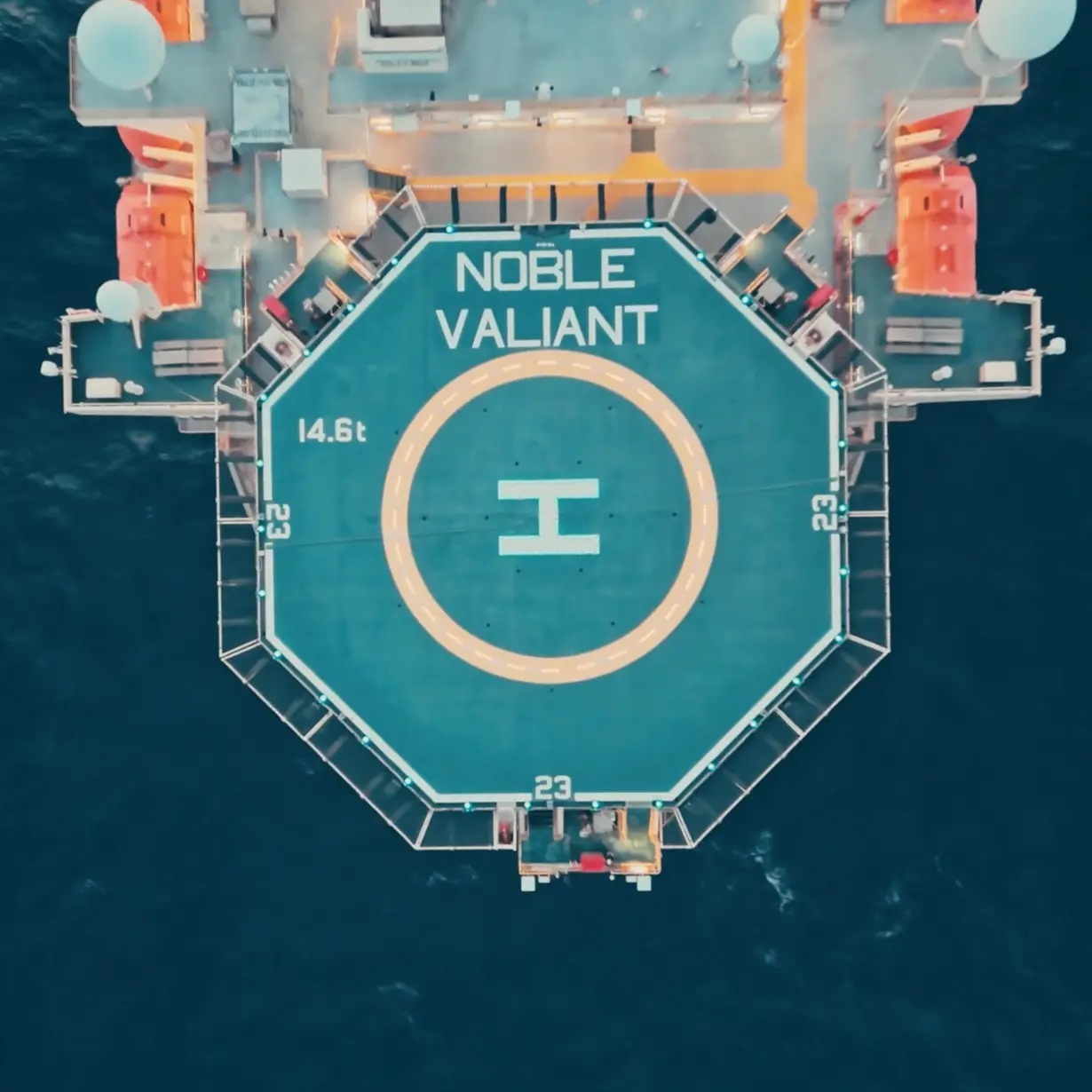
For an energy company, the practical benefit is access to drilling capacity without building and operating its own fleet. For everyone else, Noble offers a lesson in industrial economics: machinery earns its keep through the work it can actually secure. Its reported operating revenue was approximately $3.286 billion in 2025. That scale does not remove the scheduling problem.
The balance sheet went first
In July 2020, Legacy Noble and certain subsidiaries filed for Chapter 11 protection. The failure was financial: the corporate structure needed a restructuring. When the business emerged in February 2021, it had less than $400 million of debt and approximately $600 million of liquidity. Its old ordinary shares were cancelled. Former bondholders received shares in the new parent.
Survival therefore meant different things depending on where you sat. The drilling operation continued; the old equity did not. This distinction matters whenever a corporate comeback is presented as an uncomplicated happy ending. Equipment, customer relationships and employees can carry on through a process that changes who owns the business.
Buying the fleet, selling the edges
Noble subsequently expanded through combinations. Maersk Drilling joined in October 2022. Two days later, Noble completed a $375 million sale of five jackups to Shelf Drilling as part of that combination. Expansion had a regulatory price: some equipment, staff and supporting infrastructure had to leave the enlarged business.
Diamond Offshore followed in September 2024, adding approximately $2 billion of backlog. The acquisition’s accounting consideration was about $1.5 billion, including roughly $610 million in cash and $880 million in noncash consideration. Noble also assumed $550 million of Diamond debt. Those figures describe different pieces of the transaction; treating them as interchangeable would hide what the expansion required.
Rounded acquisition-accounting figures. Assumed debt is separate from consideration.
The fleet also keeps shrinking at the edges. In January 2026, Noble completed the sale of five jackups to Borr Drilling for $360 million. These moves reveal the direction of management’s choices: assemble drilling capability through acquisitions, then release capital from selected assets. They do not prove that every rig retained will stay busy.
Against alternatives such as Transocean, Valaris and Seadrill, Noble’s proposition rests on fleet specifications, availability, operating performance and customer relationships. There is no universal winner across every well. The interesting comparison begins with a producer’s actual drilling program, rather than a contractor’s total rig count.
The crew has to remember
Some of Noble’s most revealing equipment sits onshore. Its NobleAdvances facility has seven interconnected simulator environments and has trained more than 8,000 professionals since 2013, according to the company. Employees and customers can rehearse drilling, well control and marine operations. The purpose is practical: let people encounter demanding situations before the live operation.
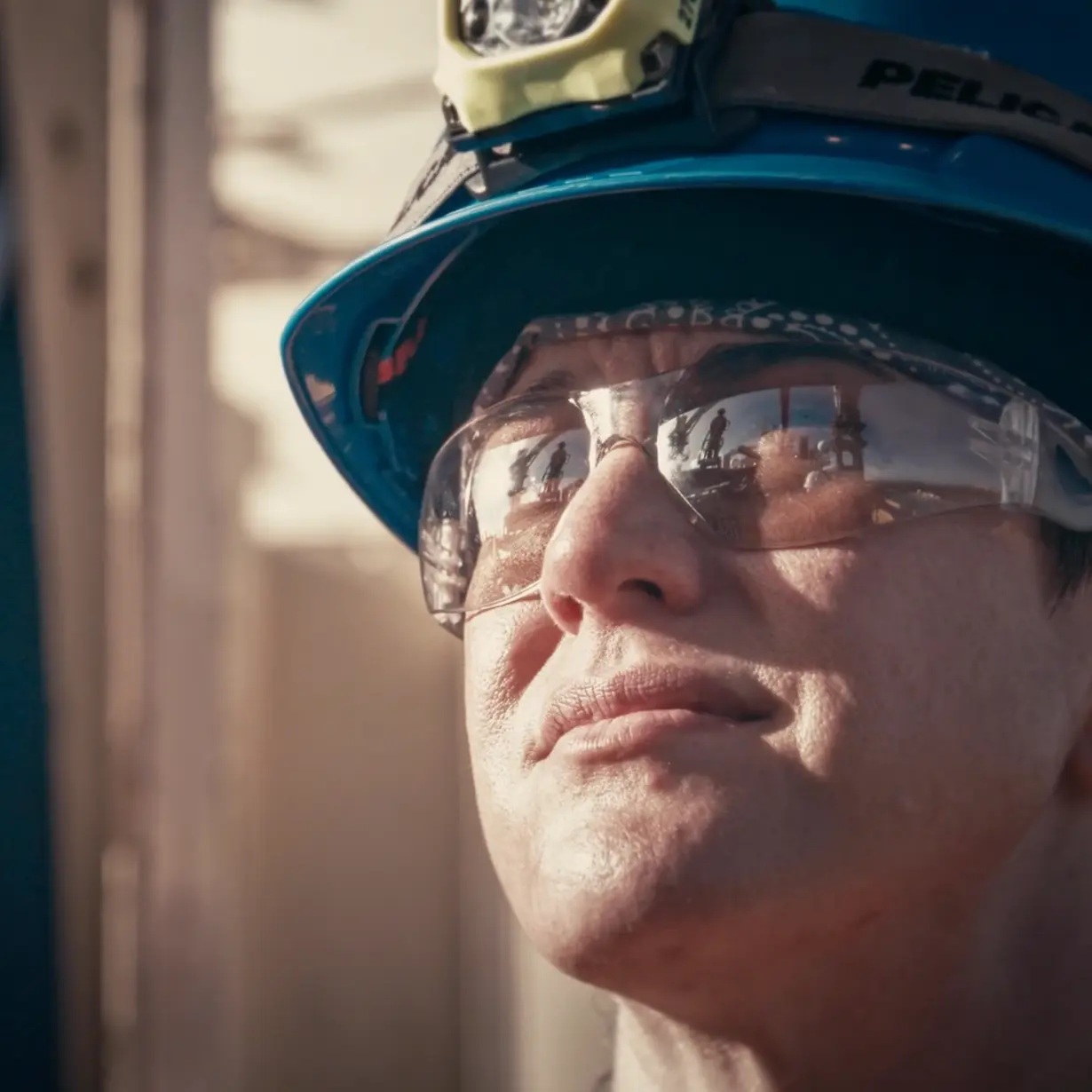
Then there is NORMS, Noble’s Houston operations support center. It runs around the clock and supports planning for nine types of critical operations. A crew may perform a particular significant task only a few times a year. Across the fleet, similar tasks happen weekly. NORMS gathers those lessons so another crew can use them.
“Drilling to power the world responsibly.”
Noble’s stated mission
This is the part a reader can copy without owning a drillship. Identify the tasks that are consequential but infrequent for any one team. Gather experience across teams, then bring it into planning before the next attempt. Noble’s system depends on experienced operators, current information and crews willing to use support. A dashboard alone cannot supply those conditions.
The next job matters
Long relationships provide another way to manage uncertainty. Noble’s ExxonMobil agreement covers four Guyana rigs, with current terms extending into February 2029. Its structure includes periodic market-based rate resets and performance incentives. The arrangement combines continuity with repricing, rather than assuming a long contract must freeze every commercial term.
The constraints remain visible. In the second quarter of 2026, suspensions affecting two Brazil rigs reduced contract drilling revenue by approximately $43 million. Noble reported a $37 million quarterly net loss and lowered its full-year outlook. Its $6.8 billion July backlog represented contracted future work, subject to execution and contractual conditions.
September brought another assignment: Tullow contracted Noble Faye Kozack for up to ten wells offshore Ghana, expected to begin around mid-2027. One rig, another place on the calendar. A century after the first loan, that remains the business: securing the next job, preparing the crew, and making the working days count.