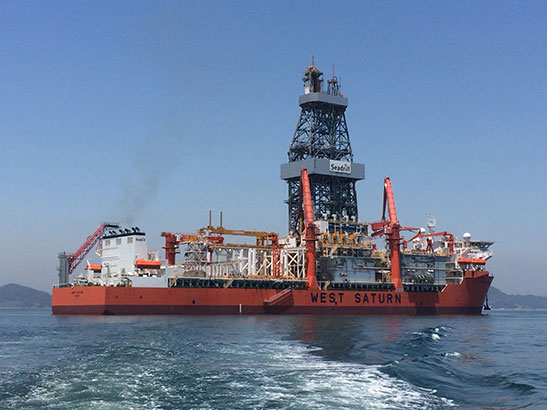
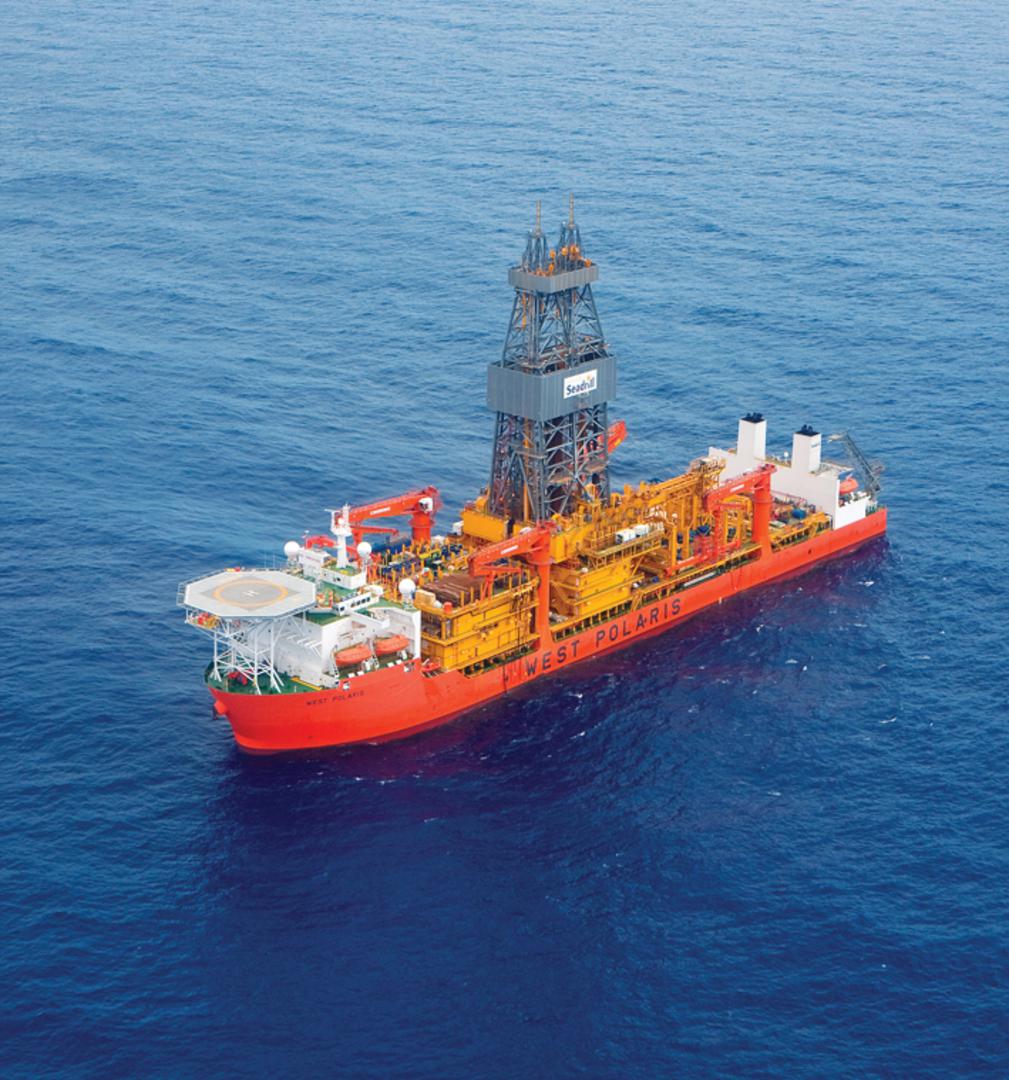
Consider the West Saturn. From a distance, the Seadrill drillship looks like an industrial neighborhood that has wandered out to sea: cranes, pipes, a tall derrick, an orange hull. The machinery attracts the eye. But the more revealing thing about this business is invisible. It is the clock. Offshore, a lost hour can be an expensive event.
- Rigs, crews and drilling expertise, sold by the day.
- Two bankruptcies made capital discipline a central issue.
- Integrated pressure control is a practical point of difference.
Seadrill owns and operates drilling rigs for oil and gas companies. Its customers bring the reservoirs and development plans; Seadrill brings the vessel, drilling equipment and people who operate it. Contracts typically pay a daily rate. The commercial challenge is to turn a complicated machine, working far from shore, into dependable days of work.
The distinction matters. Seadrill occupies the service layer between an oil company’s investment decision and the execution of a well. Buyers include national oil companies, integrated producers and independents. Fleet disclosures name Petrobras, Equinor and LLOG among customers. These organizations buy access to specialized equipment and crews without having to build and operate an equivalent drilling fleet themselves.
A fleet can float. A balance sheet can sink.
John Fredriksen established Seadrill in 2005. Expansion followed through acquisitions and newbuild orders. The underlying wager was understandable: deepwater exploration would need sophisticated rigs, and owning them would command attractive rates. The awkward part was timing. A rig ordered during enthusiasm can arrive in a market that has lost its appetite.
The oil-price collapse beginning in 2014 cut demand for rigs. Seadrill entered Chapter 11 in September 2017 with debt and liabilities exceeding $10 billion. The first thing to break was the financial arrangement around the fleet. Expensive equipment and drilling expertise could not make customers spend on projects they had postponed.
The company emerged in July 2018 after a restructuring that supplied more than $1 billion of new capital. It filed again in February 2021. That second process converted approximately $4.9 billion of secured bank debt into equity and raised $350 million in new financing. The reset was costly for shareholders: legacy holders were left with just 0.25% of the successor’s equity.
By February 2022, Seadrill was out of court protection again. Management’s stated priorities included “disciplined capital investment, cost containment, and contract risk management.” Read those words against the history and they acquire weight. Two restructurings supplied a fairly persuasive reason to reconsider how much financial pressure a fleet could carry.
A rig ordered during enthusiasm can arrive in a market that has lost its appetite.
THE TIMING PROBLEM
The pressure problem you can actually engineer
There is another pressure Seadrill can influence more directly. Managed pressure drilling, or MPD, gives crews finer control over pressure in the well. Too little pressure can allow formation fluids into the wellbore; too much can force drilling fluid into the rock. The useful operating window can be narrow. Better control helps crews navigate it.
Seadrill says it has drilled more than 100 MPD wells and has nine rigs equipped for MPD. With Oil States, it has introduced an Integrated Riser Joint designed to simplify deployment. The company reports a reduction of more than 50% in rig-up time for that component. This is a company-reported comparison, rather than a promise that every well will finish twice as fast.
The interesting move is organizational. Seadrill combines the equipment with its own trained crews and an in-house MPD program at its Dubai academy. Instead of treating pressure control as an isolated attachment, it is building it into rig operations. For a customer, the potential benefit is fewer awkward handoffs between equipment, installation and the people responsible for using it.
The same logic runs through its published safety approach. Seadrill uses simulation to rehearse incidents and emphasizes communication alongside technical skills. It also investigates near misses and checks the barriers intended to prevent accidents. For customers choosing an offshore contractor, those routines deserve attention alongside the visible hardware. A new component still needs people who understand its limits and know how to respond when conditions change.
That gives Seadrill a concrete way to compete with contractors such as Transocean, Noble and Valaris. A modern drillship alone is an incomplete argument. The stronger sales pitch connects the rig’s capabilities to a particular well, then shows that the crew can execute the program. Price still matters. So do location, availability, maintenance and safety.
Influx riskCONTROLLED
Operating windowTOO MUCH
Fluid-loss risk
MPD helps crews control pressure inside the well. Conceptual diagram, not to scale.
The portfolio gets a sharper outline
The financial reset did not end dealmaking. Seadrill completed its Aquadrill acquisition in April 2023, following an agreement that valued Aquadrill’s equity at approximately $958 million. The announced transaction used shares as its currency. In 2024, Seadrill sold three Qatar jackups and its related joint-venture stake for $338 million. Together, the moves fit a more focused deepwater portfolio.
The economics remain demanding. In 2025, Seadrill reported $1.437 billion in revenue and a $77 million net loss. Revenue alone therefore tells an incomplete story about whether those busy machines are producing a satisfactory financial result. Repairs, depreciation, financing and preparation for the next contract all have claims on the money.
Conditions improved in the second quarter of 2026: revenue reached $449 million and net income was $29 million. Economic utilization was 95.5%, a measure of dayrate revenue earned against the contractual opportunity, rather than simply the percentage of rigs working. Samir Ali, appointed CEO in March, inherited a business whose results still depend on converting contracted time into paid performance.
Different measures, same year. Busy rigs do not automatically mean net profit.
What an 880-day booking really buys
In October 2026, West Carina won an Indonesian program with an estimated firm duration of 880 days and an approximately $420 million contract value, including mobilization and excluding additional services. Malaysia and Angola extensions added visibility elsewhere. Seadrill said more than 85% of available 2027 drillship days were contracted. Those bookings offer planning room; they are future work to execute.
For a buyer, the practical next step is to match a well program with a rig’s technical specification, location and contract window. For another business, the useful lesson is smaller: integrate a recurring operational bottleneck with the team accountable for the outcome, and fund the asset for a bad market as well as a good one.
There are limits. MPD cannot rescue an uneconomic reservoir, and long contracts cannot remove equipment failures, customer disputes or political risk. Seadrill gives every employee authority to stop work they believe is unsafe. That detail belongs beside the dayrate. In a business paid by the day, knowing when to stop is part of knowing how to operate.
Go aboard
Explore the fleet and watch MPD in action.