In 2011, Liberty Resources had a problem that would sound familiar to anyone who has waited for a plumber. It needed somebody to show up. According to the producer’s account, none of the pumping companies working in the Bakken would give it a frac date. So it founded Liberty Oilfield Services. Before the electric pumps and data-center agreements, there was a calendar with no room on it.
- Liberty sells the equipment, crews, and expertise that help producers complete wells.
- It has brought sand logistics and gas fueling inside the business to control more of the job.
- Its next market is data-center power, where announced capacity still has to become working infrastructure.
The first shortage was a date
That origin offers a useful way to read the company. Liberty’s customer is buying progress: a well brought closer to production, a crew that keeps pumping, fewer hours spent waiting. The pump matters. So does everything capable of stopping it.
Founded by Chris Wright, Liberty grew into a completion-services provider working across the United States and Canada. It supplies hydraulic fracturing, which pumps fluid and proppant into rock, and wireline perforating, which opens pathways through the well casing. Its engineering work includes fracture design and production analysis. The customer wants better well economics; Liberty has to coordinate the machinery and the people that make those economics possible.
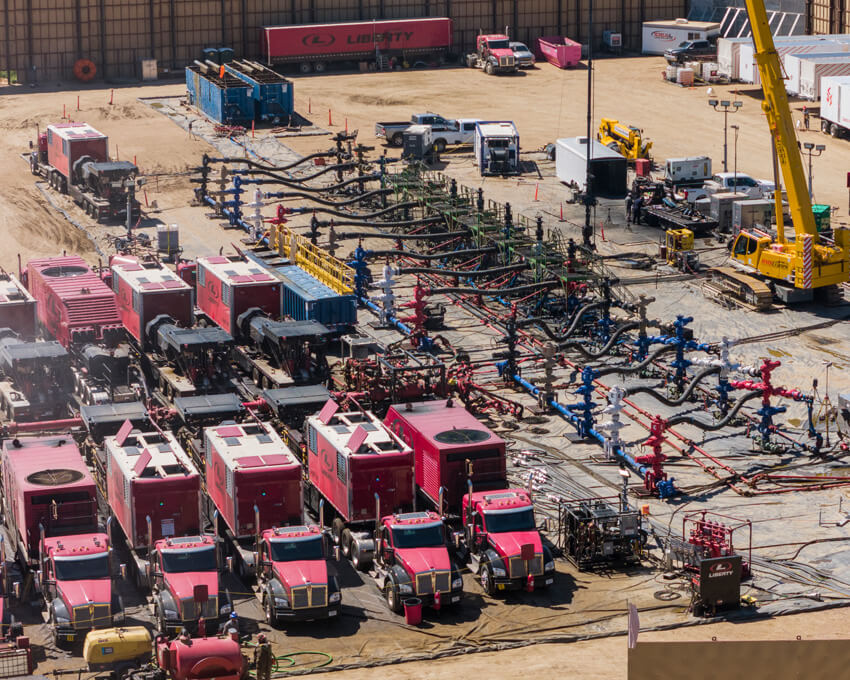
A better pump needs a whole system
In July 2021, Liberty announced a revealingly modest test. After three years of internal research and development, its digiFrac electric pump worked on a three-well pad in West Texas. It supplied just 10% of the pumping capacity. The interesting result was control: operators could make rate adjustments in increments of 0.1 barrel per minute.
“The digiFrac pump quickly became the control center of location.”
Jesse Dees · Liberty service leader · 2021
Today, digiFrac can use grid electricity or on-site generation. digiPrime takes another route, using natural gas mechanical drive, with hybrid configurations. digiPower provides modular generation and distribution; digiWire brings electric capability to wireline. An electric pump does not automatically mean renewable electricity. Liberty’s system frequently makes its electricity from natural gas.
The same attention reaches an unglamorous ingredient: sand. Proppant keeps fractures open. Through PropX, Liberty handles it in containers and moves damp sand without first drying it. Removing that step can remove fuel consumption and transport work. Suitable deposits must be close enough to the operation; geography gets a vote. Freedom Proppant supplies sand from Liberty-owned Permian mines.
A view of the operating system, rather than a literal process sequence.
The price of taking responsibility
Owning more of that system costs money. Liberty announced the PropX purchase in 2021 at approximately $90 million in cash and equity. Subsequent filings recorded roughly $103 million of consideration using acquisition-date share values. Those figures describe different valuations of the transaction. In 2023, Liberty paid $78 million cash for Siren, adding gas compression and delivery as it launched Liberty Power Innovations.
Scale also came through equity. Schlumberger contributed its North American OneStim business at the end of 2020 for a 37% interest in the combined company. Pumping, perforating, and Permian sand operations arrived together. Liberty’s competitive argument against Halliburton, Patterson-UTI, ProFrac, and regional rivals rests on execution and the cost of the whole operation.
Annual revenue, rounded. Net income fell from $316 million to $148 million over the same period.
The financial record supplies some welcome friction. In 2025, revenue fell 7%; adjusted EBITDA, a non-GAAP measure, fell 31%. Better equipment cannot make customers’ budgets irrelevant. In February 2025, Ron Gusek succeeded Wright as CEO when the founder became U.S. energy secretary. Gusek inherited the engineering program and its exposure to the oilfield cycle.
Keeping experienced people is part of the system, too. Liberty lists adoption and fertility assistance among its benefits, alongside technical training and rotational field schedules. These are concrete choices in a business that asks employees to work around heavy equipment, away from ordinary office routines. A new pump still needs someone who understands what it is doing.
The server room meets the engine room
The next application is a customer with a different product and a familiar need. Data centers require dependable electricity. Liberty Power Innovations offers generation, fueling, and continuing operations. Its proposition is to take responsibility for power over time, including owning and operating generation under long-term service arrangements.
In January 2026, Liberty and Vantage announced a partnership targeting up to one gigawatt of power agreements over five years. In May, Bergen Engines announced an order for 45 gas generator sets totaling more than 500 megawatts. Piller stabilization technology addresses abrupt changes in computing demand. The problem has moved from controlling fluid flow to keeping electrical supply steady.
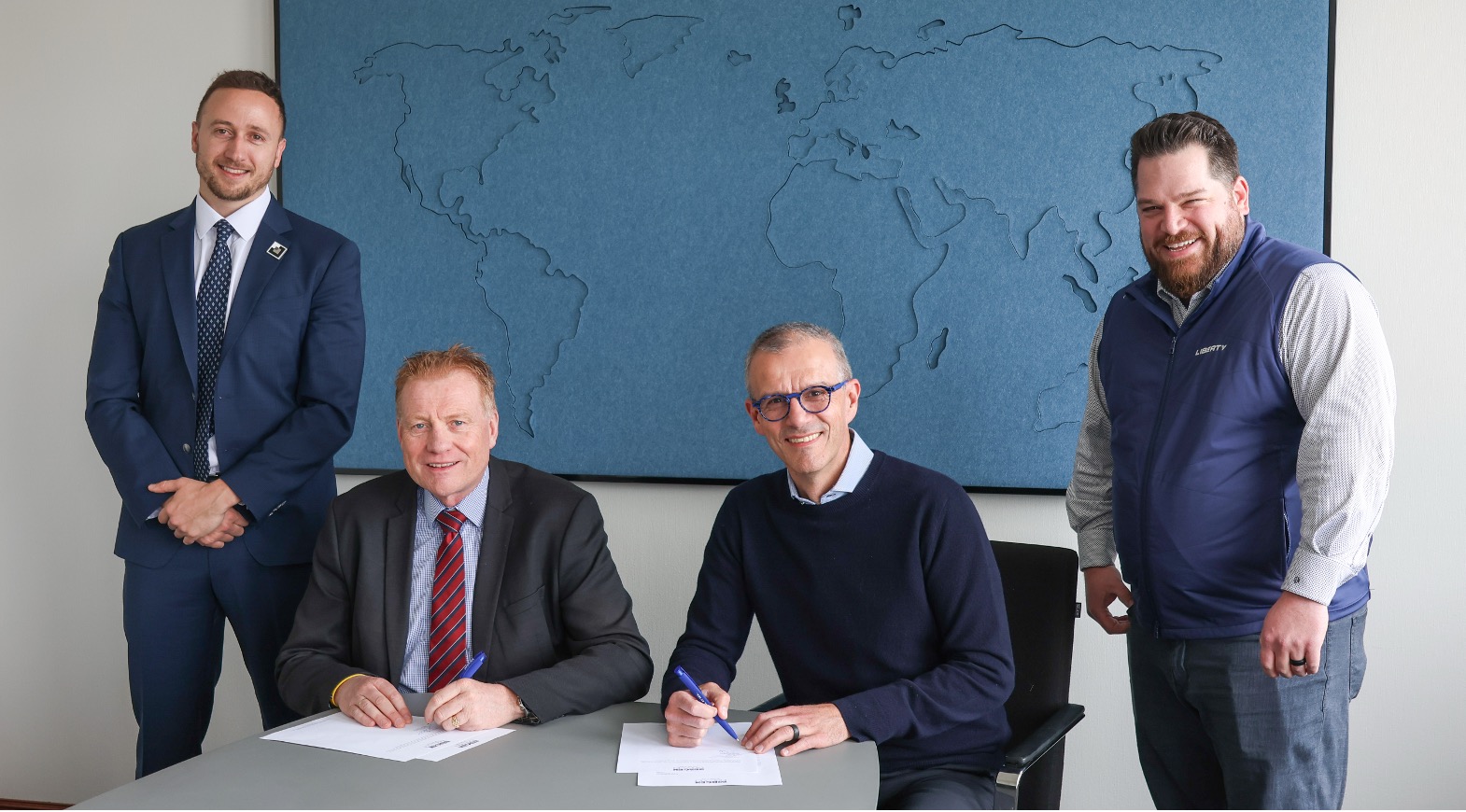
July brought a planned infrastructure alliance with SLB and a PowerBridge venture focused on a proposed West Texas campus. In October, Liberty announced a 1.2-gigawatt development agreement with an unnamed frontier AI lab and infrastructure platform. The first roughly 500-megawatt energy service contract was targeted for December 2026. Planned energization runs from late 2027 into early 2029. A development agreement is a step toward power delivery, with work still ahead.
Copy the question before the machinery
The transferable lesson is a question: which outside dependency keeps interrupting the customer’s work? Liberty repeatedly answers with equipment, logistics, or ownership. Another business might answer with a better supplier agreement. The useful habit is measuring the complete job.
For a prospective customer, the useful comparison starts with delivered cost and operating responsibility. Who supplies the gas? Who maintains the generator? What happens when demand changes? Who carries the equipment investment while the site ramps up? Those questions connect the frac business to the power business more clearly than the word diversification. They also give a buyer something specific to ask of competing bids.
The limits are equally practical. Gas supply, fuel prices, permits, construction, and utilization affect the return. A dependable grid connection may give a customer a different answer. Liberty’s opportunity depends on making industrial coordination pay in another market. Its first customer needed a date. Its newest ones need a credible date when the power comes on.