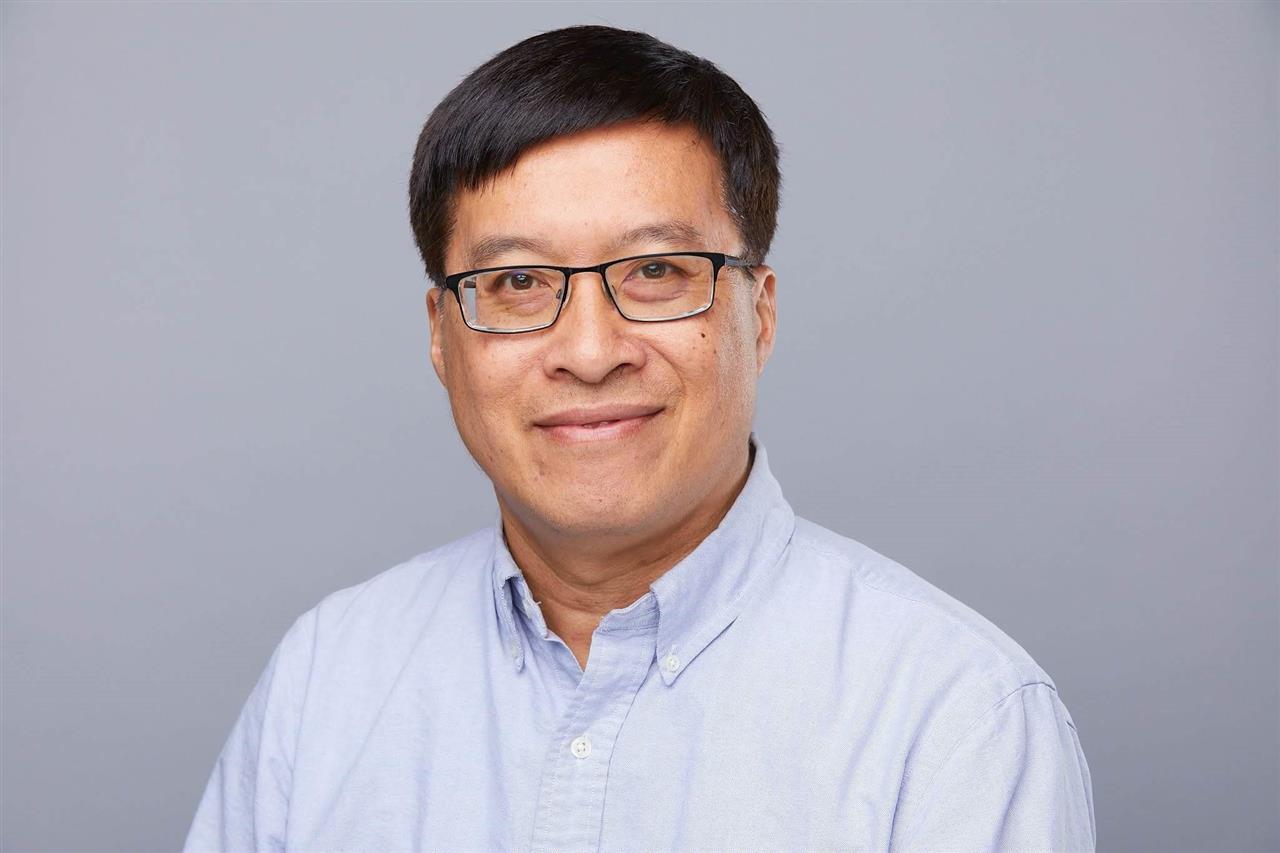
Siyad Ma has spent much of his career around machines that are supposed to move things quickly. The revealing question is what happens when they stop. A processor may have plenty of arithmetic available and still sit waiting for the next piece of data. There is something faintly comic about buying all that computational muscle and then making it stand in a queue.
Ma’s work follows that queue. Before becoming CEO and co-founder of Expedera, he worked on custom chips and networking systems. His public invention record reaches from a network-switch buffer to memory access in neural-network processors. The applications changed. Moving information efficiently remained a problem worth returning to.
That continuity gives his career its shape. AI can sound like a sudden arrival, complete with a new vocabulary and an invitation to forget everything that came before. Ma arrived carrying experience from the machinery underneath networks. At Expedera, that background became part of a different way to organize computation.
A career spent minding the traffic
Ma holds a doctorate in electrical engineering from Stanford. His engineering history includes AMD, Chameleon, Zettacom and Spanslogic, followed by work leading ASIC and intellectual-property teams at Cisco. An ASIC is a chip designed for a particular job; IP is a design that another company can incorporate into its own silicon. Both demand attention to constraints that a software demonstration can politely postpone.
At Cisco, his remit included Algorithmic TCAM work for product families including Nexus 7000, MDS and Catalyst systems. These are the sorts of names that rarely enter a dinner conversation unless the dinner has gone quite badly. They belong to a world where throughput, memory and the reliable handling of traffic matter enormously.
One earlier invention offers a concrete glimpse of that world. Ma is a co-inventor, with Toan D. Tran and Robert J. Divivier, of a buffer manager for a network-switch port. Granted in 2003 and assigned to Zettacom, the patent concerns the handling of cells stored in buffer memory. Its mechanism changes the order of pointers so the stored cells can be read more efficiently.
In ordinary language, the work concerns how to serve waiting traffic without wasting the memory system’s time. There is no need to imagine a dramatic conversion from that problem to AI. A career can advance through a series of increasingly demanding versions of a question someone already understands.
Three colleagues, one persistent bottleneck
Expedera began in 2018 with three engineers who had worked together at Cisco: Ma, Da Chuang and Sharad Chole. Their starting point was a recurring suspicion that deep learning had something in common with networking. The useful similarity lay in the movement of information and the resources left waiting when that movement fell behind.
The founders examined training and inference workloads. They kept encountering the bandwidth between memory and computation. More processing capacity could not make that constraint disappear. They wanted to keep the available engines occupied within the bandwidth a system could actually supply.
The route from that idea to a product involved repeated design work and a test chip manufactured on TSMC’s 7nm process. In 2021, the team completed its silicon characterization. Expedera emerged from stealth that April. For a company selling a processor design, working silicon gives the conversation a useful change of venue: the argument has to leave the presentation and enter the laboratory.
The resulting business sells semiconductor intellectual property. Its customers license an NPU, or neural processing unit, and the supporting software for integration into their own chips. Much of Ma’s work therefore reaches the world inside somebody else’s product. The arrangement gives engineering an unusually discreet form of success: the user can enjoy the result without ever learning the supplier’s name.
By May 2024, Expedera said its IP had reached more than ten million devices. That month it announced a $20 million Series B led by indie Semiconductor. Including the conversion of an earlier SAFE note, the company put its cumulative funding above $47 million. The money was intended to advance its products and services and expand its engineering presence internationally.
Those figures describe a company moving beyond the founding experiment. They also help explain the setting for Ma’s next role. A processor architecture needs customers, integration work and continuing development. Once it has shipped, the interesting problems have acquired deadlines and other people’s expectations.
A larger job, familiar constraints
On September 16, 2024, Ma became CEO. He had previously been vice president of engineering, leading the team that developed Expedera’s packet-based NPU architecture and software stack. Chuang, the founding CEO, moved to executive chairman, taking responsibility for long-term planning and major corporate initiatives.
The handoff kept both founders involved while changing their responsibilities. Ma’s public response credited Chuang’s guidance and looked toward customers increasing production in smartphones, automotive systems and data centers. The announcement framed the appointment around expansion and innovation. The underlying transition was concrete: the engineering leader would now lead the company delivering the engineering.
“I am honored and excited to lead the next phase of Expedera as CEO.”
Siyad Ma · September 2024
The less glamorous side of that larger job appeared the following April. Expedera announced ISO 9001:2015 certification of its quality-management system for NPU IP design and development, verified by SGS Taiwan. The scope included its Santa Clara headquarters and Taipei engineering offices. Ma connected the milestone to the needs of customers across automotive, consumer and data-center markets.
A quality system does not offer much material for a triumphant product photograph. It does address a practical question: can the organization repeat its work consistently as more customers depend on it? For an engineering founder becoming CEO, that question sits close to the original task. Reliability has to extend beyond the circuit into the way the company operates.
The memory problem grows up
Ma’s technical work continued to appear in the invention record. A patent granted in June 2024 names him alongside Shang-Tse Chuang and Sharad Chole on methods for accessing external memory in a neural-network processing system. The problem described is straightforward: specialized matrix processors need data supplied efficiently, or their capacity goes unused.
The design describes coordinating computation and memory access, retaining reusable information locally and finding useful work when a particular operation must wait. A processor can work on another layer or network if the necessary data for its current task has not arrived. The conceptual appeal is easy to grasp even when the implementation is demanding. Waiting should not automatically become the whole machine’s occupation.
In May 2025, Expedera launched Origin Evolution, extending its approach to large language models alongside convolutional and recurrent neural networks. The architecture breaks networks into executable fragments and directs them through specialized processing blocks. The company described feed-forward, attention and vector blocks, supported by software for importing and deploying trained models.
The new workload made the familiar constraints more pressing. Models had to fit within budgets for memory, power, area and response time. Expedera reported more than a 75 percent reduction in external memory moves for Llama 3.2 1B and Qwen2 1.5B against the alternative solutions in its comparison. That is a workload-specific company claim, rather than a universal measurement of every possible application.
Fewer external memory moves reported by Expedera for two named language models.
Llama 3.2 1B and Qwen2 1.5B · company comparisonThe distinction matters to the story. Ma’s field is full of attractive maximums; a buyer needs to know what happens on a particular model inside a particular system. The useful unit of ambition is a product that can do its job within its limits.
Composure, in six words
A different view of Ma appeared in March 2026. Ramteja Tadishetti, reflecting publicly on his Expedera experience, described work that resembled a musical jam session: ideas were aired, challenged and carried into execution. He recalled building blocks and tools, working through customer evaluations and delivering with limited resources. His acknowledgments singled out different qualities in colleagues.
For Ma, the phrase was “Composure to handle things smoothly.” It is a modest observation, tied to one person’s experience, and more revealing for its specificity. It gives a human scale to years otherwise recorded through product names, patents and appointments. Somebody remembered how the work felt in Ma’s company.
The following month, Origin Evolution received the Edge AI and Vision Product of the Year award in the Edge AI Processor IP category. It was recognition for the company’s product, with its combination of specialized hardware and a jointly developed software stack. By then Ma’s responsibilities encompassed both the original engineering effort and the organization taking it to customers.
His career offers an appealingly practical picture of technical ambition. Look closely at the work already being done. Notice what prevents it from moving. Give the available resources something useful to do. The AI industry has ample vocabulary for speed; Ma’s story keeps returning to the quieter business of making the waiting shorter.