In January 2015, Mike Noonen offered an unusually vivid description of venture capital’s relationship with chip companies. “Sand Hill Road treats silicon startups like plutonium,” he told Semiconductor Engineering. Consider the predicament. An entrepreneur could have a clever design, an experienced team, and a promising market. Before proving much of anything, the company still needed expensive tools and access to manufacturing. The bill arrived before the evidence.
- A 24-month accelerator built around semiconductor development.
- Industry partners contribute design tools, IP, and prototyping resources.
- Investment is a separate decision. Admission is no promise of a check.
Silicon Catalyst grew out of that mismatch. Its founders, Rick Lazansky, Dan Armbrust, and Noonen, organized an incubator around reducing the cost of reaching a credible technical milestone. The idea had a pleasing practicality: persuade the companies that already owned the necessary infrastructure to help startups use it. A young business might then have something more persuasive to show an investor than another slide.
01 / The expensive part comes early
These were founders who knew the industrial plumbing. Armbrust had led SEMATECH. Noonen had been an executive at GlobalFoundries. Lazansky had founded Denali Software. In early reporting, Synopsys, TSMC, and Keysight were already part of the coalition. Their presence mattered because they could supply things an ordinary mentor could only recommend buying.
The distinction is concrete. Electronic design automation software helps engineers develop and check a chip. Intellectual property can supply a reusable building block. A process design kit connects design work to a manufacturing process. Prototyping, packaging, and testing turn a design into something that can be examined. Silicon Catalyst connects admitted companies to partners across these steps. It does not operate a factory of its own.
Resource categories, not a fixed development schedule.
MathWorks offers a useful example. Its modeling and simulation tools let startups explore algorithms and system behavior before the physical chip is ready. Its account of the partnership describes software access and engineering support. That is a specific kind of help: making experiments possible earlier, when changing the design is still a decision someone can make on a screen.
The bill arrived before the evidence.
The problem Silicon Catalyst set out to solve
02 / Twenty-four months. Many small doors.
The accelerator’s main program runs for 24 months, with a Silicon Catalyst partner working closely with each company. The customers are semiconductor and related hardtech startups, spanning chips, chiplets, materials, photonics, sensors, and more. Portfolio names include optical-connectivity company Ayar Labs and on-device AI specialist Quadric. They sell into different problems; both belong to an industry where reaching a working product requires specialized support. Their needs vary. A materials company and an AI processor designer may both require patient support, but they should not be handed identical homework.
The curriculum reflects that variety. Alongside chip development are intellectual property, team building, market opportunity, cash flow, and new-product introduction. CEOs move through material according to their needs. The company’s published curriculum explicitly favors this approach over putting everyone through the same short course. Technical talent gets attention; so does the awkward business of persuading someone to buy.

Getting in involves several doors. The application process starts with review and a conversation, moves into diligence, then technical prescreening and a larger screening event. Its criteria include coachability, customer traction, a realistic financial plan, and a need for the network’s resources. That last requirement is revealing. Even an interesting company can be a poor match for a particular kind of help.
03 / A network has its own economics
The global incubator takes equity in portfolio companies. Richard Curtin, a managing partner, explained that arrangement in a 2020 interview with EE Power. The commercial logic is that helping a company become valuable can eventually make that stake valuable. For founders, the comparison is therefore between ownership surrendered and the useful resources, judgment, and connections received.
Keep the currencies straight. Silicon Catalyst reports more than $150 million in cumulative in-kind goods and services. Those benefits can replace expenses, but they cannot be spent on payroll. Investor introductions are another category. The organization works with more than 500 investors; an introduction still leaves a financing decision to be made.
Company-reported value. Not cash investment.
In June 2024, affiliated Silicon Catalyst Ventures publicly announced plans to deploy $10 million to $20 million that year through its first series. The release said eight investments had already been completed. This added a dedicated source of early capital alongside the incubator and the separate angel organization. It did not turn admission into an automatic investment.
The funding arrangements also change by geography. Britain’s original ChipStart pilot had a £1.3 million government budget. ChipStart EU advertises public funding, no participation cost, and no equity requirement, with its own eligibility rules. These are distinct offers. A founder should compare the actual local program terms before deciding what participation costs.
04 / When the suppliers started calling
The early obstacle was getting the network built. A 2022 Silicon Catalyst newsletter recalled approaching potential partners and nearly begging for assistance. By then, it said, public companies were approaching Silicon Catalyst to join. That reversal helps explain what the organization had accumulated: a place where established suppliers could encounter young companies worth their attention.
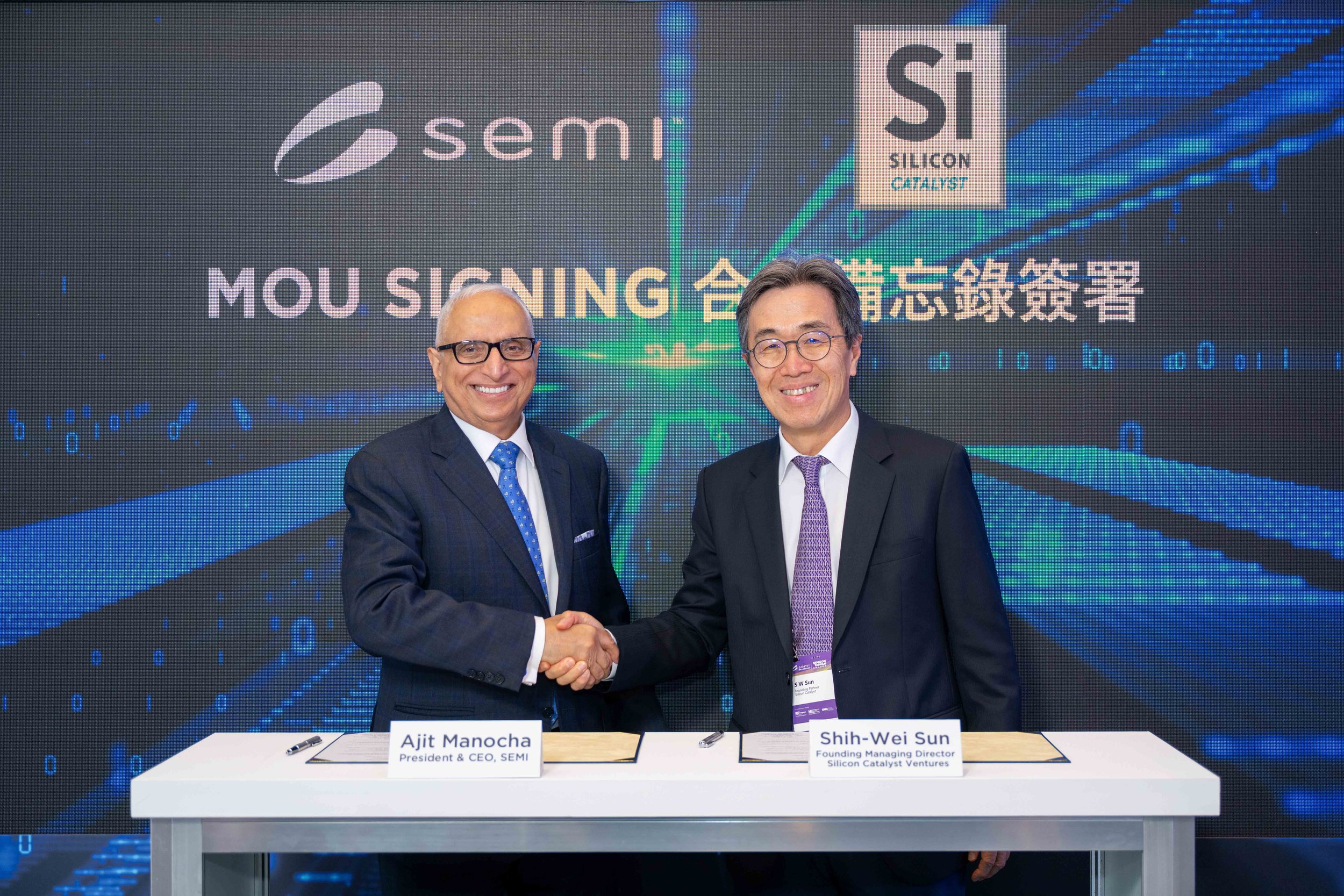
In September 2026, that network gained another connection through an agreement with SEMI. The organizations outlined startup activities at SEMICON exhibitions, investor engagement, and technology showcases. Silicon Catalyst now reports more than 150 companies admitted worldwide. The scale is useful context, although admissions alone cannot tell a founder what will happen to their own company.
There are alternatives, including imec.istart, university commercialization programs, and specialist investors. Silicon Catalyst’s particular proposition is the concentration of semiconductor resources around a company’s development. The lesson other founders can copy is to identify which expensive dependency blocks the next proof point, then find a partner with a reason to remove it.
That approach needs a product people want and a team willing to listen. Subsidized tools cannot create demand, and introductions cannot make an unworkable design work. Silicon Catalyst’s admissions criteria acknowledge those conditions. The practical achievement is giving a promising team a better chance to reach the moment when its chip can speak for itself.