Lunch is a surprisingly difficult engineering problem. A robot handling food must cope with ingredients that arrive wet, sticky, irregular and inconveniently different from the last batch. The internet offers plenty of pictures of dinner. It offers much less of the information a machine needs to pick dinner up.
Chef Robotics, a company backed by MFV Partners, describes this as an AI cold-start problem. Restaurants would demand considerable flexibility before a robot became useful. Yet building that flexibility required data from robots already working. Chef chose high-mix food production, where automating part of a process could create value while generating the data to improve.
- MFV funds early-stage companies built around difficult engineering.
- Its bets connect AI and computing to factories, energy systems and other physical industries.
- The useful lesson: choose a first job the technology can do before asking it to do everything.
That little loop between usefulness and learning is a good way into MFV. The firm supplies venture capital to people whose products must eventually survive a much less forgiving examination than a slide presentation: a working day.
An investor who can read the experiment
Karthee Madasamy founded MFV in 2018. His background includes electrical engineering, semiconductor and wireless startups, and 11 years at Qualcomm Ventures. In an interview with The Sure Shot Entrepreneur, he argues that investors must recognize technical progress even when a milestone has yet to produce customers or revenue.
This is a particular kind of expertise. An engineering result can remove an enormous obstacle without looking impressive on a conventional sales dashboard. Someone needs to understand what was uncertain yesterday, what the experiment established today, and which expensive uncertainty remains.
“Will the underlying physics or engineering work at all?”
Karthee Madasamy · MFV’s origin story, September 2026
In his account of MFV’s beginnings, Madasamy identifies an opening between technically ambitious founders and investors who lacked the tools to assess them. The firm’s position rests on making those judgments early. That is also the demanding part of the proposition: specialist confidence still has to be earned by evidence.

Four ways into the physical world
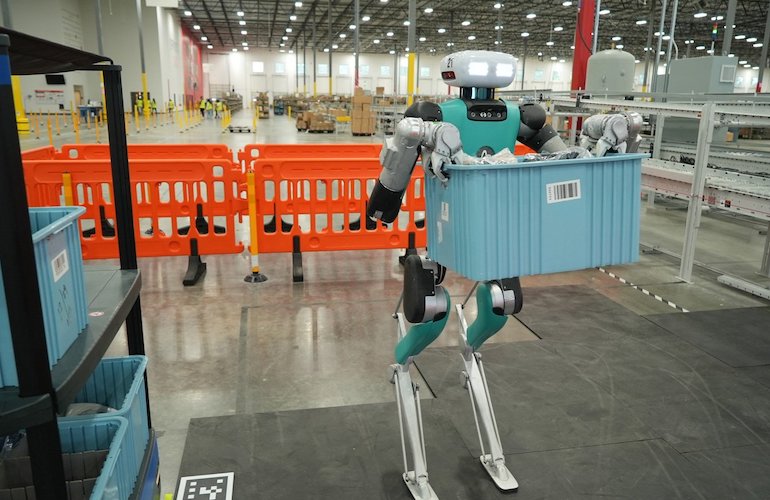
MFV’s current focus spans physical AI, next-generation computing, energy and semiconductors. The portfolio makes the categories tangible. Agility Robotics builds humanoids. PsiQuantum pursues quantum computers. Conifer develops electric powertrains. OpenInfer works on running AI inference efficiently at the edge.
Conifer is an instructive example. Its April 2025 announcement described a motor architecture using widely available ferrite magnets, reducing dependence on rare-earth materials. The company raised $20 million to commercialize its powertrains and manufacturing approach. MFV was among the investors.
The appeal reaches beyond a clever component. Materials affect supply chains; manufacturing affects price; price affects which customers can electrify equipment. MFV occupies the early-stage specialist part of the venture market, where understanding these connections is part of deciding whether a young company deserves capital.
OpenInfer adds another wrinkle: deep tech can include software. MFV’s investment case emphasizes local inference for applications where latency, privacy, connectivity and cost matter. The unifying interest is a technical advantage that changes what an industry can practically do.
The money has different jobs
MFV’s business is investing, with founders on one side and the investors supplying fund capital on the other. It seeks returns through stakes in young companies. A factory buying automation is a portfolio company’s customer; it is not buying a product from MFV.
Several eye-catching amounts sit around this story, and they describe different things. Chef’s March 2025 financing combined equity with equipment debt. Conifer’s $20 million was a startup seed round. Harper Court Ventures’ $25 million was the announced size of an investment fund independently managed by MFV.
Harper Court Ventures Fund I
Capital for investing in startups
Volt Harbor seed round · May 2026
Startup financing led by MFV
Volt Harbor illustrates the next step. The company’s May 2026 release says its MFV-led seed financing will help move modular energy storage from pilot projects toward commercial deployment. A successful experiment and a repeatable commercial operation require different kinds of work. Capital has to support the passage between them.
For a founder, that distinction changes the pitch. A useful financing plan connects the next technical milestone to the next commercial decision. What will the money establish? Who will care when it does? For a potential customer, the equivalent questions concern reliability, installation and support. An improvement inside a machine has to make sense outside it.
A shorter walk from lab to company
Harper Court brings that passage closer to a research institution. Launched in May 2025, it has a formal cooperation agreement with the University of Chicago and works with the Polsky Center to identify promising ventures. Its initial investments included Flow Medical, SimCare AI and Beacon.
The arrangement gives researchers and university-connected founders a route to an investor already interested in technical uncertainty. It also gives MFV access to young companies before their commercial shape is settled. The partnership connects scientific work, company formation and financing at an unusually early point.
By October 2026, Thrixel’s public press page named both MFV and Harper Court among the backers of its $3 million inception financing. The company turns computer-graphics research into structured, editable 3D assets. The university connection is producing concrete investments.
Start with one useful task
Founders can borrow a practical question from this portfolio: where can the present version create value? Buyers can ask its companion: what must the surrounding operation change to make that value real?
Madasamy’s writing on humanoids recommends beginning with a single cell or line and paying attention to integration and maintenance. The logic depends on a bounded task, a workable deployment and a customer willing to participate. Without those conditions, a promising pilot may offer little evidence about a wider rollout. Lunch, it turns out, is a useful test.