A parcel is an awkward little test of intelligence. It might be a box, a padded envelope or a soft bag. Someone has to identify it, lift it and send it to the right place. Do that once and you have a demonstration. Do it through a holiday shipping rush and you might have a business. Bow Capital has invested in precisely that distinction.
- Bow connects university discoveries with venture capital and commercial experience.
- Its current investment thesis centers on AI working in the physical world.
- Ambi Robotics supplies a useful case: research, financing, deployment, then expansion.
The firm occupies a particular patch of venture capital: the journey between scientific capability and something a customer will pay to use. The startup founders it backs raise money; its limited partners supply the capital. Warehouse operators and manufacturers sit further down the chain, buying the products those startups build. Keeping those roles straight makes Bow easier to understand.
A university with a cheque book
In December 2015, the University of California announced a $250 million commitment to a venture fund led by Vivek Ranadivé. He had founded TIBCO and become the owner of the Sacramento Kings. Software, basketball and academic research made an unusual calling card. The institution had discoveries; he brought experience building companies and a network beyond campus.
Bow was founded in 2016. UC’s Regents later recorded an initial $100 million investment that July. The distinction matters: a commitment is money promised to a fund, with capital supplied over time. Neither figure is Bow’s sales revenue. The firm invests through private venture vehicles, seeking investment returns from the companies it backs.
UC’s own discussions distinguish venture investing from the earlier work of funding proof of concept. A university affiliation does not turn a laboratory project into an investable company. Bow’s territory includes founders with a commercial proposition, and its investments extend beyond UC-affiliated startups. The research connection helps with discovery and evaluation; customers still have to want the result.
“Do people love your product?”
A question in Bow’s early investment material
An early Bow handout called the firm a “venture bus,” borrowing the computer term for a connection between components. Researchers, mentors, corporate partners and capital could plug into the same network. The metaphor is nerdy enough to be memorable. It also explains the offer: help a founder reach people who can make the invention useful.
The $23 million test
Consider Ambi Robotics, whose technology grew from work at UC Berkeley. In March 2021, it emerged from stealth with $6.1 million in seed financing co-led by Bow, Vertex Ventures and The House Fund. Its AmbiOS software trained robots in simulation before transferring what they learned to physical picking and sorting systems.
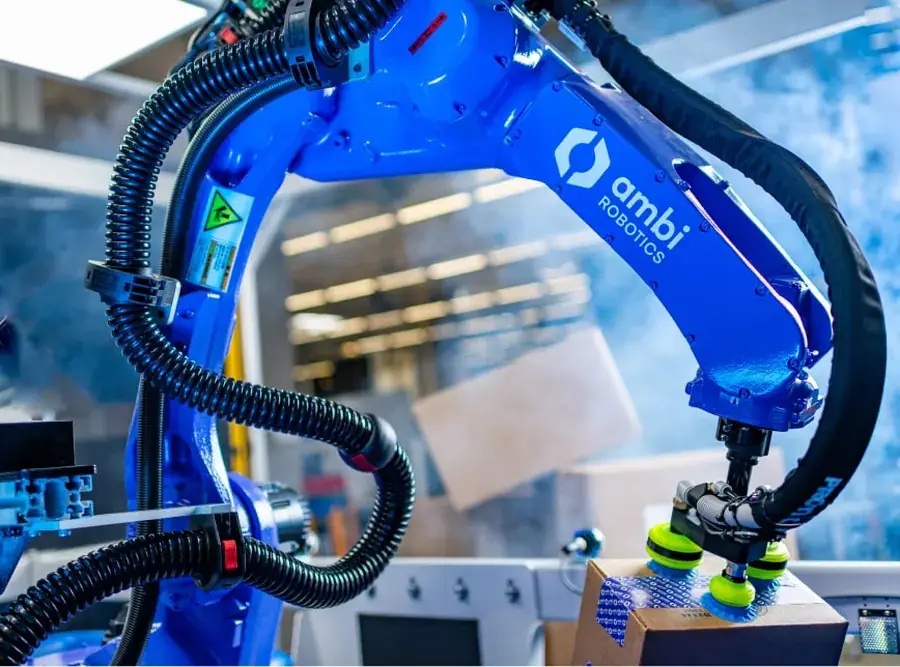
The commercial evidence arrived in a form warehouse managers recognize. In March 2022, Pitney Bowes announced a $23 million expansion agreement covering robot-as-a-service fees over four years. It followed a Stockton deployment that, the companies reported, nearly doubled parcel-sortation throughput to local delivery units during the 2021 holiday peak. This was customer spending, separate from investment capital.
Round totals include other investors. They are not Bow’s individual cheques.
In October 2022, Bow and Tiger Global led another $32 million financing for Ambi. The sequence gives the robotics thesis some substance: a narrow job, a working deployment, then resources to expand. It also supplies a useful caution. A clever gripper is only one part of a system that must fit an existing operation.
GrayMatter Robotics provides a second example. Bow participated in its $45 million Series B in June 2024. The company automates surface finishing for industries including aerospace and manufacturing. Sorting parcels and finishing parts share an investment logic: apply adaptable software to a physical task with measurable operational value.
Start smaller. Get closer.
There is an earlier, smaller experiment in Bow’s history. In 2018, Berkeley student Matthew Bond proposed a fund for pre-seed opportunities that preceded Bow’s usual seed and Series A rounds. Bow backed the idea. Arrow Capital’s student team planned typical investments of $15,000, helping campus-connected founders prepare for larger funding.
By summer 2026, another route was operating in San Diego. Bow and UC San Diego’s Office of Innovation and Commercialization selected six companies for a three-month, in-person incubator. Each received $100,000 in investment funding. The technologies had commercial and national security applications, including cooling, medical response, autonomy and advanced materials.
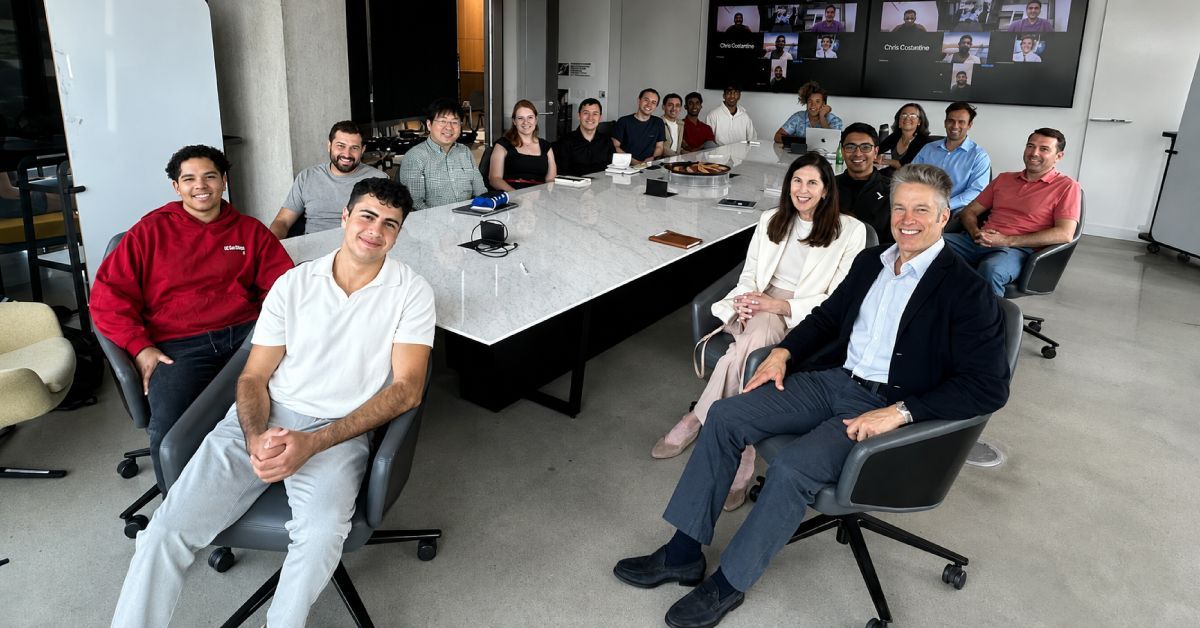
The program added customer introductions, mentors and access to operators and government partners. Stifel Bank supported banking arrangements; DLA Piper supplied legal expertise. This is where a network becomes practical: a founder needs someone who can evaluate the technology, someone who understands the buyer, and someone who can help establish the company.
Access is an advantage. Returns are a test.
Bow’s current website emphasizes physical AI, industrial automation, defense, commerce and digital biology. It reports more than 50 core portfolio companies, 36 active ones and an average investment of about $5 million into core companies. That average describes its portfolio investing, rather than a promised first cheque for applicants.
Total value relative to paid-in capital for UC’s Bow Ventures Fund I holding. UC reported a -1.0% net IRR. Includes unrealized value; a dated snapshot, not a final outcome.
The university connection comes with a public measuring stick. UC’s June 2025 disclosure valued its Bow Ventures Fund I position at 0.95 times paid-in capital, with a negative 1.0 percent net internal rate of return. Those figures include unrealized holdings and describe UC’s position at that date. They show why research access and investment success must be assessed separately.
What a founder can borrow
The useful lesson is a sequence. Choose a job a buyer already needs done. Show that the technology survives the buyer’s working conditions. Learn enough about deployment and economics to justify expansion. That is an interpretation of the Ambi example, rather than a formula promising the same result.
It depends on deployable technology, patient financing and a customer with a reason to change. An academic pedigree cannot supply those automatically. Bow’s interesting contribution is its attempt to bring the relevant people together early. The parcel still has to land in the right sack.