An employee sees himself on a billboard at LIG Square in Indore. His name is Avinash Jain, and the enormous public thank-you comes from his employer, InfoBeans. In February 2022, Siddharth Sethi shares the gesture online, thanking Jain for his contribution and Ankur for the design. A company has bought space on a busy intersection and put a team member in it. Advertising usually asks the public to admire a product. This advertisement asks it to notice a colleague.
The gesture is wonderfully literal. Every organization wants its people to feel seen; here, a commuter can see one of them from the road. Sethi calls it part of the search for fresh ways to recognize team members. The detail matters because it gives substance to a subject that can otherwise disappear into office wallpaper: company culture. A billboard has a location, a face and a person whose family can point to it.
Sethi is InfoBeans’ co-founder and CEO, as well as its managing director. His work spans global software delivery and business development in Europe and the Middle East. Those responsibilities sound a considerable distance from an Indore intersection. His public account of leadership keeps bringing them together. The business needs people who can deliver for distant clients. Those people need reasons to imagine a future inside the business.
Three friends, several time zones
Before InfoBeans, Sethi, Mitesh Bohra and Avinash Sethi studied engineering in Indore. Siddharth and Avinash took electrical engineering; Bohra studied electronics and telecommunications. They later worked for different Tata companies and met in a Mumbai park to talk about doing something of their own. Entrepreneurship, in this telling, began with an ongoing conversation among friends. The park bench was an inexpensive boardroom, with rather better ventilation.
Their careers took them to America. Siddharth ended up in Florida, while his future partners worked elsewhere in the country. The distance did not dissolve the friendship. They kept meeting, kept discussing a venture and learned how American clients worked. By 2000, the discussions had become InfoBeans. They funded the early business themselves and put its earnings back into expansion. Referrals through professional and personal networks supplied much of the early work.
One small detail from the years before the company gives the friendship an everyday texture. During preparations for management entrance exams, Siddharth helped his friends with English grammar. The three traveled together to take the tests. Later came a website for people connected to Indore, AapkaIndore.com, which let people overseas send gifts home. Sethi’s wife, Meghna, contributed graphic design. The ambition to build software was already attached to a place, and to the people missing it.
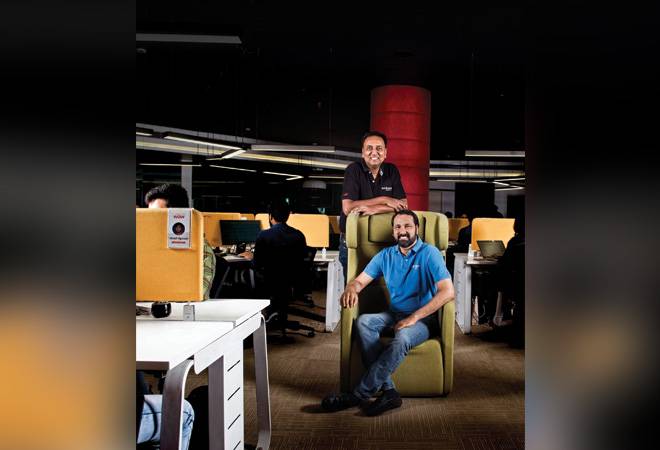
An engineer learns to make room
Sethi’s qualifications include an electrical engineering degree from Devi Ahilya Vishwavidyalaya and an MBA from the Indian Institute of Management Indore. His LinkedIn education record dates the IIM years to 2004–2006. His company biography also records substantial work in user experience design and an interest in creating workplaces for the team. The combination places him close to both the systems being built and the people who must use them.
User experience invites a particular kind of attention. Someone has to ask how a screen behaves for the person facing it, rather than merely whether its code runs. An office invites related questions about how people actually spend their days. Sethi’s documented interest in both gives his leadership a concrete design dimension. A workplace is experienced through ordinary encounters: where people sit, whom they can ask for help and whether their work receives recognition.
His responsibilities remain operational. The 2024–2025 annual report assigns him global software engineering and business development across Europe and the Middle East. It describes an aim to innovate with compassion. That is a useful pairing to hold up against the practical job: clients expect delivery, colleagues need judgment and both will encounter decisions that a polished presentation cannot make for them. Sethi occupies the place where those obligations meet.
Buying the next piece of the puzzle
In September 2019, Sethi announced InfoBeans’ acquisition of Philosophie, an American innovation and design consultancy founded by Skot Carruth and Emerson Taymor. Its offices were in Santa Monica and New York. He described the decision as the result of deliberation, thought and instinct. The appeal was specific: Philosophie’s innovation and user experience work could sit alongside InfoBeans’ application development, testing and support.
That combination changes the conversation a software company can have with a customer. A team can help examine an idea, design it and then take responsibility for building and maintaining it. In his announcement, Sethi concentrated on how the capabilities would fit together. Acquisition language often floats above the actual work. Here, the useful question was what the combined teams could do when a customer arrived with a problem.
A second expansion followed in 2021 with Eternus Solutions, the Pune-based Salesforce consulting firm founded by Jitendra Tanna and Shreyas Merchant. Its consultants, engineers and strategists added to InfoBeans’ Salesforce practice. Tanna and Merchant would lead the Salesforce Consulting Center of Excellence. Once again, the addition brought a defined capability and the people who had built it. These were company milestones shared among the founders and their teams, with Sethi helping explain their purpose.
The company comes home in public
On 10 November 2022, Sethi and Avinash Sethi were present for InfoBeans’ opening bell ceremony at the Bombay Stock Exchange. Madhya Pradesh’s then chief minister, Shivraj Singh Chouhan, struck the gong. The company had already listed on the National Stock Exchange in 2017. Its BSE ceremony put a business built in Indore on a national stage, with its home state very much in the picture.
At the time, InfoBeans described a workforce of more than 1,600 across 13 locations. It also said it had brought more than 500 professionals back to Madhya Pradesh from other Indian technology centers. These are historical company figures, useful for understanding what the founders had built by that point. They put numbers beside the original wish to create work opportunities in Indore: a career could reach international customers while remaining connected to home.
Sethi’s remarks at the listing centered on employment and the team’s contribution. A stock exchange ceremony offers ample opportunity to discuss share prices. He chose to recognize the people whose work had carried the company there. The emphasis fits the billboard, though the stage is larger and the audience different. Recognition travels through the story in several forms: a street corner, a public ceremony, a chance to take on more responsibility.
What happens when a project goes wrong
In a 2026 post about partnerships, Sethi explains trust through situations that are uncomfortable to discuss. A project slips behind schedule. An implementation needs a fresh start. A prospective engagement is a poor fit. His argument is that long relationships depend on saying so early and honestly. That account gives trust a cost. The person delivering the news must accept an awkward conversation today to preserve credibility tomorrow.
He reports 95 percent client retention over InfoBeans’ 26 years, tying that claim to candor during difficult moments. It is his account of the company’s performance and the lesson he draws from it. The examples are more revealing than the percentage. A customer needs reliable information to make decisions. If the supplier conceals a problem, the customer loses both time and the chance to respond. An accurate update is part of the work being purchased.
There is a connection here to the three founders’ long association. They began with relationships that preceded the company and built a business dependent on relationships that must outlast individual projects. Sethi has written that friendship and standing by one another helped keep them going. His account gives people a central role in the company’s endurance. It also leaves a demanding test for leadership: would the same commitment survive the moment when the news is inconvenient?
“The clients who stay the longest are never the ones where everything went perfectly.”
Siddharth Sethi, on partnerships, 2026
Indore enters the AI conversation
The subjects around Sethi have changed as the business has grown. In 2026, he shared a conversation with Dharmendra Jain and Sanjeev Agrawal about Indore’s technology ecosystem. His takeaways included talent choosing the city, the importance of soft skills in an AI era and the habits behind lasting success. He pointed readers to the full discussion on YouTube. The location remained a central part of the question: how do people build global companies from Indore?
InfoBeans’ current work makes the technology shift visible. The company’s Dreamforce 2026 material identifies Sethi as CEO and co-founder and places him alongside its Salesforce leadership and board adviser Oliver Schwarz. Its event offering focuses on Agentforce and Data 360. Earlier in the year, InfoBeans announced ServiceNow’s Transformation Partner of the Year recognition for the APAC region. These developments belong to the organization, rather than to Sethi alone.
For a profile of its founder, they show the present setting of his work. The platforms change, the client problems change and the team must keep learning. Sethi’s interest in soft skills is therefore more than an agreeable side topic. A technically capable team still has to understand a customer, explain a decision and raise a problem. His emphasis on communication connects the newest technology conversation to the older question of trust.
A universe-sized ambition
The personal detail on Sethi’s leadership profile is disarmingly small: he enjoys watching his two sons play without a care in the world. His stated ambition for InfoBeans borrows his five-year-old’s scale of measurement, extending the wish for a good workplace to the entire universe. The phrase carries a child’s cheerful disregard for procurement boundaries. It also brings a human voice into a field that can be fond of abstract nouns.
His accompanying philosophy is brisk: “Think beyond and big. Act immediately. Deliver thoughtfully.” The last instruction asks for care after the urge to move. Read beside his operational responsibilities, it suggests a balance he wants the organization to pursue: ambition has to arrive in the form of something another person can use. Speed acquires its meaning at delivery, when the work leaves the team and enters a customer’s day.
The Indore billboard is a useful place to leave him. It translates belonging into something visible enough to interrupt a commute. Behind it stands a longer sequence of choices: studying with friends, keeping in touch across America, building from home, adding capabilities and telling clients when work needs a rethink. Sethi’s story is carried by those particulars. A colleague gets a larger future, and occasionally a very large photograph, in the city where the whole enterprise took root.