A loyalty card is a curious little contract. A company promises to remember you. You agree to remember the company. Somewhere between those two acts of devotion come the passwords, the qualifying purchases and the discovery that your affection has an expiry date. Shyam Shah has spent much of his working life thinking about what happens underneath that contract.
In 2009, while he was a director of product management at Oracle, Shah offered a diagnosis that still sounds uncomfortably familiar: “Many loyalty programs remain trapped in ‘version 1.0’ thinking.” His concern was sameness. When members could scarcely distinguish one program from another, companies struggled to gain an advantage from operating them.
It was a product leader’s complaint with a customer’s impatience inside it. Businesses had built elaborate ways of counting purchases. The harder task was making participation feel different enough to matter. A new badge could change the appearance of a program. Changing what the program could actually do required work further down.
Years later, as co-founder and chief executive of Loyalty Juggernaut, Shah is still pursuing that problem. His company’s platform, GRAVTY, supplies the software behind loyalty programs and networks of partner brands. His career offers an unusually sustained view of an everyday commercial ritual: the attempt to turn another transaction into a reason to return.
An engineer with a balance sheet
Shah’s education straddles two disciplines that have plenty to say to each other. He studied electronics engineering and earned an MBA in financial management at Pune University. The combination provides a useful way to read his work: a loyalty idea has to function as a system and make sense as a business.
At Oracle, he led product management and strategy for loyalty, marketing and customer data management solutions. His responsibilities also included industry strategy for retail, travel and transportation. Those are businesses in which a customer relationship can spread across purchases, journeys, locations and partners. Keeping the record straight is already a considerable job. Making something useful happen because of it is another.
He subsequently co-founded Innovacx, where he is identified as president. The enterprise applications business connects him with another Oracle veteran, Murali Subramanian, who is also a co-founder of Loyalty Juggernaut. These connections place Shah’s entrepreneurial work within a network of people who had already spent years building and implementing corporate software.
Loyalty Juggernaut was founded in 2015. Kalpak Shah, its co-founder and chief technology officer, is a central collaborator in the next part of the story. The continuity is striking: rather than leaving enterprise loyalty behind, Shyam Shah made it the subject of another business. The problem had followed him out of the large company. He gave it a company of its own.
The interesting part is under the points
Consider a member who shops at several partner businesses. Counting the total spend is one task. Understanding which combinations of behavior should trigger a reward is more complicated. Different brands, activities and time periods introduce different conditions. This is where a pleasant promise to a customer becomes a rather demanding instruction to a computer.
A U.S. patent granted in June 2022 names Shyam Shah, Kalpak Shah and Azeem Mohammed as inventors of a method for tracking member behavior across multiple dimensions. Its examples include visits, spending and flights. The invention describes a way to keep track of those combinations and trigger an action when the relevant rule is met.
That sounds remote from a checkout counter, but it addresses a practical gap: a marketer may be able to describe an offer long before the existing system can execute it conveniently. The patent’s proposed approach reduces the need for separate counters for every combination. The ingenuity sits in the bookkeeping, where very little of the applause usually goes.
The company’s Visual Rules capability tackles another part of that translation, giving loyalty professionals a visual way to configure program logic. For Shah, software architecture and marketing ambition keep meeting in the same place. A brand’s promise is only as flexible as the system that must honor it.
Three prizes, three different chores
The company’s run at the Golden Loyalty Awards makes an instructive miniature history of its priorities. In 2021, Visual Rules won Best Technology Innovation. In 2022, the recognition went to G-Sense, its AI-based anomaly detection capability. In 2023, Pulsar received the award for using generative AI to help create personalized loyalty campaigns.
The sequence moves from defining rules to watching operations to creating campaigns. Each addresses a different chore behind the member experience. Together, they help explain why Shah keeps returning to the underlying machinery. Creativity needs somewhere to run; operations need a way to notice when the machinery starts doing something peculiar.
In November 2024, Loyalty Juggernaut announced another U.S. patent, this time concerning AI-powered fraud prevention. Fraud may seem an awkward guest at a conversation about customer affection. Yet any system that holds redeemable value must think about protecting it. Shah’s public discussion of loyalty includes that less photogenic responsibility alongside personalization.
The point is not that every customer needs to know how an offer was configured or a suspicious transaction detected. The member has other plans for the afternoon. The work matters precisely because it can disappear into a program that behaves as promised.
A bucket list with unusually specific entries
For a glimpse of Shah outside the product description, there is his appearance with Amanda Cromhout on the Blind Loyalty Challenge. Introducing their 12-minute conversation, Cromhout noted his delight at being able to tick the challenge off his bucket list. Some people collect mountains. Enterprise software has its own itinerary.
The conversation covered fraud protection through outlier analysis, the SHARE rewards program in the United Arab Emirates, and the choice of performance measures at different stages of a program’s life. His example of SHARE brings the discussion back to the customer moving among businesses, rather than a company examining one isolated sale.
The lifecycle point is particularly revealing. Asking whether a loyalty program works also means asking what it is trying to accomplish at that moment. A new program and an established one need not be judged identically. Shah’s subjects move easily between the member’s experience and the operator’s decisions about what to measure.
His professional circle extends across these conversations. David Slavick has interviewed him about loyalty technology. In Stockholm, Dave Andreadakis sat down with him for the Loyalty Leaders Podcast. Andreadakis also describes Shah’s founding approach at Loyalty Juggernaut as starting with the desired customer experience and working backward through the restrictions that prevent it.
Five Es, and the unglamorous sixth task
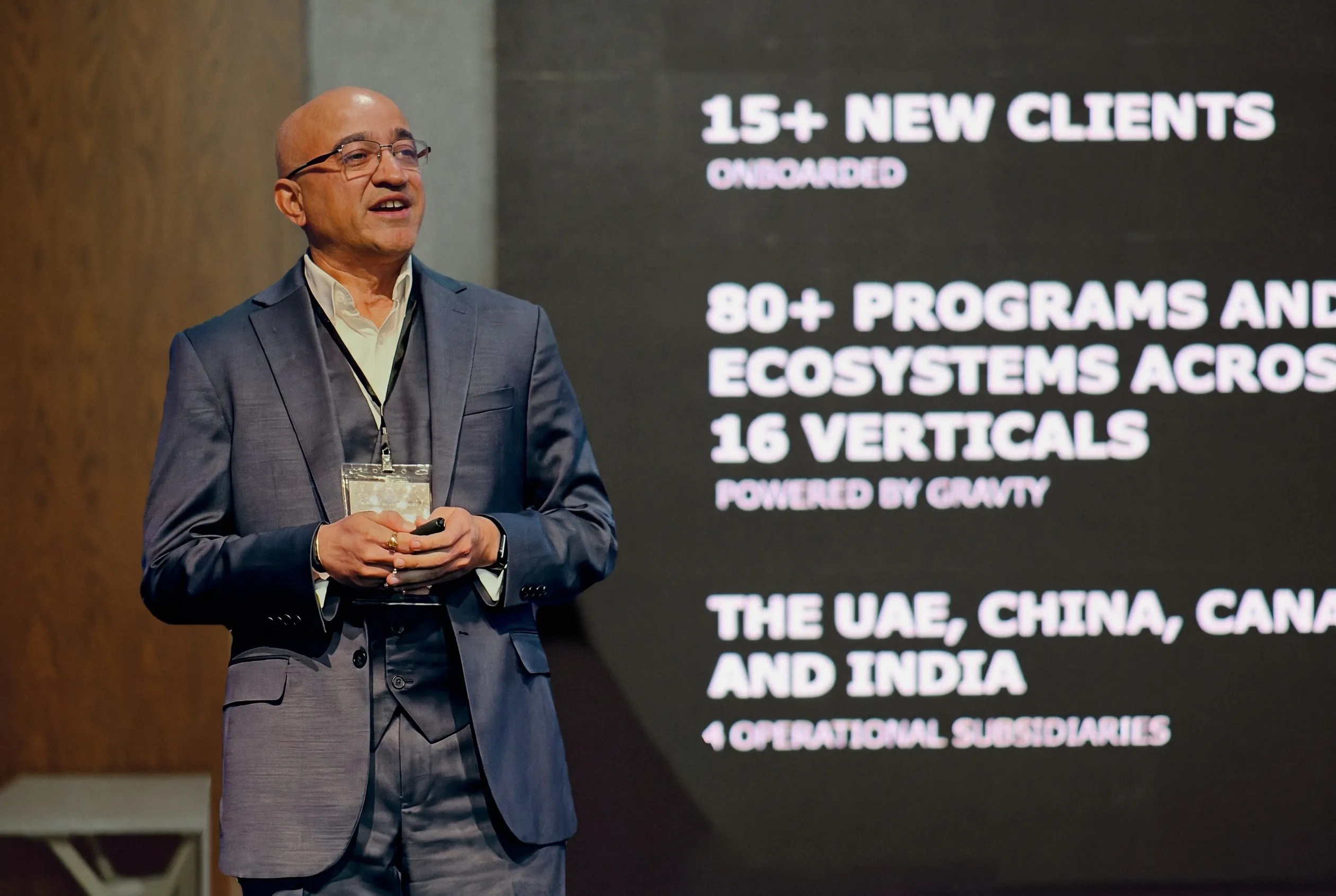
At Loyalty Summit CXM Europe in Stockholm in 2025, Shah organized his argument around five Es: engagement, experience, emotion, ecosystem and economics. It is an unusually compact packing list for a complicated industry. It includes how people behave, how participation feels, who else takes part and whether the arrangement pays.
His remarks placed loyalty within business strategy and the executive conversation. They also connected it with individualized experiences and a company’s own customer data. The ambition is wider than encouraging one more purchase: the program becomes part of how a business understands and serves the people who choose it.
Implementation remains the sixth task, even if it spoils the alliteration. In a 2025 discussion of the company, Andreadakis described six platform releases a year, with innovations rolled out across its clients. That gives Shah’s argument an operational rhythm. A program needs room to keep changing after the launch presentation has been put away.
In a Chicago fireside conversation with David Feldman, Shah again addressed loyalty as a business growth engine. Colleague Stijn Hendrikse highlighted the discussion of limited customer data and the constraints of software architecture. The theme has survived different audiences and different stages: an ambitious strategy still needs a system capable of carrying it.
“Today’s loyalty programs can’t plan their tomorrow based on yesterday’s technology.”
Shyam Shah · 2023
The relationship travels
In May 2025, Riyadh Air and Loyalty Juggernaut announced a partnership to power the airline’s digital loyalty program. The plans included real-time engagement, personalized experiences and expanded partnerships. For Shah, the agreement put his ideas into the demanding setting of an airline building its customer proposition.
Later that year, he signed a five-year strategic partnership with Air Serbia’s chief executive, Jiri Marek, at the airline’s headquarters. The November agreement made GRAVTY the foundation for a proprietary loyalty program. Here was a different starting point: an established airline preparing another chapter in how it recognizes passengers.
The two agreements show the range of the work without turning every customer announcement into a personal trophy. Airline teams own their customer promises. Shah’s business supplies infrastructure intended to help deliver them. The distinction matters because a loyalty platform succeeds in the middle of other people’s organizations, priorities and existing systems.
By 2026, his advertised London keynote was asking how agentic loyalty could connect transactions and emotion with everyday habits. The question extends the earlier work on recognizing behavior toward anticipating what a relationship may need next. It is an aspiration with a familiar practical burden: the useful action must reach the member in time.
Shah is based in San Jose, advises startups and has an interest in behavioral economics. That last interest fits the recurring question in his work: what makes someone choose to come back? The engineering can make a reward possible. The economics can make it affordable. The customer still gets a vote.
In a 2023 post, he argued that loyalty’s future demanded an update to its technology. The observation captured a long professional preoccupation. Shah has kept working on the gap between the welcome a company imagines and the welcome its software permits. Somewhere beyond the counters, conditions and campaign rules sits a person deciding whether the invitation is worth accepting.