Software has a social problem. A program can be perfectly capable, beautifully engineered and entirely unwilling to cooperate with its neighbours. Christopher Stone built a considerable part of his career around that awkwardness. In 1989, he founded the Object Management Group, bringing the business of agreement into an industry rather fond of doing things its own way.
The name sounds like a committee that might spend an afternoon discussing the correct placement of a filing cabinet. Its concern was more consequential: how software components could work together across different computing environments. Stone, generally known as Chris, had come from the practical world of business software. He understood that an organisation could buy useful systems and still end up paying for the gaps between them.
Follow his working life and the product names change repeatedly. There are office systems, distributed objects, network services, Linux, document management, web platforms and AI. The recurring question is easier to recognise: how does a promising technology become something people can actually use together?
A blinking cursor was once a feature
Stone graduated from the University of New Hampshire in 1979. His early career included Data General, the minicomputer maker, where he worked on office software. That meant dealing with the machinery of everyday business before the web browser became the room in which so much office work happened.
At Data General, he spent eight years working on software products, eventually taking responsibility for product strategy. His remit included integrated office tools and the ideas that became familiar as office suites and groupware. The words sound routine now. The underlying ambition was to make separate activities behave like parts of a working whole.
There is a pleasing continuity here. An office suite has to bring tools together for a user. A distributed computing standard has to bring components together for a developer. Different scale, similar irritation. The useful work happens at the joins, precisely where an impressive demonstration can become an exasperating working day.
1989: agreement becomes the product
OMG gave that problem an institutional home. Stone served as its founding chairman and CEO, leading the organisation before his move to Novell in 1997. It was a standards consortium, with a purpose distinct from selling one vendor's software. The work required participants to agree on interfaces through which their products could interact.
Its best-known result was CORBA, the Common Object Request Broker Architecture. The long name describes an intermediary: a way for a software object to request something from another object without requiring both sides to share every detail of their implementation. A common interface could preserve differences underneath.
CORBA's first version appeared in 1991. Its early specification included an object model, an interface definition language and a mapping for C. By the 1996 revision, the architecture had added protocols for interoperability, along with further language support and services. Compatibility arrived through successive pieces of engineering, rather than a single grand announcement.
+ object request brokerSoftware on another system
Different implementations. A shared way to ask.
Stone's own writing in 1992 described a wider Object Management Architecture, with the request broker sitting alongside services, facilities and application objects. The ambition extended beyond making two programs exchange a message. It concerned how components could be reused, assembled and made portable across environments.
That helps explain why standards work can be consequential while remaining difficult to photograph. The achievement is an agreement expressed precisely enough for engineers to implement. Nobody gets to point at a single attractive box and declare the problem finished. A specification earns its keep when independently built products can follow it.
Eric Schmidt calls, and the committee gives way to customers
Novell announced Stone's appointment in August 1997, with a September 2 start date. He would become senior vice president of strategy and corporate development, reporting to chairman and CEO Eric Schmidt. His responsibilities included software architecture, strategic partnerships and developer relations.
The move carried a clear logic. Novell wanted to extend its network services business; Stone had spent years organising cooperation across software companies. Architecture and partnerships belonged in the same conversation. A technical design that nobody adopted would have been a rather expensive private language.
Stone's remarks on joining emphasised listening to customers and understanding their requirements. That is an unshowy ambition, but it matters in this particular career. Interoperability only becomes useful when it serves someone's actual work. The point of connecting systems is what people can do once the connection holds.
He left Novell in 1999 to start Tilion, a supply-chain software business. In March 2002, Tilion announced an acting CEO as Stone returned to Novell, while remaining chairman of Tilion's board. The detour put him on the startup side of the table before another turn inside a large software company.
- 1989OMG: common ground for software
- 1997Novell: networks and partnerships
- 2014Acquia: content and cloud products
- 2025KLDiscovery: AI and legal technology
Open software meets the business of running it
Stone's second Novell assignment was broad. His 2002 employment agreement listed research and development, marketing, alliances, technical services, solutions development and the chief technology officer function among his responsibilities. The title was vice chairman, Office of the CEO. The list underneath it was practically an organisation chart.
At the company's BrainShare conference that March, he laid out a commitment to web services. Novell was introducing directory technology with additional web-services support, placing identity and access alongside the work of connecting applications. A connected system still needs to know who is asking to enter.
The Linux chapter brought another set of commercial questions. Stone worked on Novell's open-source and identity-management direction during a period that included the acquisition of SUSE and Ximian. Engineering, product management and alliances were all part of his remit when he left in November 2004.
One small episode makes those responsibilities tangible. In December 2002, Novell folded its content-networking subsidiary Volera into the parent company. The rationale combined reduced duplicate costs with access to more engineering, support and quality-assurance resources. Software strategy, at working level, includes deciding where a development team belongs and how customers will be supported.
The product keeps returning to the joins
In 2005, Stone became president and CEO of StreamServe. Its business involved collecting and organising information from enterprise systems, then presenting it in usable documents. The company had more than 4,200 customers across 130 countries at the time. Once again, the challenge lay between an existing system and the person trying to get something useful out of it.
By September 2014, Acquia had appointed him senior vice president of products and development. He would oversee engineering, operations and product management for its platform, helping expand software services for integrated digital experiences. Content, community and commerce were the categories; bringing them together was the assignment.
At Acquia Engage in 2016, the subject was APIs, the interfaces through which software exposes capabilities to other software. Stone called it “the philosophy of design.” His explanation concerned giving developers access to the company's world so that its tools could connect with theirs. It was a recognisable continuation of the conversation begun at OMG.
The team's presentations also had a less committee-like name: the Mother of All Demos. At the 2016 event, product leader Will Eisner showed an updated Acquia Cloud interface, designed with customer feedback and an emphasis on API access. Stone's chief product officer role placed him alongside engineers demonstrating what their work would let customers do next.
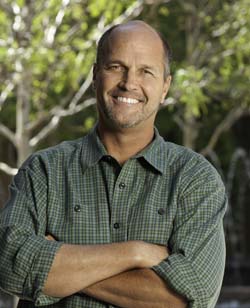
A career with room for a wrong turn
There is another version of Stone alongside the product executive: the investor who had learned the cost of being wrong. In 2011, while working with EPIC Ventures, he described a failed business that had consumed $48 million in venture funding. He treated the experience as a useful check on the confidence that success can encourage.
His advice to younger CEOs drew on mistakes as well as wins. He also made space for skiing, sometimes getting in several runs before the working day. The picture is of someone who enjoyed the people and the life around technology, while accepting that neither a clever idea nor a convincing pitch guaranteed a successful business.
“It's more fun behind the scenes.”
Chris Stone, 2011
From distributed objects to disputed documents
At Oracle, Stone went on to senior engineering work involving content services, content applications and generative AI. A 2020 Oracle publication identified him as senior vice president of product development for Content and Experience. He was discussing the growing range of digital assets that organisations needed to manage and deliver.
In November 2021, he joined a University of Wisconsin computing-school conversation with Tom Erickson about Oracle, AI, machine learning and paths into private-sector careers. By then, he had worked across enough technical generations to discuss both what was changing and what a graduate might choose to do about it.
Today, Fuller Hill Advisory identifies Stone as its founder and managing director, working on technology strategy for startups and enterprises. EPIC lists him as a venture partner. His working life has moved towards advising and governance, carrying experience from development teams, product organisations and investing into other people's decisions.
KLDiscovery added him to its board effective March 4, 2025, alongside legal-technology executive Andrew Shimek. The company highlighted Stone's software and AI experience. He expressed an eagerness to help shape its approach to technology-driven growth. In a business handling digital evidence and information, the connection to his content-systems career is direct.
The distance from CORBA to AI can look enormous on a timeline. Look at the working problem and it narrows. There are systems full of information, people trying to use it, and difficult decisions about how the two should meet. Stone has spent much of his career in that intervening space. It rarely supplies the prettiest screenshot. It does supply plenty of work.