Twelve million dollars sounds like a vote of confidence. For Canonical, it was a reason to issue refunds. In August 2013, the company behind Ubuntu closed its crowdfunding campaign for the Ubuntu Edge, a proposed phone that would double as a desktop computer. Backers had pledged $12,809,906. The target was $32 million. The phone never shipped.
The episode makes an awkward opening for a technology success story, which is precisely why it belongs here. Canonical had a widely used operating system, a committed community and a founder prepared to finance ambitious ideas. Getting people excited was possible. Getting enough people to pay for this particular idea was another matter.
Today, its business has a more practical center of gravity. Canonical helps organizations operate open-source software: the Linux underneath a cloud application, the infrastructure supporting a mobile network, the systems used in space-mission operations. Ubuntu remains free. Security maintenance, specialist support and the work of running complicated systems provide reasons to open a purchase order.
The free CD was the distribution strategy
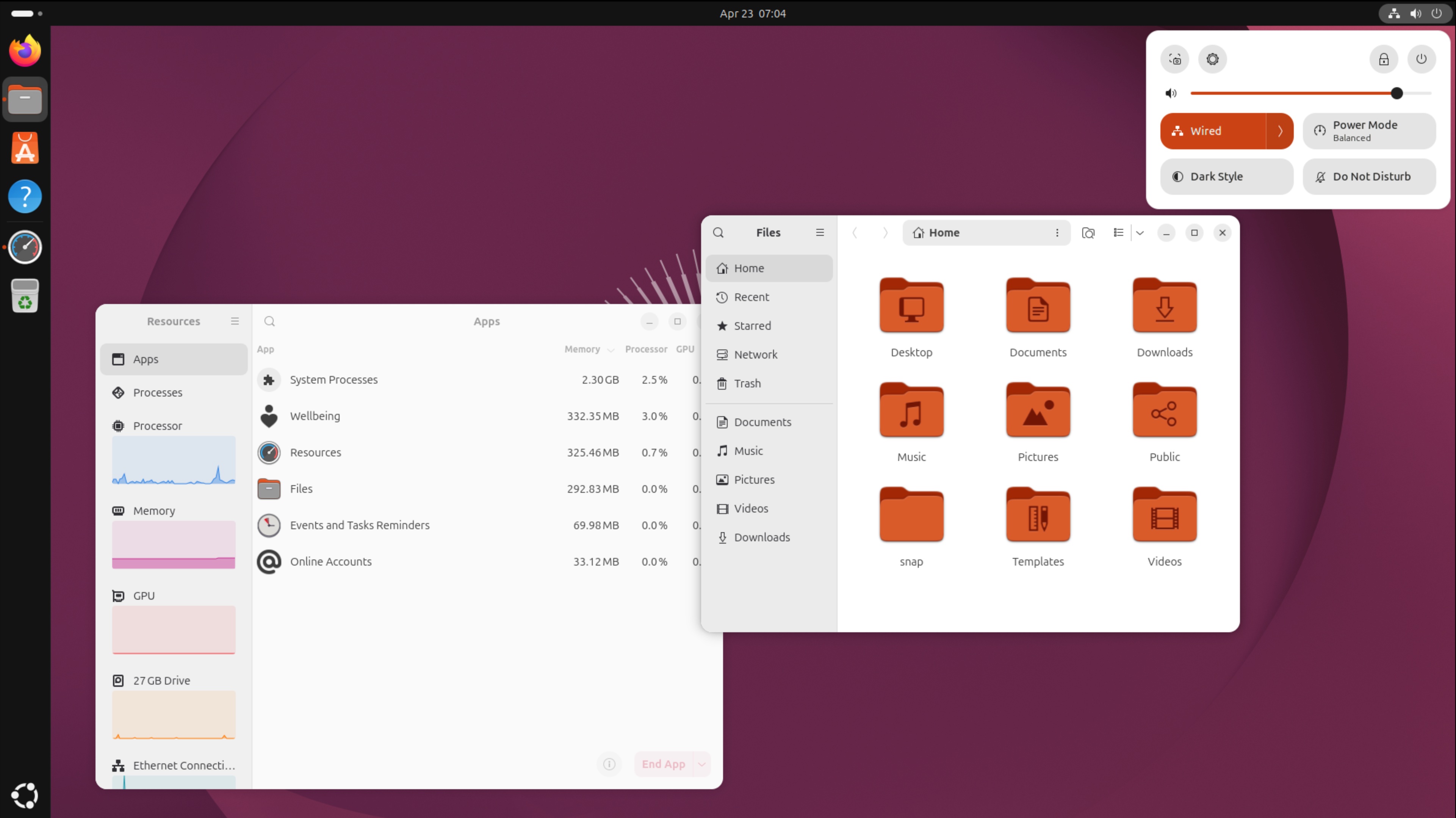
Mark Shuttleworth founded Canonical in 2004. Ubuntu’s first release, Warty Warthog, arrived that October. Built on Debian, it brought together work from the wider free-software community in a distribution intended to make Linux approachable. The ambition included ordinary desktop users, not just people comfortable repairing their own operating system.
Canonical even mailed installation CDs through its ShipIt program. A free download was less useful if your internet connection made downloading an operating system an ordeal. The CD solved the last-mile problem with an envelope. It was an unusually literal way to put software into users’ hands.
That accessibility still matters. A developer can begin on Ubuntu Desktop, move an application onto Ubuntu Server and find Ubuntu images in major public clouds. Canonical benefits when familiarity travels with the developer. The operating system becomes a recurring choice before an enterprise sales conversation begins.
The phone was not the only detour
Ubuntu Edge was an early, conspicuous rejection of one consumer proposition. Nearly 20,000 people contributed, and Bloomberg pledged $80,000. Even that attention could not close the gap. The $12.8 million was pledged demand, not retained financing for Canonical. Backers were to receive their money back.
In 2014, another consumer service reached its limit. Canonical announced the closure of Ubuntu One file synchronization and storage. Then-CEO Jane Silber explained that competing at a global scale would require more investment than the company was willing to make. Other services were offering large amounts of free storage. Ubuntu One’s sign-on service survived.
The sharper strategic break came in April 2017. Shuttleworth ended investment in Unity8, the phone and convergence shell, and said Ubuntu’s default desktop would return to GNOME with the 18.04 LTS release. He had expected both the free-software community and the technology industry to welcome convergence. Neither had responded as he anticipated.
“I was wrong on both counts.”
Mark Shuttleworth, on the convergence bet, April 2017
His explanation was unusually direct: some community members saw fragmentation, while manufacturers preferred established alternatives or their own platforms. Meanwhile, commercial engagements in cloud and connected devices were growing. Canonical would concentrate investment where it already had customers, revenue and communities. The desktop continued; the attempt to unite phones and PCs under that shell did not.
The invoice arrives after the download
Canonical’s commercial offer begins with a distinction familiar to anyone responsible for a production system: obtaining software and maintaining it are different jobs. Installing Linux does not settle who will investigate a vulnerability, prepare a compatible fix or help diagnose an outage. Those obligations repeat long after the original project has launched.
Ubuntu Pro packages some of that work into a subscription. It adds expanded security maintenance and tools for compliance and fleet management. It can be attached to an existing Ubuntu installation. Buying Pro does not require replacing Ubuntu with a separate premium operating system.
The published annual price starts at $25 for a workstation and $500 for a physical server with unlimited virtual machines. Human support changes the price: a workstation with full 24/7 support is listed at $300; a server with full 24/7 support at $3,400. Public-cloud billing follows a separate, metered model. Personal users can obtain a free tier for up to five machines, with some enterprise benefits excluded.
Ubuntu Pro
Ubuntu Pro
Pro + full 24/7 support
Server plans include unlimited VMs. Published prices checked September 2026; cloud pricing differs.
The arithmetic became a substantial business. Phoronix’s report on Canonical Group’s accounts put 2024 revenue at approximately $292 million, up from $251 million in 2023, with operating profit of $15.5 million. Those are historical results, not a current annualized sales figure. They show a company generating a profit from services around software that users can still download free.
A mobile network has no use for nostalgia
The customer list helps explain why maintenance sells. BT Group chose Canonical infrastructure for its 5G Core, using an OpenStack-based platform to run network functions as software. Separating those functions from dedicated equipment makes it possible to share hardware and change services through software updates.
Canonical’s 2024 account of the project connects that infrastructure to EE’s network improvements at busy venues. The technical story is virtualization; the human story is a stadium full of people trying to use their phones. Canonical supplies part of the underlying platform, alongside the operator’s network and other equipment. It does not single-handedly deliver the signal to every seat.
The European Space Agency illustrates another buying motive. Canonical deployed infrastructure and provides managed services for mission operations, with a portfolio including Kubernetes, Ceph storage and PostgreSQL. Consolidating those responsibilities gives the customer a coordinated service relationship across several open-source components. The operating system is an entry point to a much larger operational job.
Juju, MAAS and the machinery behind the names
Canonical’s catalog can read like a collection of passwords. MAAS means Metal as a Service: it automates the provisioning of physical servers. Juju coordinates applications through software operators called charms, which encode operational tasks. MicroCloud assembles a smaller cloud environment using virtualization, storage and networking components.
Kubernetes manages containerized applications. Canonical offers distributions and support around it, while OpenStack serves organizations building private-cloud infrastructure. Customers can buy deployment expertise or hand ongoing operations to Canonical. The company’s expertise sits in integration, automation and maintenance across these layers.
Ubuntu Core brings a related approach to connected devices. Its transactional updates and recovery mechanisms address a practical problem: a device in the field is harder to repair than a development laptop. Snapcraft packages applications for distribution and updates. An industrial customer needs a repeatable way to maintain a fleet, not a heroic engineer visiting each box.
Applications & AIDatabases, Kubeflow, MLflow
Cloud & containersOpenStack, Kubernetes, MicroCloud
Operating systemsUbuntu Desktop, Server, Core
Machines & deploymentHardware enablement, MAAS
Security maintenance, support and operations run across the layers. Coverage depends on the product and contract.
Partnerships widen that reach. AWS, Microsoft Azure and Google Cloud distribute Ubuntu offerings. Elektrobit’s collaboration with Canonical brings Ubuntu into automotive software development. These relationships put Canonical alongside larger businesses whose customers need an operating system, without requiring Canonical to manufacture every device or own every data center.
Fifteen years is a product feature
In November 2025, Canonical extended its Ubuntu Pro Legacy add-on to five additional years, taking the total maintenance horizon for eligible LTS releases to 15 years. Standard maintenance for the Main repository lasts five years; Pro extends coverage, and Legacy adds the final period. Optional human support and package coverage still depend on the subscription.
The proposition recognizes an unglamorous customer reality. Upgrading a long-lived production system can require application changes, testing and renewed certification work. Canonical sells more time to plan that transition while receiving maintained software. An old release is not automatically an abandoned release, provided the appropriate coverage remains in place.
New development continues beside that long commitment. Ubuntu 26.04 LTS arrived in April 2026 with NVIDIA CUDA and AMD ROCm available through its repositories, Rust-based system utilities and Livepatch for Arm64 servers. In August, Canonical joined the Open Secure AI Alliance. Its AI business extends a familiar role: supplying and maintaining the software beneath applications, including supported machine-learning and data tools.
The customer still has to choose
Canonical operates in a crowded market. Red Hat Enterprise Linux and SUSE Linux Enterprise Server also offer commercial Linux platforms. Debian provides a community-developed alternative and supplies Ubuntu’s upstream foundation. The decision involves existing applications, staff skills, certified configurations and service requirements, as well as price.
For a small team with simple needs, operating a private cloud may introduce more work than it removes. A subscription also cannot make every third-party application compatible or replace a customer’s backup and recovery planning. The useful comparison is total operating effort for a particular workload. A low software acquisition cost is only one entry in that calculation.
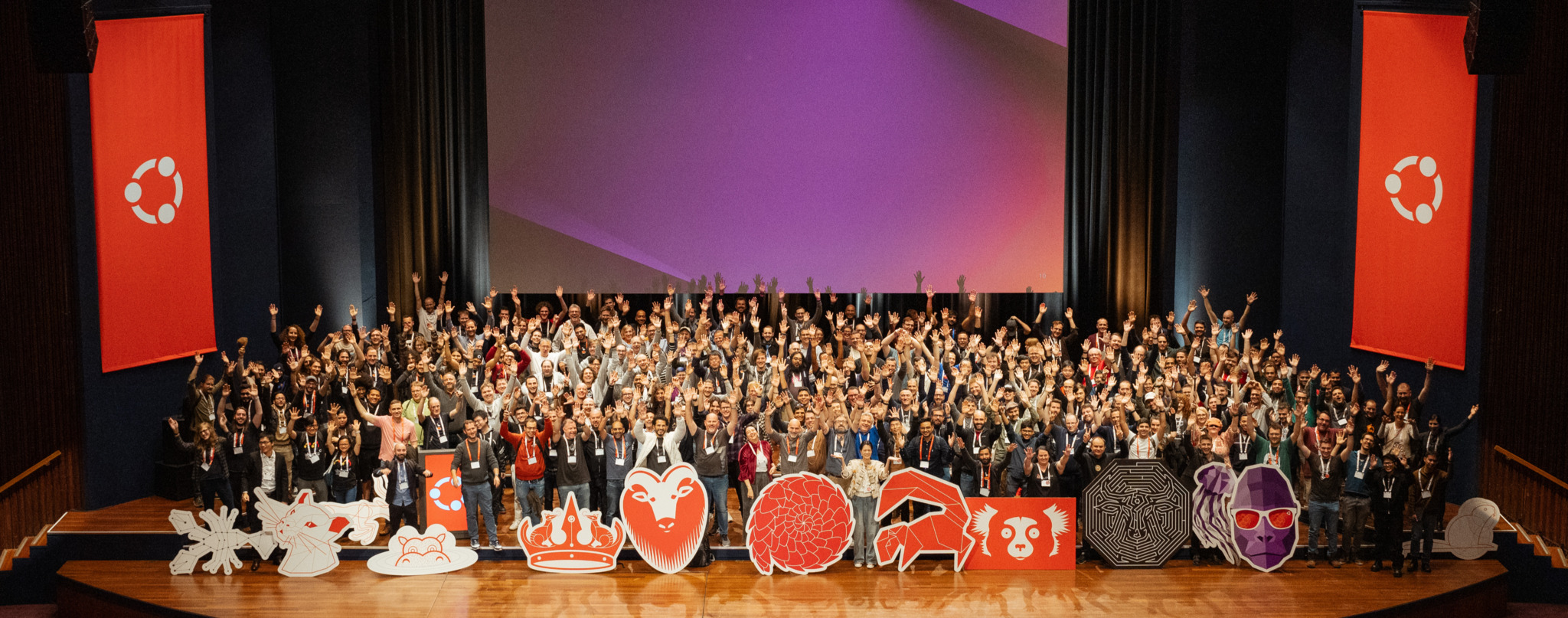
Canonical’s own organization reflects the communities around its software. It describes itself as fully distributed since 2004, with more than 1,200 people across over 80 countries. Staff meet at least twice a year for in-person sprints. Its stated emphasis on self-direction and precision suits work that must cross time zones and still arrive as a dependable release.
The lesson for other companies is an inference from that history: make adoption easy, then identify a recurring responsibility customers will pay you to carry. Enthusiastic users and paying customers can overlap, but one group does not automatically become the other. Canonical learned that distinction through abandoned products as well as successful ones. The free download still opens the door. The work that follows keeps the business employed.
Open the toolbox
Try the software, follow the projects or watch the people building them.