Shlomi Ben Haim once tried to explain his software company with a refrigerator. Developers, he suggested, were like cave dwellers heading out to hunt. Each expedition brought back something the group needed. Why send everyone outside again when one person could bring the food home and put it somewhere the others could safely use it?
This was his explanation for Artifactory, JFrog’s software repository. In his recollection, his two technical co-founders looked embarrassed. The investor pitch nevertheless helped secure the company’s first funding. Venture capital had finally found a use for the domestic appliance.
The analogy gets at something distinctive about Ben Haim. He is the chief executive of a company whose business demands technical precision, yet his particular contribution has often been making the people around that technology understand one another. A developer needs a dependable tool. An investor needs a comprehensible business. A new employee needs to know what sort of place they have joined. These are different conversations, even when they concern the same refrigerator.
The job before the job
Before JFrog, there was AlphaCSP. Before AlphaCSP, there was the Israeli Air Force, where Ben Haim served from 1988 to 2000 and reached the rank of major. He joined AlphaCSP in 2000, became its chief executive in 2006, and worked there until 2009. His academic credentials include a business administration and management degree from Ben-Gurion University and a master’s degree from Clark University.
At AlphaCSP, he met the colleagues who would become his partners: Yoav Landman and Fred Simon. The three founded JFrog in 2008. Landman brought the technical vision behind Artifactory. Ben Haim brought experience in running a business and working with people. A founding team can contain several kinds of expertise without every founder being interchangeable.
His own short introduction on his personal website begins with working with people: the team, the community, customers and partners. It is a revealing order of attention. The biography then moves into sales strategy, expansion, fundraising and corporate development. The financial machinery follows the relationships.
For a company selling developer infrastructure, this arrangement makes practical sense. Its customers can judge the product in considerable detail. Explaining their needs to everyone else becomes a substantial part of the chief executive’s work. The refrigerator was a translation exercise, with a term sheet somewhere at the end of it.
A company behind the screen
Most of us encounter software at its finished surface. A button appears, a document opens, a video plays. Developers work with the less decorative material underneath: packages, dependencies, compiled files and the versions of those components that an application needs. Artifactory helps organize and manage those software artifacts.
Consider the difference between writing a recipe and preparing a meal. Source code describes instructions. The packages that reach a running system are the things people actually use. They need somewhere to live, a record of where they came from, and a reliable route to their destination. The quality of that route matters even when the person using the application never sees it.
Ben Haim has long described the destination as Liquid Software: updates flowing continuously, with less interruption for the user. In a 2019 conversation, he pointed to a familiar detail. People often do not know which version of an online service they are using. They simply expect it to be available and current. Making that expectation ordinary across more kinds of software is the ambition.
There is comic difficulty in explaining a successful business whose desired effect is to become less noticeable. Ben Haim acknowledged that difficulty in 2020 when discussing his mother: “she will lose attention the moment that we start to speak about binary.” Anyone who has tried to explain their profession over a family meal can recognize the hazard.
That same year, he described a sales model in which developers adopted the product first and spending followed its use. At that point, he said, JFrog had no direct salespeople in the field. The claim belongs to that period, but the underlying preference is clear: let the people with the problem try the solution.
The first twenty seats
Hiring is where Ben Haim’s language becomes especially definite. In a 2025 conversation with Rig Security co-founder Guy Kozliner, he described the earliest employees as the people who establish a company’s lasting culture. Investors and management habits become part of that inheritance too.
Read literally, the number is his rule of thumb. Its usefulness comes from the question it forces a founder to ask. What behavior will the next person make normal? Early employees teach later employees how disagreement works, what customers deserve and whether promises mean anything. Those lessons can travel faster than a handbook.
“The first 20 people you hire are the company’s genetic code.”
Shlomi Ben Haim, 2025
JFrog calls its system of values the Codex. In a 2017 discussion, Ben Haim explained that the company used it to preserve its culture while expanding internationally. He described a preference for building processes from the bottom up, across functions including sales, research and development, marketing and budgeting.
The interesting part is the operational reach of the idea. Culture is easy to praise at an employee gathering. Budgeting is where a preference meets a constraint. Taking the same approach into several departments asks leaders to make it part of how decisions are made, rather than leave it on the wall.
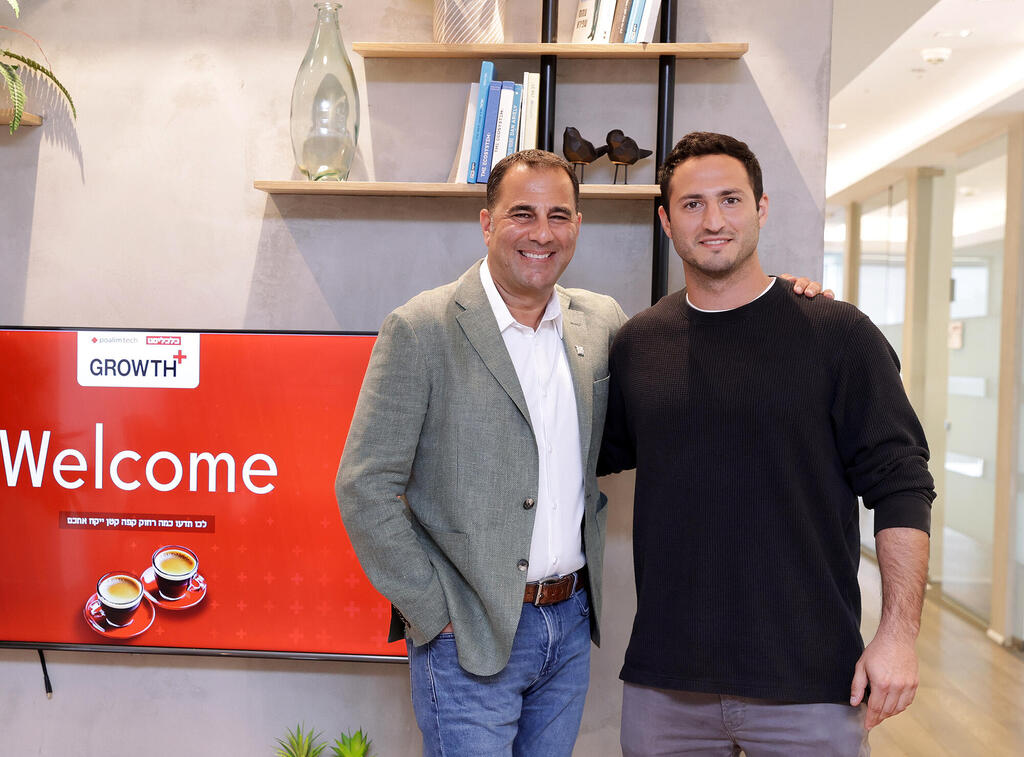
His conversation with Kozliner also showed a willingness to give the next generation credit. Ben Haim saw younger founders aiming to build enduring technology companies. Experience can make an executive territorial about advice. Here, he treated the younger founder’s ambitions as something to respect.
A bell, a parking lot, a longer obligation
JFrog began trading on Nasdaq on September 16, 2020, under the ticker FROG. Its offering was priced at $44 a share. The company sold eight million shares, with existing shareholders selling additional shares. The distinction matters: money raised for a business and money received by its shareholders are separate things.
The celebration took place in the parking lot of JFrog’s Sunnyvale headquarters, with a broadcast connecting the occasion to the wider world. An infrastructure company had arrived at a conspicuously public milestone in a distinctly practical setting. A parking lot can accommodate an astonishing amount of ceremony when the occasion warrants it.
Ben Haim had already spoken about the restrictions that come with growth. More stakeholders, liabilities, employees and board members reduce a company’s freedom to maneuver. Scale increases the number of people who have a legitimate interest in the next decision. His advice was to become more disciplined as the business grew.
That observation gives the listing a second meaning. The bell celebrates an achievement; the reporting calendar establishes an obligation. A founder’s enthusiasm now has to live alongside recurring explanations of revenue, spending and results. The story continues, with more people entitled to ask questions.
More things in the refrigerator
Under Ben Haim’s leadership, JFrog expanded beyond its original repository business. It completed the acquisition of security company Vdoo in July 2021 in a deal valued at approximately $300 million. The stated aim was to extend security through the software delivery process, including devices and the edge.
In 2024 came Qwak AI, whose technology helps organizations deploy, monitor and manage machine learning models. JFrog’s rationale was to bring model workflows into the same broader environment as software delivery and security. Ben Haim’s shareholder letter framed the deal around expanding the platform, its capabilities and the team building it.
A model that works in a demonstration still needs a route into an application people depend on. Someone must manage its versions, permissions and deployment. Those tasks are less theatrical than the demonstration, but they determine whether the demonstration becomes useful work. This is the territory JFrog chose to enter.
The company also announced an integration with NVIDIA NIM in September 2024, combining AI model services with its model registry and software delivery processes. The relationships illustrate the founder’s expanding circle: developer communities, acquired teams and technology partners, each bringing another set of requirements to the platform.
A surfing film for the team
In March 2026, Ben Haim wrote that he had asked his team to watch Chasing Mavericks, the film about surfer Jay Moriarity and his mentor Frosty Hesson. He used the story to think about preparation as AI increased the volume of software artifacts. It was an unusual addition to the executive reading list: a movie with waves large enough to make a quarterly forecast look relaxing.
The choice fits his habit of translating infrastructure into tangible scenes. A refrigerator explains reuse. Surfing explains preparation for forces a company cannot command. Neither image does the engineering work. Both can help people discuss why the engineering work matters.
His 2026 writing argues that increasingly capable AI makes governance and traceability more necessary. The argument is also a commercial proposition for JFrog. It should be understood as his view of the opportunity, with execution still required to make it pay. Generating software faster creates another question: who can account for what gets delivered?
Reported August 6, 2026. Company operating figures, not personal wealth.
JFrog’s second-quarter 2026 results provide a dated measure of the business he leads: $163.8 million in revenue, up 29 percent from a year earlier. It also reported a GAAP operating loss of $13.2 million. Growth and an operating loss can occupy the same quarter; a useful portrait leaves room for both.
Ben Haim’s career returns repeatedly to the work between people: explaining, recruiting, persuading, choosing partners. His company manages the material between writing software and running it. The resemblance is useful. In each case, something valuable has to pass from one person or system to another without losing the trust that makes it usable. The refrigerator has acquired rather more shelves. He still has to explain what belongs inside.