Sheridan Orr’s career begins with a punch line delivered at her own expense. She studied history, developed a suspiciously deep command of the bubonic plague, and watched her father reach what a former biography called a reasonable conclusion: she was unemployable. The joke works because the opposite happened. Orr moved into technology and spent two decades making herself useful wherever software became difficult to explain.
The route was indirect enough to become its own education. English literature and political science at Meredith College. A master’s degree from Vanderbilt. An MBA from Tulane. Then a succession of companies selling things that do not fit neatly on a billboard: kiosks, e-commerce infrastructure, search technology, customer-experience analytics, workplace culture, recruitment platforms and, now, enterprise translation.
Seen as a list, it looks restless. Seen as a body of work, it is unusually consistent. Orr has kept returning to the seam between systems and people. What does a customer mean? What does a worker value? Can a salesperson repeat the message without sounding as if it was approved by a committee in a windowless room? What survives when a phrase crosses a company, a culture or a language?
“I feel like a lot of marketers have erred on that side now and they’ve lost the human connection and the story.”Sheridan Orr, speaking about data and marketing
A humanities education sneaks into SaaS
Technology marketing likes to borrow the vocabulary of engineering. Funnels are built. Pipelines are filled. Growth is driven, as if the customer were a sedan awaiting a firm hand on the wheel. Orr speaks that language when she needs to. She has led product marketing and market development, run global programs and served as a chief marketing officer. Yet her more distinctive habit is to look beneath the machinery for motive.
At CultureIQ, where she was vice president of marketing, she described culture as a competitive advantage and talked about using data to make human decisions. She warned that a clever line written for an advertisement still had to be spoken by somebody in sales, face to face with a prospect, and then proved. It is a modest test with severe consequences. If the message cannot survive a real conversation, decoration will not save it.
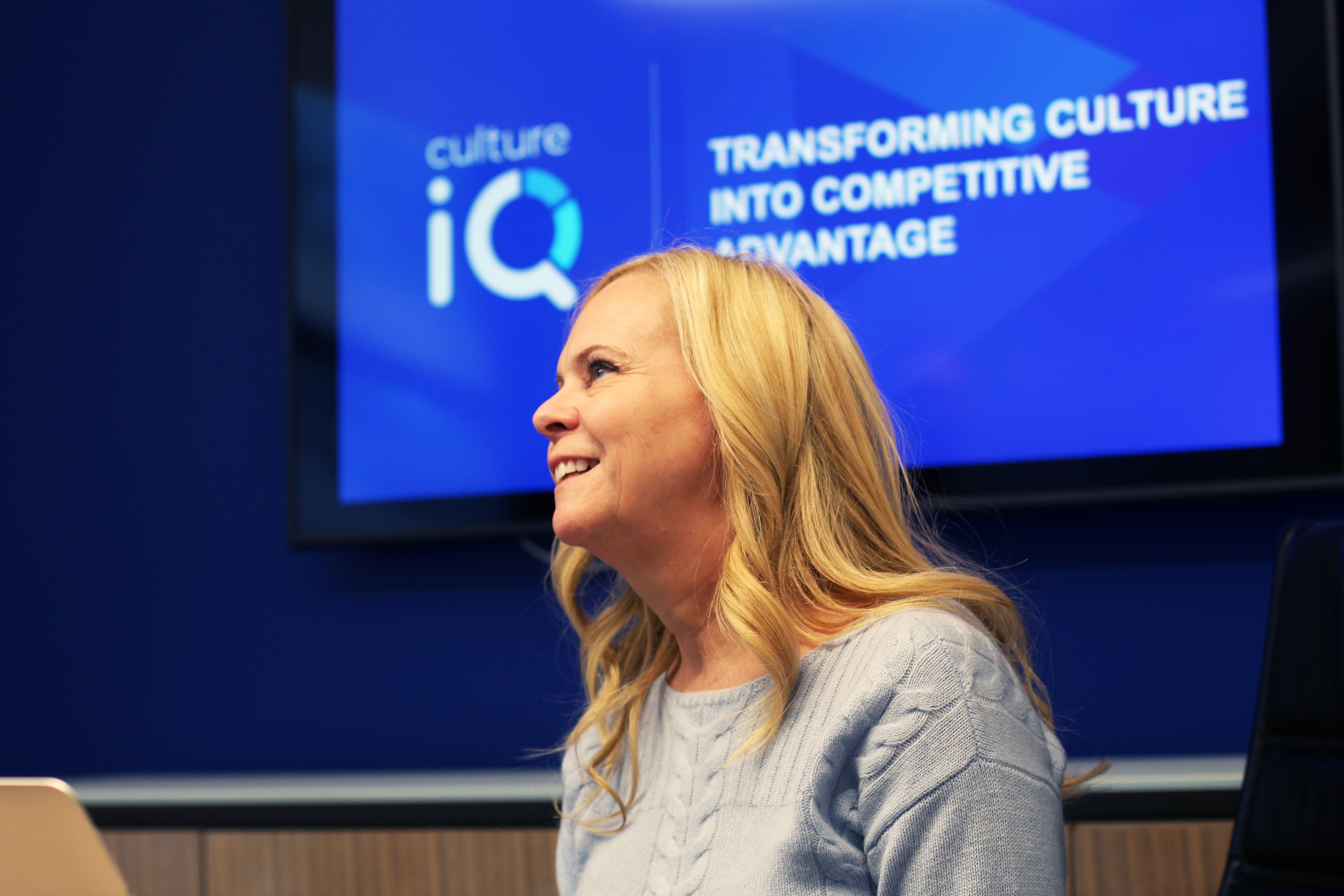
That instinct may explain why her career crosses categories so easily. At ChannelAdvisor, she worked on commerce. At Conductor, search. At NICE, customer experience. At PeopleFluent and CultureIQ, work itself. Each market brought a different product, but the marketer’s problem remained translation in the broadest sense: turn specialist knowledge into a reason another person should care.
The work kept changing. The question stayed human.
ChannelAdvisor
Conductor
CultureIQ
Built In
Language IO
The CMO as matchmaker
Years before “go-to-market” became a compound noun in every founder’s vocabulary, Orr called herself a matchmaker in a presentation about creating customer love stories. The word is more revealing than the usual executive titles. A matchmaker does not manufacture affection. She notices fit, listens for desire and arranges the conditions for recognition.
Orr also ran her own consulting practice for more than a decade, first associated with the gleefully punctuated Interrobang! and later The GTM Collective. An interrobang combines a question mark with an exclamation point. It is hard to imagine a more appropriate mark for marketing: curiosity wearing a loud jacket.
In 2020 she joined Built In, the tech recruitment platform, as chief marketing officer. During a 2022 podcast conversation, she described a network of 72 American tech hubs and almost three million monthly visitors. The audience gave Built In a close view of what technology workers wanted from employers after the pandemic disrupted old assumptions about offices, careers and belonging.
Recruiting technology may seem a long way from translation software. In practice, both businesses are about access. One asks whether people can find companies where they might build a future. The other asks whether customers and support agents can understand each other without sharing a language. Both fail when a platform forgets that the neat row in a database represents a complicated person.
When rage bait becomes an angry fish
In 2023 Orr became chief marketing officer of Language IO. Her appointment arrived as the company was expanding its work in real-time, business-specific translation for customer support. The software plugs into systems such as Salesforce, Zendesk and ServiceNow. The proposition sounds technical until a customer types a joke, a misspelling, a piece of industry jargon or a sentence whose meaning depends entirely on tone.
Orr found a tidy demonstration in the Oxford English Dictionary’s choice of “rage bait” as a word of the year. She tried translating the phrase literally and ended up, delightfully, with versions that suggested bait fed to anger or an angry fish. The accident is funny because every English speaker understands the original without picturing either rage or bait. Meaning sits in the relationship between the words, the culture and the moment.
This is where Orr’s old concerns about marketing return in a more literal costume. Data alone did not make a story. A polished slogan did not guarantee a believable sales conversation. Now a dictionary match does not guarantee understanding. The work calls for context, domain terminology, security and a sense of how actual people use language when they are confused, hurried or annoyed.
“We take your best-performing agents and make them multilingual.”Sheridan Orr on Language IO’s practical promise
Security belongs in the same conversation. Orr has written about the ordinary moment when an employee pastes company or customer information into a convenient consumer translation tool. The action may be innocent; the data trail may not be. Her marketing at Language IO therefore sits at an awkward but productive intersection: explain an experience that should feel effortless while making the invisible safeguards legible to buyers.
The useful seriousness of having fun
Orr’s public voice rarely sounds like a security brochure. She likes jokes, odd words and the small absurdities that expose a larger idea. Earlier biographies described an avid skier and “atomic soccer mom.” Her current company biography lists tennis, dogs and world travel. She has called the Oxford English Dictionary one of her nerdiest pleasures. The plague-history trivia remains available should a product launch ever require it.
The humor is not a detour from the work. It is evidence of the work. A person who notices that “rage bait” has become a fish is paying attention to the precise instant language stops doing its job. A marketer who can laugh at an MBA following a history degree is less tempted to pretend careers are designed on graph paper.
Her recent writing has also sharpened around authenticity. Commenting on organic employee advocacy, Orr argued that authenticity is a condition rather than a brand attribute to be manufactured. In another reflection, she urged teams to pause before the next planning cycle and recognize what they had built. “Momentum doesn’t just come from ambition,” she wrote. “It comes from remembering that the work mattered.”
Those lines offer a clear picture of the leader she is trying to be. The aim is not merely to make technology appear human in a campaign. It is to preserve enough space for people to speak in their own voices, see the consequence of their labor and trust the system carrying their words.
The sentence on the other side
Orr said when she joined Language IO that she wanted to grow the brand and expand the business. That is the CMO’s plain obligation. Her more interesting contribution is the frame she puts around it. Multilingual customer experience is no longer a decorative gesture made after a company decides to “go global.” It lives inside daily support operations, privacy reviews and the anxious minutes when somebody needs an answer.
AI can make more language than any organization knows what to do with. Orr’s career suggests a sterner standard: whether the language carries meaning, whether the person receiving it feels understood and whether the company can stand behind the way it was handled. Scale is impressive. Context is useful.
That standard also makes marketing accountable to the product. A promise about empathy cannot end at the advertisement; it has to appear in the support ticket, the privacy decision and the translated reply. Orr has spent her career following that promise downstream, to the place where another person finally reads it.
For a supposedly unemployable historian, it is fitting work. History is what remains after context has had its say. Marketing, at its best, notices context before the sentence leaves the building.