SHENSI DING CO-FOUNDER & CEO, MERGE $75M RAISED 7,000+ CUSTOMERS THE INTEGRATION LAYER FOR THE AI ERA COLUMBIA UNIVERSITY CS ’15 30X ARR GROWTH IN 12 MONTHS SERIES B LED BY ACCEL CALENDLY ● GONG ● RAMP ● BREX ● REVOLUT USE MERGE SHENSI DING CO-FOUNDER & CEO, MERGE $75M RAISED 7,000+ CUSTOMERS THE INTEGRATION LAYER FOR THE AI ERA COLUMBIA UNIVERSITY CS ’15 30X ARR GROWTH IN 12 MONTHS SERIES B LED BY ACCEL CALENDLY ● GONG ● RAMP ● BREX ● REVOLUT USE MERGE
YesPress Profile

Shensi
Ding

Co-Founder & CEO — Merge

She spent six months talking to a hundred companies about a problem before writing a single line of code. That problem was integrations. The company she built to solve it now underpins how the AI era connects to everything else.

$75M
Total Raised
7K+
Customers
30x
ARR Growth (2021-22)
140
Employees
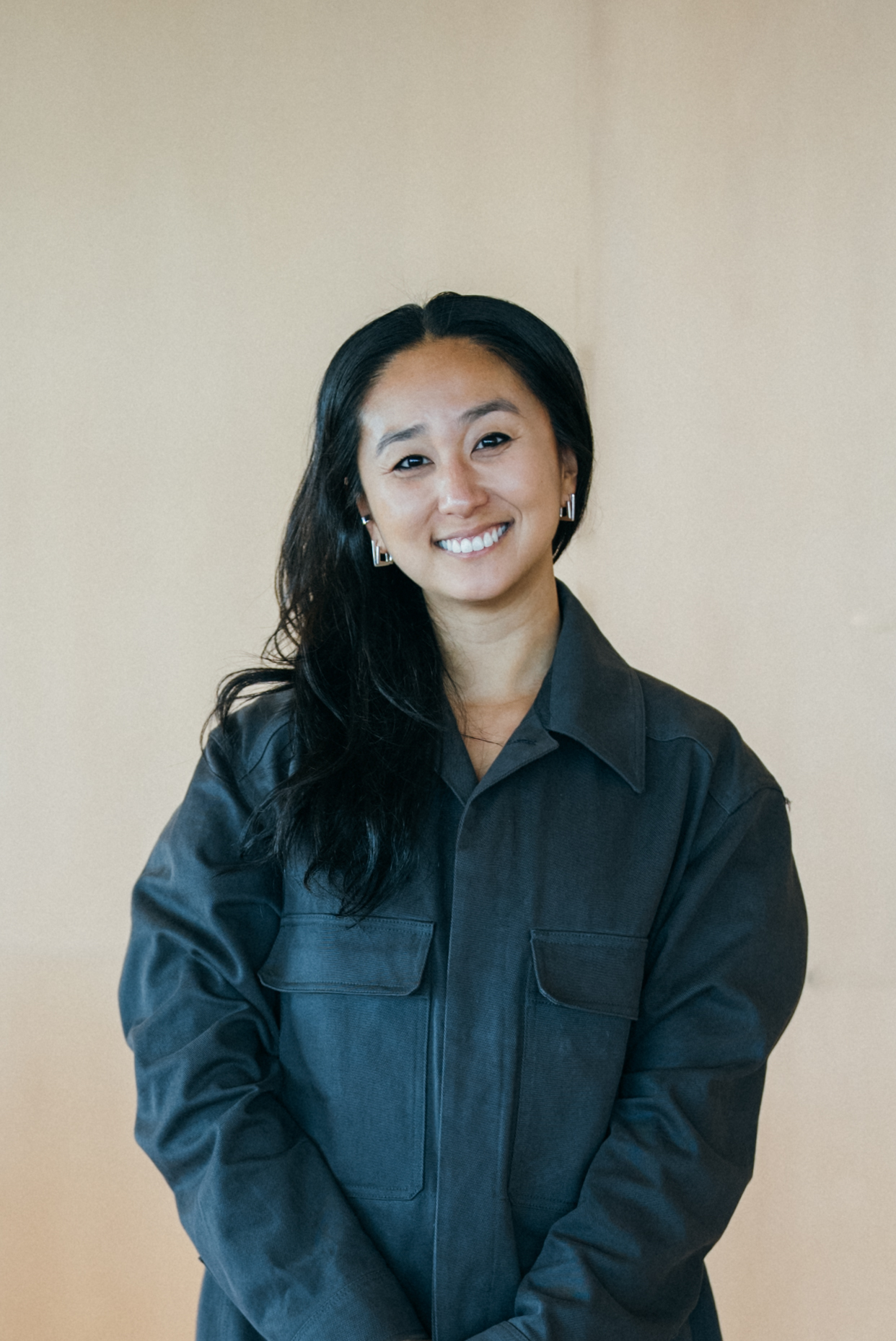
Shensi Ding, Co-Founder and CEO of Merge
SHENSI DING / CO-FOUNDER & CEO, MERGE
San Francisco / New York City / Berlin
Founded 2020
Columbia University, CS ’15
Investors: Accel · NEA · Addition

One dinner at a time,
a company gets built

The scene: a Sweetgreen somewhere in San Francisco, 2019. Gil Feig keeps showing up to their regular dinners looking wrecked. Not hungover. Not overworked in the general sense. Wrecked by a single, specific, infuriating thing: integrations.

Gil was a founding engineer at Untapped, a recruiting startup. Shensi Ding was Chief of Staff at Expanse, a cybersecurity company that would later sell to Palo Alto Networks for around a billion dollars. Both companies were drowning in the same invisible tax: every enterprise customer expected your product to connect with their existing tools. HRIS systems, ATS platforms, CRMs, ticketing software. And building those connections, each one, was slow, expensive, and the work never actually ended.

Shensi and Gil had known each other since freshman orientation at Columbia. They'd been in the same CS classes, the same group projects, the same social circles. By senior year they were running the engineering student council - she was President, he was VP. After graduation they'd each gone separate ways: she toward finance (Credit Suisse, then Silver Lake), then back toward tech operations; he toward engineering. The Sweetgreen dinners were how they stayed in each other's orbits.

The integration problem wasn't new. But something about the combination of both of them hitting the same wall at the same time, at different companies, in different roles, made it feel structural rather than incidental. Not a bug. A feature of the SaaS market itself.

"We didn't have a solution at first - we just knew that this was a big problem, and the solutions out in the market weren't solving it."
- Shensi Ding, Co-Founder & CEO, Merge

What followed was six to eight months of methodical research. They interviewed more than a hundred companies - not pitching anything, not testing product ideas, just listening. They talked to sales reps, partnership leads, product managers, engineers, customer success teams. They wanted to understand the shape of the problem from every angle before they even thought about solutions.

When pricing conversations came up organically - they didn't raise it, customers did - numbers like $50,000 to $300,000 appeared. That wasn't a price point test. It was a market signal. This problem was expensive enough that people would pay serious money to make it go away.

In June 2020, they left their jobs. They started building out of Gil's San Francisco apartment.
By the Numbers
  • 100+Customer interviews before any code was written
  • ~6-8 monthsResearch period before founding
  • June 2020Company founded, Gil's SF apartment
  • ~1 yearBuilt in stealth before public launch
  • April 2021Public launch with HRIS + ATS categories
  • 600Customers at time of Series A
  • 50+Integrations at time of Series A
Before Merge
  • 2015-2017Investment Banking - Credit Suisse
  • 2017-2019Investment Banking - Silver Lake
  • 2019-2020Chief of Staff - Expanse (acq. by Palo Alto Networks ~$1B)
$4.5M
Seed Round (NEA, Aug 2020)
$15M
Series A (2021)
$55M
Series B (Accel, Oct 2022)
30x
ARR Growth, 2021-2022

Integrate once.
Cover hundreds.

The insight that became Merge is simple enough to explain in a sentence: instead of every B2B software company building and maintaining dozens of separate integrations, they integrate once with Merge's unified API, and Merge handles the rest.

Simple to say. Genuinely difficult to build. The integration space is a graveyard of failed attempts - tools that covered five platforms, or ten, but couldn't achieve the breadth that enterprise buyers required. Shensi and Gil weren't trying to build a better integration tool. They were trying to make integrations into infrastructure - the kind you stop thinking about, the way you stop thinking about payment processing once you've wired up Stripe.

They launched in stealth for nearly a year, and when they went public in April 2021, they did something deliberate: they launched two integration categories simultaneously (HRIS and ATS, two of the most painful categories for HR tech and recruiting software). Not one. Two. The message to the market was explicit - this is a platform play, not a feature.

The self-serve model with a free tier removed friction. But both founders spent the next four to five months personally running back-to-back sales meetings globally, treating each one as an A/B test. What messaging landed? What demo structure worked? Who in the buying organization actually had authority? They were the first to find out that meeting with individual engineers was a dead end - decision-makers were heads of product and engineering. Every conversation taught them something.

"Founder-led selling creates a tighter feedback loop that makes your product better," Shensi has said. It also turned out to be the best training for investor pitches. The same story that closed enterprise deals resonated in term sheet conversations.

"Any time a company thinks about offering integrations, they just use Merge."
- Shensi Ding, Co-Founder & CEO, Merge

The AI wave turbocharged what was already working. As LLMs began proliferating in 2022 and 2023, AI-native startups discovered that their models were only as useful as the data they could access - and that data lived inside third-party systems: Salesforce, Workday, BambooHR, Jira, GitHub. Merge's infrastructure became critical plumbing for the entire AI ecosystem. Frontier LLMs and Fortune 500s alike began using Merge not just to offer integrations to customers, but to give AI agents the real-time data access they needed to act.

Integration Categories
  • HRISHR & People data
  • ATSApplicant tracking
  • CRMCustomer relationships
  • TicketingSupport & project tracking
  • AccountingFinancial data
  • File StorageDocuments & assets
AI-Era Use Cases
  • LLM Data AccessReal-time third-party data for AI agents
  • Agent Tool IntegrationConnect agents to enterprise systems
  • Automated WorkflowsHR, finance & support automation
  • Integration ObservabilityDashboards & error detection
Some of the 7,000+ companies using Merge
Calendly Gong Ramp Brex Revolut Airwallex TripActions AngelList

From coding at 12
to $75M raised

Age 12
Started coding - a habit she'd eventually leave for five years before returning to it to build Merge
2011
Enrolled at Columbia University School of Engineering. Met Gil Feig freshman year - same classes, same projects, same friend group
2015
Graduated Columbia with a CS degree. Served as Engineering Student Council President (Gil: VP). Joined Credit Suisse - investment banking
2017
Moved to Silver Lake for private equity/investment banking. The finance detour would later give her a credibility edge in fundraising she didn't know she'd need
2019
Joined Expanse as Chief of Staff - a cybersecurity startup that would sell to Palo Alto Networks for ~$1B. Started noticing the integration problem from the inside
Early 2020
Left Expanse. Began 6-8 months of customer discovery - 100+ interviews, zero pitching. Just listening. Confirmed the problem was universal and expensive
June 2020
Founded Merge with Gil Feig from his San Francisco apartment. $4.5M seed from NEA in August 2020
Apr 2021
Launched publicly - two integration categories simultaneously (HRIS + ATS) with self-serve model and free tier. $15M Series A, 600 customers, 50+ integrations
Oct 2022
$55M Series B led by Accel. 30x ARR growth over prior 12 months. 7,000+ customers. The AI wave arriving right as Merge's infrastructure becomes essential
2024-25
Merge positioned as integration infrastructure for the AI era - powering frontier LLMs, Fortune 500s, and the AI agent ecosystem. 140 employees, offices in SF, NYC, and Berlin
"The timing felt like if we missed this window, it was going to be too late. We had to take our shot."
- Shensi Ding on the decision to found Merge in 2020

The long route to
the right destination

2015
Investment Banking
Credit Suisse
2017
Investment Banking
Silver Lake
2019
Chief of Staff
Expanse (acq. ~$1B)
2020 - Now
Co-Founder & CEO
Merge — $75M Raised

She started coding at 12. Then spent nearly five years in investment banking. Then became an operator. The zig-zag wasn't directionless - the finance years taught her how capital allocation and deal mechanics actually work, which made her a better fundraiser. The operator years taught her where the integration pain lived in a real company. The CS foundation meant she could evaluate the technical feasibility of the product she wanted to build. All three mattered.


What she learned
the hard way

On co-founding

Most founders talk about co-founders in terms of complementary skills: one technical, one commercial; one builder, one seller. Shensi talks about Gil Feig as a life choice. "My co-founder will be the man of honor at my wedding," she's said. "Who you're going to be working with is a huge decision." They've known each other for over a decade. The trust isn't built - it pre-existed the company.

At Merge, the division of labor reflects that comfort level. Gil leads product and engineering. Shensi took on sales, commercial strategy, and investor relations. Neither role was assigned - they evolved naturally from where each person's energy was strongest.

On customer obsession as a survival strategy

The first Merge customer, Shensi has described, was like "a tough parental figure who's just disappointed in you all of the time." Enterprise buyers in the integration space had been burned before - by vendors who promised coverage and delivered partial solutions. Merge's early bet was to over-invest in trust: enterprise-grade security certifications, reliability, and support quality that wasn't strictly necessary for a company at their stage. It was necessary for the customers they wanted.

On fundraising as a learnable skill

The five years in investment banking gave Shensi a front-row view of how capital flows - who makes decisions, how they frame risk, what moves a deal forward. When she sat across the table as a founder, she was less surprised by the process. "There is a process and there is a game, and you need to learn it," she's said. Passion alone doesn't close a round. Understanding the mechanics does.

On the personal cost

She's unusually candid about what it takes out of you. "I don't know if I could do this again - sometimes the first one takes a lot of energy out of you." It's not a complaint. It's an acknowledgment that the "accidental confidence" she credits as a first-time founder advantage - the naivety that lets you attempt things you'd never attempt if you fully understood the difficulty - doesn't refill on demand. You spend it once.

Hiring Philosophy
  • EnergyThe primary filter in hiring decisions
  • DirectnessValues people who say what they think
  • Psychological safetyCulture where questions are welcome
  • SupportivenessTeam cohesion over individual brilliance
On AI at Merge
  • Chose not to build AI products just because competitors were
  • "You can't build it just because everyone else is if it is not the right thing for your company"
  • Believes human involvement remains essential in integration workflows

Quotable

"That first customer is like a tough parental figure who's just disappointed in you all of the time."
On early enterprise customers
"Founder-led selling creates a tighter feedback loop that makes your product better."
On why both founders ran sales personally
"You have to know what's going on. You have to really know your product inside and out."
On technical credibility as a CEO
"Gil looked terrible. He was working on a particularly miserable integration project that was killing him at work."
On the origin of the idea, from their Sweetgreen dinners
"I really think something is here."
Her first pitch to Gil Feig, before any product existed
"We wanted to make sure if we were investing resources into AI products that it was going to be worth it."
On Merge's disciplined approach to AI features

Six things that explain
Shensi Ding

12
The age she started coding. She'd spend five years in finance before returning to write code again - this time to build Merge's foundation from Gil's apartment.
100+
Customer conversations before Merge wrote a line of code. Not pitching. Just listening. It's what made the product right before it was real.
5
Years in investment banking (Credit Suisse and Silver Lake) between graduating Columbia and becoming a founder. The finance fluency turned out to matter enormously when raising $75M.
2
Integration categories launched simultaneously at Merge's April 2021 debut - a deliberate signal that this was platform infrastructure, not a vertical tool. HRIS and ATS, both on day one.
10+
Years of friendship with co-founder Gil Feig before they founded Merge. They met freshman year at Columbia. She plans to have him as the man of honor at her wedding.
$1B~
Approximate acquisition price when Palo Alto Networks bought Expanse, where Shensi was Chief of Staff. She watched a startup exit from the inside before building her own.

Shensi Ding on video

Interviews and appearances where she goes deep on Merge, the integration market, fundraising, and building as a first-time founder.

YouTube
Shensi Ding, Merge Co-Founder - $75 Million to build API Infrastructure in an AI World