The org chart arrived with a verdict hidden in its boxes. Shelley Force Aldred had helped build the company and led negotiations for its acquisition. She and her male business partner had made their equal standing clear. Their credentials were almost identical. Yet the proposed organization gave him a route toward the executive suite and placed her eventual ceiling two levels below it.
In Aldred’s telling, the episode clarified a career choice: she could create the leadership opportunities she wanted by starting companies herself. An organizational diagram is a remarkably efficient piece of fiction when it mistakes an assumption for somebody’s potential. She had already done the difficult work of building a business. Someone else’s boxes need not become her biography.
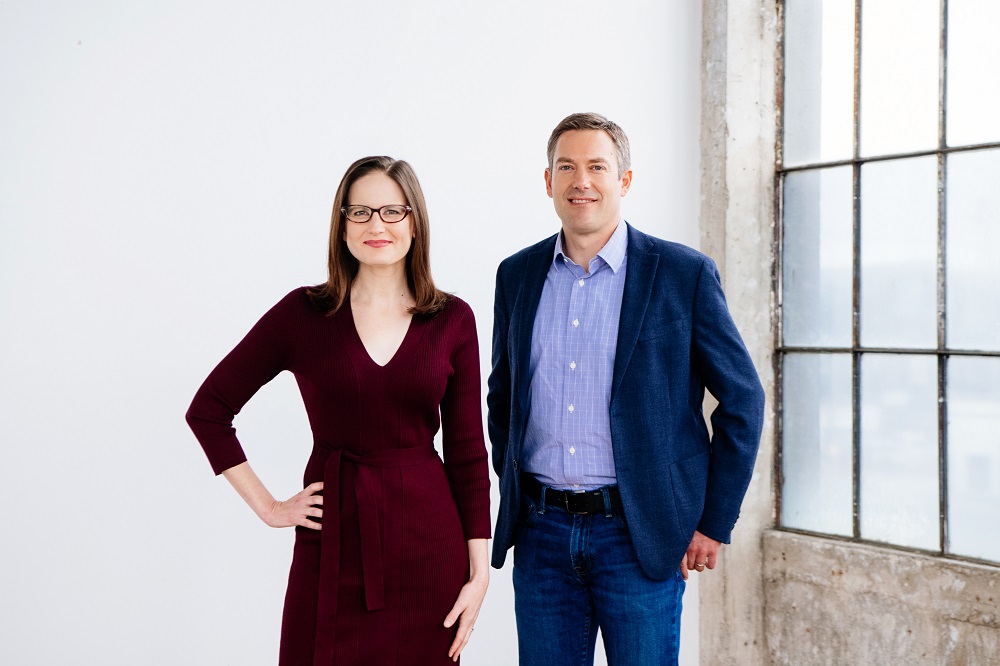
Today she is co-founder and CEO of Rondo Therapeutics. Her working history includes SwitchGear Genomics and Teneobio, and a partnership with fellow scientist Nathan Trinklein that has survived changes of company, product, and scale. The interesting continuity is the choice to keep building together.
A business learns from its buyers
Aldred earned her genetics doctorate at Stanford in 2005. Her training belonged to the period when the Human Genome Project was turning enormous scientific questions into enormous collaborative undertakings. She worked in Richard Myers’s laboratory and contributed to genome and ENCODE research. It was an education in identifying what mattered within a complicated system.
In 2006, she, Trinklein, and Myers founded SwitchGear Genomics. The company made research products for studying the regulatory elements of the human genome. There was a direct connection between the founders’ scientific work and the customers they hoped to serve. Researchers could use what these researchers knew how to make.
Scientific familiarity did not settle the commercial question. The founders initially expected relatively few customers to place large orders. The demand that developed called for a broader base of smaller purchases. Aldred and her colleagues changed the selling model. Being right about a product had left them with more work to do on the business surrounding it.
That distinction matters in her story. A customer can value a tool without wanting to buy it in the quantity its maker imagined. The business has to accommodate the customer’s habits, budget, and purchasing decisions. Conviction is useful; insisting that buyers shop according to the founding plan has a rather smaller audience.
On March 21, 2013, Active Motif announced that it had acquired SwitchGear. Its announcement identified the combination of computational identification, experimental validation, and analysis that the team had assembled. A company that began around the founders’ research had become something another business wanted to own. Aldred had also acquired a practical education in negotiation and operations.
- 2005Stanford genetics Ph.D.
- 2006SwitchGear begins
- 2013Active Motif acquisition
- 2022Rondo’s Series A
- 2025Stanford alumni president-elect
Choosing the same partner again
Trinklein remained part of the story after SwitchGear. Both worked on Teneobio’s founding team; Aldred led preclinical development, while his responsibilities included the technology and discovery work. At Rondo, their division of responsibility places her in the CEO’s seat and him in scientific leadership. They have repeatedly chosen a familiar collaborator for unfamiliar problems.
A long partnership can be described too politely. Aldred’s account includes respect, trust, and persistent challenges to one another’s ideas. The relationship makes room for disagreement. Familiarity has value when it allows people to question a conclusion without first having to establish that they belong in the conversation.
Teneobio brought that experience into a different commercial setting. In October 2021, Amgen completed its acquisition of the company for an announced $900 million upfront, with additional payments dependent on future milestones. The transaction involved a team, its technologies, and a portfolio of work. For Aldred’s career, it marks another business she helped build becoming part of a larger organization.
Rondo carried forward several professional connections. Its leadership includes Katherine Harris, whose previous work also spans SwitchGear, Active Motif, and Teneobio. Repeated collaboration makes this history more textured than a sequence of startup names. Experience travels through people, including their knowledge of how colleagues behave when a plan needs changing.
The people around the capital
Rondo announced a $67 million Series A on March 2, 2022. Red Tree Venture Capital and Canaan Partners co-led the round. Johnson & Johnson Innovation - JJDC, Novo Holdings, and SV Health Investors also participated. It was a substantial financing for a company whose founders had already learned how much work sits behind a public announcement.
Co-led by Red Tree Venture Capital and Canaan Partners, with JJDC, Novo Holdings, and SV Health Investors.
Aldred emphasized the investors’ experience and engagement. Money comes with people who will join board discussions, interpret progress, and respond when the timing changes. Choosing them becomes part of designing the company’s working conditions. An investor’s familiarity with the business can matter long after the announcement has slipped down the news page.
The board changed again in July 2024, when Steven James joined. He brought more than three decades of industry experience, including company leadership and transactions. Aldred highlighted that business background. It was a concrete addition to the resources around her, an example of the CEO’s responsibility to bring useful judgment into the room.
Later that year, Rondo announced a research collaboration and license agreement with Eli Lilly and Company. Its commercial terms included an undisclosed upfront payment, eligibility for development and commercial milestones, and tiered royalties. The agreement granted Lilly exclusive worldwide rights for a defined target. The scale of the partner and the structure of the arrangement gave Aldred another kind of company-building problem to manage.
These milestones ask different things of a founder. Raising a round means assembling investors. Developing a board means selecting people whose experience will prove useful. A collaboration requires deciding how two organizations will work together. Across them, scientific knowledge shares the desk with negotiation, communication, and operating responsibility.
Learning does not stop at the title
Recognition followed the operating work. In October 2024, Aldred appeared among the PharmaVoice 100’s Biotech Pathfinders. The recognition placed her alongside other company leaders. Her comments there emphasized the opportunity for capable teams to demonstrate what they could do, a concern that fits a career spent assembling and leading them.
Her professional life also includes advising Stanford’s SPARK program and serving on the advisory board of Life Science Cares Bay Area. Those commitments extend her working circle beyond Rondo. Students, other entrepreneurs, and colleagues enter the picture alongside investors and employees. A founder’s network can contain people at very different stages of the same uncertain process.
In April 2025, she joined Laura Schewel for a discussion about starting companies from graduate research. Their subjects included fundraising, hiring, unexpected challenges, and exits. There is something usefully circular about that appearance. The person who once had to learn company building while doing it was now helping beginners inspect the less tidy parts.
Her April 17, 2026 listing in UC Davis’s biotechnology seminar series continued that exchange between academic and commercial worlds. A seminar is a modest item beside an acquisition announcement, but it belongs in this career. Explaining work to researchers and trainees is another way accumulated experience becomes useful beyond one company.
A different kind of steering
Outside work, Aldred enjoys travel and reading, particularly mysteries, detective novels, and historical fiction. She also grew up boating and water skiing with her family. Asked for something people might find surprising, she said she handles a boat better than a car. It is a welcome interruption to a biography crowded with companies and credentials.
A detective novel gives its reader a puzzle with an eventual answer. A company requires decisions before the last chapter is available. Aldred has kept returning to that unfinished sort of work, even after an acquisition might have supplied a convenient ending. The pleasure she describes in learning helps explain why beginning again remains appealing.
Back in a room full of beginners
In September 2025, Aldred addressed incoming Stanford bioscience doctoral students as president-elect of the Stanford Medicine Alumni Association. Two decades separated her own doctorate from their arrival. She encouraged them to recognize abilities beyond their intelligence and scientific accomplishments.
“You’re more than your IQ and your scientific prowess.”Shelley Force Aldred · Stanford, September 2025
For someone whose career has crossed research, operations, fundraising, and negotiation, the advice has a practical meaning. A scientific education can become part of several working lives. The abilities that help a person build a team or complete a transaction may receive less attention during a doctorate. They can still become central to what that person does.
Her own record gives those students several possibilities to consider. A research project can lead toward a product. A product needs a business. A business requires colleagues, customers, and the judgment to change its arrangements. An acquisition can close one chapter while leaving the working partnerships intact. The diploma does not prescribe the whole sequence.
There is also the question of who gets to imagine the next chapter. That proposed org chart had offered Aldred a future smaller than the one it offered her equal-status partner. Her subsequent career has put her in positions where she helps make those decisions. The boxes remain useful for assigning responsibilities. She has given them considerably less authority over her possibilities.