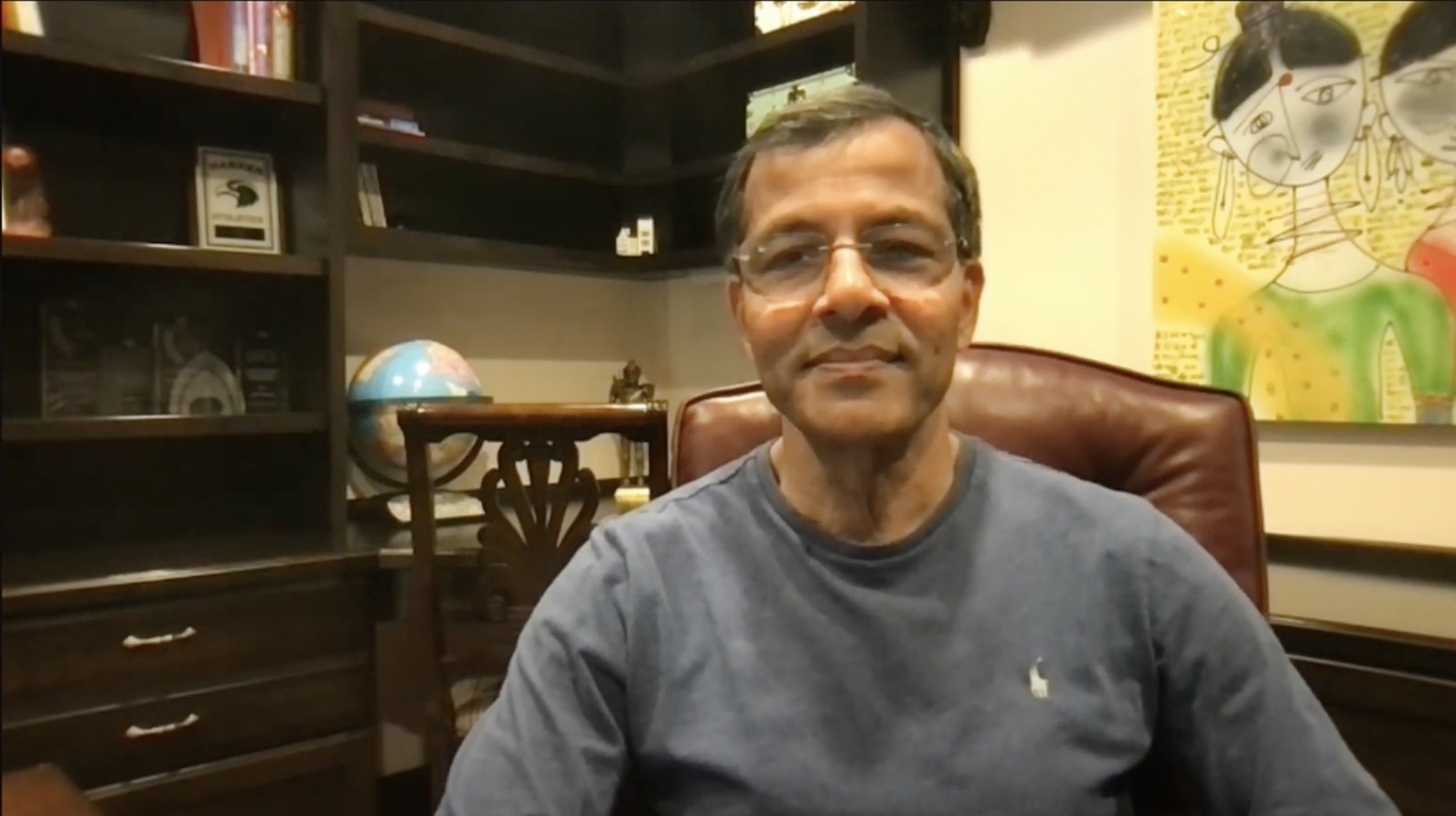
The awkward thing about infrastructure is that success makes it disappear. A video loads, a payment clears, an AI assistant answers, and nobody applauds the route the packets took. Shekar Ayyar has spent much of his career studying precisely these invisible layers - first as an electrical engineer, then as a consultant, dealmaker, general manager, investor, director, and now chairman and CEO of Arrcus. His present wager is that the network can no longer afford to be invisible to the people deciding how AI gets built.
It is a wager with a long prehistory. Ayyar trained at IIT Bombay, earned a master’s and Ph.D. in electrical engineering at Johns Hopkins, conducted research at Bell Laboratories, and taught electrical engineering at Lafayette College. He then added an MBA from Wharton, graduating as a Palmer Scholar. The sequence looks like a deliberate attempt to learn every dialect spoken in a technology company: equations, products, balance sheets, and boardrooms.
His working life followed the same restless logic. McKinsey supplied the consultant’s view from above. Lucent put him closer to telecommunications. Instantis and BindView brought product, marketing, business development, and security software. In 2007, he arrived at VMware, the company whose central trick was to loosen computing workloads from the physical machines beneath them. He stayed for nearly 14 years.
The buyer learns to build
At VMware, Ayyar’s corporate-development ledger included Nicira, AirWatch, VeloCloud, Heptio, and Uhana. The names trace a compact history of enterprise infrastructure: software-defined networking, mobile management, wide-area networking, Kubernetes, and mobile-network automation. More than 60 acquisitions and investments passed through the group he led. A buyer with that much repetition acquires an unusual education. He sees which technical ideas survive diligence, which teams travel well, and which grand strategies collapse when introduced to integration.
Yet Ayyar did not remain in the spectator box. He helped incubate VMware’s push into telecommunications, then became executive vice president and general manager of its Telco and Edge Cloud business. The abstract work of finding markets became the concrete work of serving communications providers preparing for 5G, edge computing, and virtualized network functions. Strategy had acquired an uptime requirement.
“I didn’t intend to jump into a CEO role this quickly, but I would not have taken anything else other than Arrcus.”Shekar Ayyar, on accepting the role in 2021
The way he found Arrcus makes the transition almost comic. He was not combing the valley for a CEO badge. He was evaluating possible investments for a special-purpose acquisition company when Arrcus came into view. Its network operating system ran across varied hardware, separating network functions from the proprietary boxes that traditionally delivered them. The resemblance to VMware’s foundational idea was hard to miss. Ayyar called Arrcus a “diamond in the rough” and accepted the job in September 2021.
A freedom argument disguised as plumbing
Traditional networking often binds software to purpose-built hardware. Buying a routing function can mean buying the vendor’s box, silicon choices, operating system, upgrade path, and commercial terms as one indivisible object. Arrcus argues for disaggregation: keep the network intelligence in software that can operate across different hardware and silicon. Customers gain choices; established bundles lose some of their gravity.
Ayyar’s preferred analogy is compute virtualization. VMware helped free applications from individual servers, which made infrastructure more flexible and prepared the ground for cloud computing and containers. Networking, in his telling, is still waiting for the same liberation. He has described the original compute shift as “breathtaking.” At Arrcus, he wants the network operating system to become the layer that offers comparable freedom.
This is not freedom in the inspirational-poster sense. It means a carrier can introduce a function without replacing a fleet of appliances; a data-center operator can mix hardware; an enterprise can manage routes across clouds; an engineering team can program behavior instead of begging a box to develop a personality. Open standards and common interfaces are what keep this freedom from becoming a cupboard full of incompatible parts.
Then AI moved the bottleneck
For a while, the AI infrastructure story could be told almost entirely in graphics processors. Training giant models demanded giant clusters, and the cluster became the stage. Inference changes the scenery. A model answering real users may need to run across several data centers, edge sites, and specialized environments. Traffic must arrive with acceptable latency. Data may face geographic rules. Power and cost become constraints. The network stops being a passive pipe and begins making consequential choices.
“Not too many people are thinking about the infrastructure underneath,” Ayyar observed in 2024. His concern was not that AI applications lacked imagination. It was that the underlying fabric would struggle to support efficient training and, especially, widely distributed inference. By 2026, Arrcus had introduced an Inference Network Fabric intended to translate application policies into routing behavior - steering requests while accounting for latency, sovereignty, power, and cost.
Arrcus bookings, reported company index
The business around that thesis has widened. In 2024, Arrcus announced a $30 million investment involving Nvidia, Prosperity7 Ventures, Lightspeed, Hitachi Ventures, Liberty Global, Clear Ventures, and General Catalyst. In 2025, it formed a strategic partnership with Fujitsu and 1Finity to combine networking software with computing and optical capabilities. In early 2026, Arrcus said its 2025 bookings had tripled. The figures do not settle the architectural debate, but they show the debate has customers and capital attached.
“To enhance agentic AI adoption by improving response times, networks need to become AI-aware.”Shekar Ayyar, announcing AINF in 2026
The operator’s second map
Ayyar’s argument also gives telecom operators a more ambitious part than carrying somebody else’s traffic. He has said carriers were late to benefit from the cloud wave, while AI offers another chance - provided their infrastructure becomes flexible and monetizable. Distributed inference naturally needs distributed locations, and telecom networks already possess them. The opportunity is to turn reach into an intelligent service rather than a commodity road.
India sits prominently on this map. Arrcus built engineering operations in Bengaluru from its early days, and Ayyar has emphasized that the team participates in product design, technology, and architecture rather than functioning merely as support. By late 2025 the company was discussing local white-box hardware partnerships, opening a Chennai office, and planning to expand its Indian headcount. In August 2026, he again described Bengaluru as central to the company’s product strategy.
His boardroom map has expanded too. Ayyar joined Altair Engineering’s board in 2021 and remained through its sale to Siemens in a transaction valued above $10 billion. In May 2026, Viasat appointed him to its board and Strategic Review Committee, citing experience in enterprise software, cloud, networking, communications infrastructure, and public-company M&A. The engineer who learned finance now carries both disciplines into rooms where architecture and capital allocation meet.
Arrcus also places Ayyar beside a different kind of expertise. The company was founded by networking veterans including CTO Keyur Patel, whose work sits deep in routing protocols and standards. When Ayyar arrived, Patel praised his ability to translate strategy into execution and bring teams together. The pairing matters. Disaggregation is an ecosystem argument, so it requires credibility with engineers, hardware partners, cloud operators, carriers, and investors at the same time. Ayyar’s career has made him conversant with each group, though none is famous for using the same vocabulary.
There is a quieter civic thread as well. His board service has included the regional board of Room to Read, the nonprofit focused on literacy and girls’ education. It is a modest detail beside billion-dollar transactions, but a revealing one: the infrastructure executive has also made room for an organization concerned with the original access technology, reading. His public persona remains mostly professional. The available glimpses show someone more inclined to discuss systems, talent, and opportunity than to manufacture celebrity around himself.
The useful part of optimism
A podcast once billed Ayyar as “the eternal optimist,” and his public comments tend to support the label. He has spoken enthusiastically about the economic benefits that software-first networks could bring to 5G and about AI as a second chance for operators. Yet his optimism is built less like a balloon than a routing table. It looks for an alternate path.
That may be the connecting idea across his eclectic résumé. Research asks what is possible. Consulting asks where it matters. Corporate development asks whether it can be bought. General management asks whether it can be delivered. Ayyar has occupied every one of those questions, sometimes at once. Arrcus gives him a place to attempt the final translation: turn a long-observed architectural pattern into a working, saleable layer.
The grand claim is that networking is decades behind compute. The more modest claim is enough: AI makes old network constraints harder to ignore. Models can improve, chips can multiply, and data centers can grow, but the answer still has to travel. Ayyar is betting that whoever makes that journey programmable will hold an unusually useful piece of the system. Invisible, perhaps. Unimportant, no longer.