ai-networking
(13)
The Little Card That Gave the CPU Its Job Back
AMD Pensando made a specialized processor for the invisible chores that steal time from expensive CPUs and GPUs. The wager turned a repeat Cisco founding team, roughly $313 million in funding and one well-timed piece of silicon into a $1.9 billion chapter of AMD's data-center strategy.

Shekar Ayyar Is Betting the AI Boom on the Part Nobody Sees
After helping VMware turn strategy into more than 60 deals, Shekar Ayyar chose a smaller stage and a harder problem: freeing networks from the boxes that contain them. Now AI is making his once-technical argument feel rather urgent.
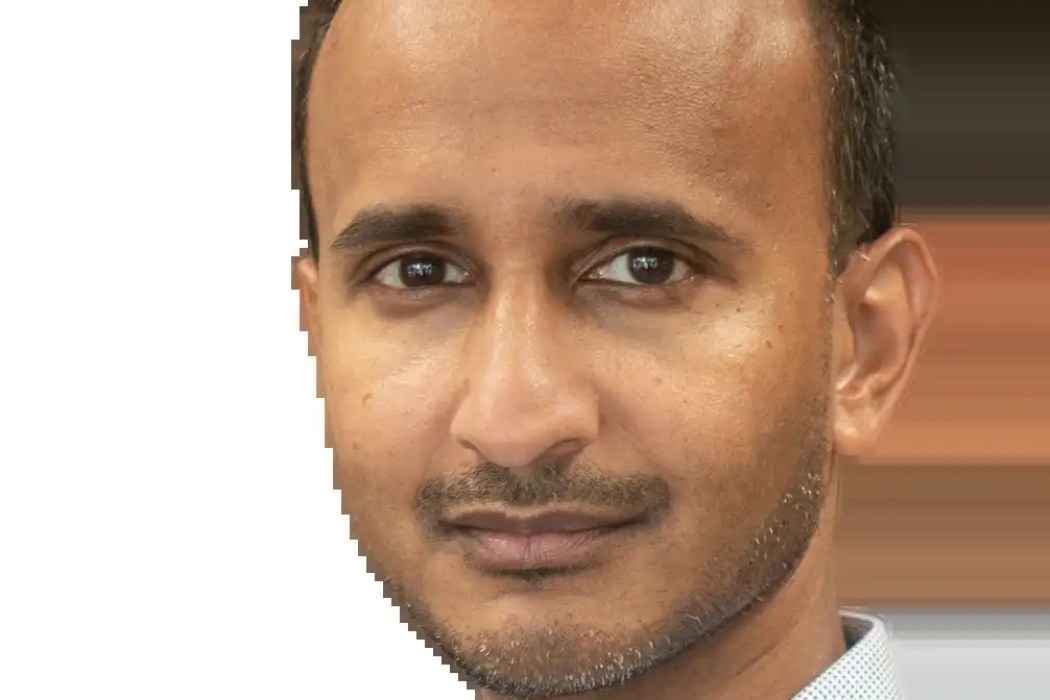
Rochan Sankar
Rochan Sankar is the founder and CEO of Enfabrica, a Silicon Valley startup building networking silicon to move data between the GPUs, CPUs and memory that power large-scale AI. A 26-year semiconductor veteran who ran Broadcom's data center Ethernet switching business before striking out on his own in 2019, he bet the company on a single idea: that AI's real bottleneck is not compute but the plumbing that feeds it. In September 2025, Nvidia paid more than $900 million to license Enfabrica's technology and bring Sankar and much of his team in-house.

Nile
Nile is a San Jose-based Network-as-a-Service (NaaS) company founded in 2018 by former Cisco leaders Pankaj Patel and John Chambers, along with Suresh Katukam and Sri Hosakote. It replaces the traditional buy-and-manage model for enterprise wired and wireless LANs with a cloud-delivered subscription that bundles hardware, software, zero-trust security, AI-driven automation, and performance guarantees. Nile designs, deploys, monitors, and continuously optimizes campus networks so IT teams no longer have to, targeting the roughly $75B enterprises spend each year running networks.
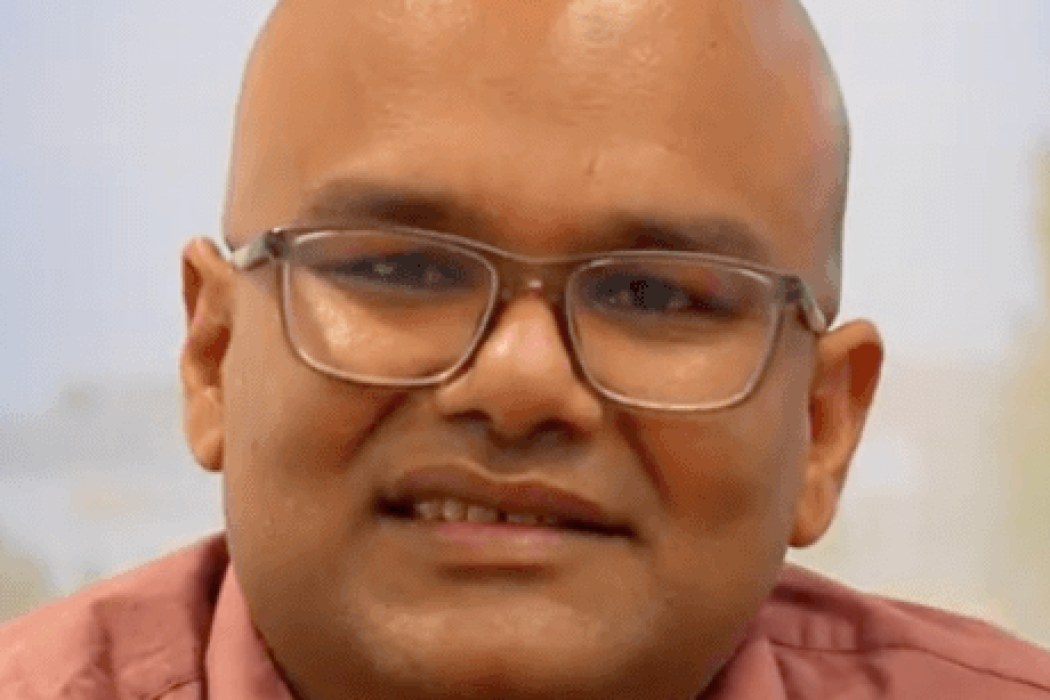
Vishal Shukla
Vishal Shukla is the co-founder and CEO of Aviz Networks, a San Jose-based company building an AI-first, vendor-agnostic networking platform on top of the open-source SONiC operating system. A networking veteran with more than 20 years of experience, he previously held leadership roles at Cisco, IBM, Mellanox (NVIDIA), and Nortel. He holds 25-plus granted patents, has authored books on SDN, OpenFlow and OpenStack, and wrote 'Deciding the Future: Building New Networks for the AI Era.' Under his leadership Aviz raised a $17M Series A in November 2024 (roughly $31M total), backed by investors including Cisco Investments and Qualcomm Ventures.

Extreme Networks
Extreme Networks is a Nasdaq-listed enterprise networking company that designs wired and wireless infrastructure - switches, Wi-Fi access points and SD-WAN - and pairs it with cloud-managed, AI-driven software. Built around ExtremeCloud IQ and the newer Extreme Platform ONE, the company delivers cloud and increasingly AI-native networking to more than 50,000 customers worldwide, from NFL stadiums and hospitals to schools, factories and retailers. Headquartered in Morrisville, North Carolina, it competes with Cisco, HPE Aruba, Juniper and Arista by pitching a single, simpler platform that unifies networking, security and analytics.
Aviz Networks
Aviz Networks is a San Jose-based networking software company that helps enterprises run open, vendor-agnostic networks built on the open-source SONiC operating system and layered with AI. Its stack - ONES, Open Packet Broker, and the GenAI Network Copilot - lets organizations deploy, observe, and operate multi-vendor, multi-ASIC networks across the data center, edge, and AI factory without vendor lock-in, combining 24x7 SONiC support with orchestration, telemetry, and plain-language automation.

Enfabrica
Enfabrica is a Silicon Valley chip startup building the networking and memory plumbing that lets tens of thousands of GPUs behave like one giant computer. Its Accelerated Compute Fabric SuperNIC (ACF-S) moves data at 3.2 terabits per second, and its EMFASYS memory fabric lets AI clusters borrow cheap DDR5 DRAM over Ethernet instead of buying more GPUs for capacity. Founded in 2019 by ex-Broadcom and Google networking engineers, the company raised roughly $290M before Nvidia paid over $900M in September 2025 to license its technology and hire CEO Rochan Sankar and much of his team.

Proficium, Inc.
Proficium is a Union City, California optical connectivity company that designs, manufactures, and tests the cables and transceivers that move data inside hyperscale and AI data centers. Founded in 2003 by Dan Miranda, it supplies OEM-compatible optical transceivers (400G, 800G, and 1.6Tb/s), DAC/ACC/AOC copper and optical cables, fiber assemblies, and InfiniBand interconnects validated against gear from Arista, Cisco, NVIDIA, and Juniper. An early mover in AI/ML cluster networking since 2019, the company was acquired by private equity firm Mill Point Capital in 2024 to scale with surging data center demand.

TeraHop
TeraHop is an optical solutions provider building high-speed optical transceivers and modules for AI clusters and data centers. Operating from Singapore, San Jose, Thailand and a new Texas plant, it ships 400G, 800G, 1.6T and emerging 12.8T-class optics. As the international-facing arm of Zhongji InnoLight - the world's largest optical-transceiver maker - TeraHop pairs high-volume manufacturing with R&D partnerships across NVIDIA, Marvell and Corning, and in 2025-2026 raised roughly US$517M with backing from Abu Dhabi's ADIA and Singapore's Temasek.

Ed Meyercord
Ed Meyercord is President, CEO, and Director of Extreme Networks (NASDAQ: EXTR), a publicly traded enterprise networking company with 2,700 employees and over $1.1 billion in annual revenue. He took the helm in April 2015 after serving as Chairman of the board since 2011, steering Extreme from a hardware-centric also-ran into a cloud-managed, AI-native networking platform. Under his watch the company now powers the wireless networks at Old Trafford, the Burj Khalifa, Taylor Swift concert tours, and Samsung's global operations, while its SaaS ARR has grown dramatically. Before Extreme, Meyercord ran Talk America (a publicly traded telco), Cavalier Telephone, and Critical Alert Systems, after starting his career as an investment banking VP at Salomon Brothers. He is also known for bringing improv comedy principles into corporate leadership and for his advocacy for people with intellectual disabilities through SKIT Programs.

Sheng Liu
Sheng Liu is the CEO of TeraHop and co-founder of InnoLight Technology (now Zhongji Innolight), a company that commands over half the global market share in 800G optical transceivers. A PhD from Georgia Tech, he returned to China in 2008 to fill a domestic gap in high-end optical modules, built InnoLight into a global leader across 400G, 800G, and 1.6T products, and now leads TeraHop - backed by Temasek and ADIA - to power the optical backbone of AI infrastructure worldwide.
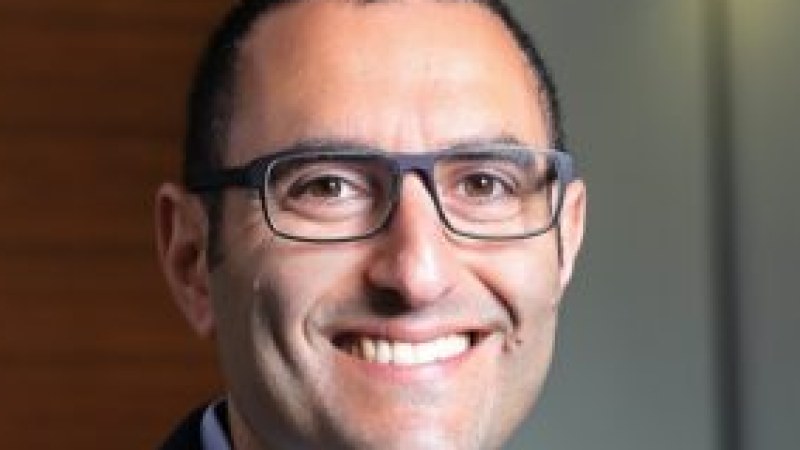
Mansour Karam
Mansour Karam is the founder and CEO of Aria Networks, the AI-native networking company that raised $125M to rethink how GPU clusters talk to each other. A Stanford-trained electrical engineer with a Lebanese-American background, he helped build Arista Networks from a handful of employees to a $4B IPO, then founded Apstra - the company that coined 'intent-based networking' - and sold it to Juniper in 2021. A piano player who names companies after musical terms, Karam has spent 25 years at the bleeding edge of how data moves, and now bets that the network - not the GPU - is the real bottleneck in the AI era.