A cloud is a wonderfully convenient thing to draw. Put a soft outline around some computers, add an arrow, and geography disappears. Geography, unfortunately, has never agreed to this arrangement. Ridge was built around that disagreement: an application might be available across the world while the computers doing its work remained inconveniently far away.
- Ridge added managed cloud services to infrastructure that already existed.
- Its customers needed applications close to users or inside particular countries.
- Ericom expanded deployments using its existing Kubernetes codebase.
- The company raised $22 million; operations ceased in November 2024, according to Startup Nation Central.
That last detail changes how the story should be read. Ridge belongs to the history of distributed cloud computing. Its customer work remains instructive, but the company’s proposition and the company’s survival are separate questions. A useful piece of engineering can leave a useful lesson even when the business behind it stops.
The browser that needed a shorter commute
Consider Ericom, a cybersecurity company whose remote browser isolation service ran website content in cloud containers, then sent safe rendering information to a user’s browser. This made location consequential. Ericom needed low latency, local data handling and a deployment method it could repeat.
It considered colocation and infrastructure-as-a-service across different geographies. The difficulty was the recurring work of provisioning, monitoring and running each location. Managed Kubernetes offered another route. Ericom began with MedOne in Tel Aviv, then added Milan, Chicago and Taipei through Ridge. Its existing Kubernetes codebase travelled with it.
“First, we didn’t want to rewrite any code.”
Shmaya Frankel, Ericom’s head of DevOps
The published case study reported that integration with local data centers fell from weeks to one day. That was a particular customer’s result, rather than a universal delivery promise. The practical appeal was clear: expanding a footprint without turning each destination into a fresh software project.
An Akamai idea, with more work inside
Jonathan Seelig had encountered a related geographical problem before. As a co-founder of Akamai, he had helped build a business around distributing internet content. In a later interview about Ridge, he described the familiar predicament of a popular website housed in one physical place, visited by people everywhere.
Ridge extended that way of thinking to application infrastructure. Moving a copy of content and running an application are different jobs. The latter needs compute resources, deployment tools and ongoing management. Ridge’s argument was that developers should be able to obtain those capabilities in the places their applications actually required.
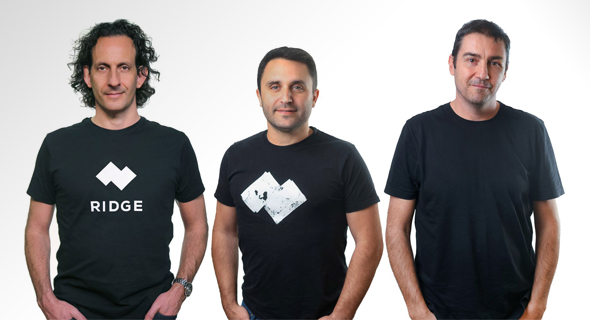
Seelig founded Ridge with Mati Lerner and Nir Sheffi in 2018. Lerner and Sheffi were co-CEOs; Sheffi also served as CTO, and Seelig as executive chairman in the 2022 announcement. NFX investor Gigi Levy-Weiss brought the team together. There was an architectural pedigree here, although a pedigree is never a business model.
The servers were already there
Ridge’s distinctive decision was to use other providers’ infrastructure. Local operators already had facilities, connectivity and computers. Ridge supplied a managed services layer that could turn those resources into a more familiar destination for cloud-native applications. T-Systems, NTT and INAP were named partners in its funding announcement.
Its main building blocks were managed Kubernetes, managed containers and object storage. Kubernetes organizes containerized workloads; Ridge’s service took responsibility for the managed platform around them. Developers accessed the distributed offering through an API instead of treating every local provider as an entirely separate deployment environment.
Kubernetes · Containers · Object storage
data centerColocation
facilityOn-premises
servers
Conceptual service model. Infrastructure providers supply the local resources.
There were two customers to please: application teams looking for convenient deployment, and infrastructure providers seeking services they could sell. Ridge’s white paper emphasized keeping the provider’s customer relationship intact. The local operator could offer managed cloud capabilities while retaining its place in the transaction. That is an unusually revealing detail in a market fond of discussing everything except who owns the customer.
For a developer, the attraction was familiarity. A local infrastructure provider could become a destination for the same category of workloads already running elsewhere. For the provider, the attraction was a new service to offer over equipment it already operated. Ridge occupied the space between those two ambitions. This is also why its public engineering footprint is interesting: its GitHub organization published Go libraries for structured parallelism and JSON construction. Small tools cannot tell us how an entire workplace behaved, but they show an engineering team concerned with the mechanics behind the promise. The glossy phrase “deploy anywhere” still needed software that could organize work, handle resources and make repeatable actions possible across different environments.
A funding round is not a price tag
In January 2022, Ridge announced $22 million in early-stage financing. Contemporary reporting separated that total into a $10 million seed round and a $12 million Series A. The latter had closed in August 2021, led by Chartered Group, with participation from NFX, Mayfield, Slow Ventures and Viola.
Those figures describe capital raised. They do not measure the cost of Ericom’s rollout, the company’s expenditure or the price of a Kubernetes cluster. Ridge’s economic pitch was to use existing capacity and spare customers another infrastructure build. Whether that arrangement was cheaper for a given workload would depend on the actual commercial terms and operating requirements.
Its place in the market was consequently specific. AWS, Azure and Google Cloud offered managed services within their own footprints. Ridge addressed applications whose location requirements did not fit comfortably within that selection. Another alternative was running deployments directly on colocation or IaaS, accepting the management work that came with them.
Begin with the map
Ridge’s own account of demand was more interesting than a parade of futuristic inventions. In a 2021 interview, Seelig described customers split between performance concerns and data sovereignty. Remote browsing, virtual desktops, collaboration, gaming and ecommerce featured among the applications seeking better performance in particular markets. The common purchase was control over placement.
The lesson to copy is a sequence of decisions: establish where an application needs to run, preserve portable code, then make deployment repeatable. That approach earns its keep when location creates a real constraint. If a regional deployment already meets the requirement, additional locations also mean additional operating considerations. Distribution should have a job description.
Startup Nation Central records Ridge as having ceased operations in November 2024; IVC also labels it ceased to operate. The engineering example does not establish the cause of closure. What remains is a sharp question for anyone choosing infrastructure: how much of the problem is computing power, and how much is where that power lives? Ridge made the second question difficult to ignore.