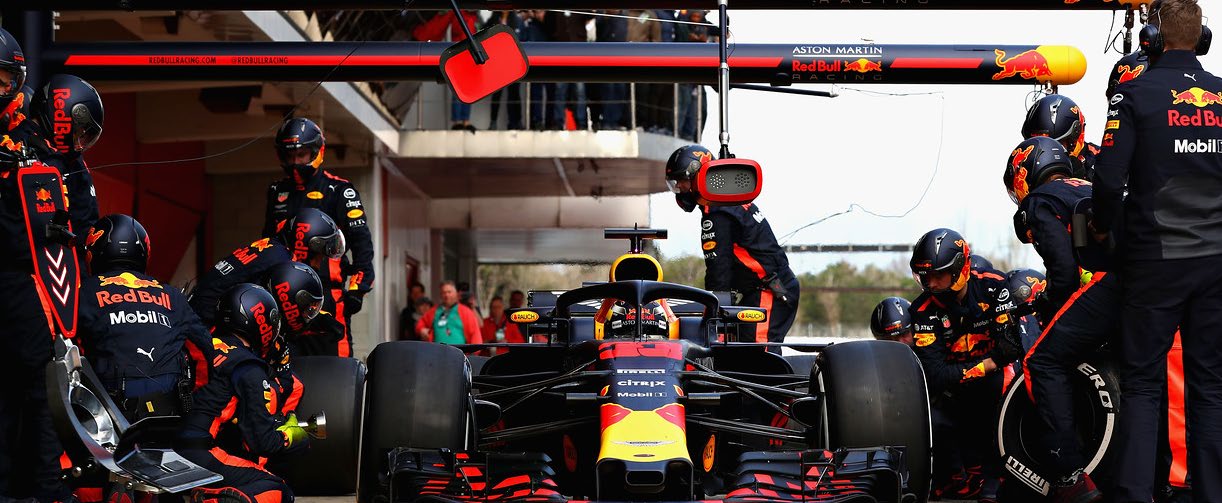
At Aston Martin Red Bull Racing, the waiting happened after the car had supplied its data. Post-processing took nine minutes. After the team adopted HPE SimpliVity, it took two. The seven-minute difference is a useful place to begin a story about enterprise infrastructure. A server purchase sounds rather less dull when you measure it in decisions people can make sooner.
- Compute, storage and VM backups share one infrastructure platform.
- Deduplication removes repeated data before it becomes more work.
- Morpheus VM Essentials adds a KVM-based virtualization option.
Today, SimpliVity is an HPE product family, descended from a company founded in 2009. Its proposition is consolidation with data protection built in. For a reader who has never negotiated a storage contract, think of an office that has accumulated a cabinet for every problem. SimpliVity asks how many of those cabinets need to exist.
01 / The expensive part was the waiting
Red Bull’s earlier environment had roughly 500 virtual machines spread across disparate hardware, with 50 terabytes of data. Engineers using virtual desktops noticed performance lags. The first trouble described in HPE’s 2018 case study was ordinary infrastructure friction: sprawl and delay. The team compared architectures and tested actual workloads before selecting SimpliVity for its VMware, desktop and trackside infrastructure.
“We took real workloads and asked vendors to impress us”
Matt Cadieux, CIO, Aston Martin Red Bull Racing · 2018
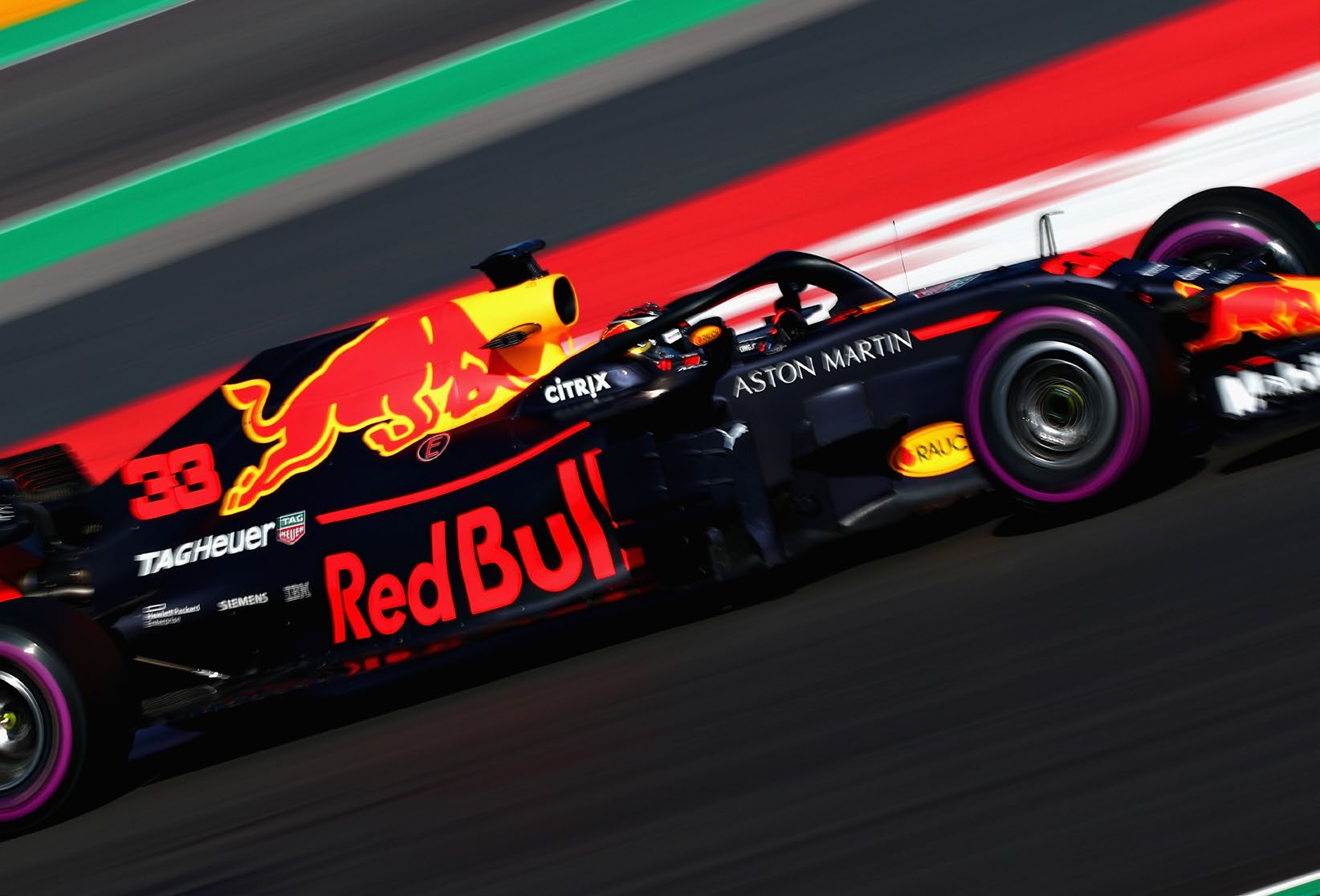
One customer’s reported result, not a forecast for every workload.
02 / A very small war against repetition
A virtual machine is a software-defined computer running on physical hardware. Enterprises can have many such machines containing repeated operating-system files and recurring backup data. Buying more disks accommodates the repetition. SimpliVity’s data architecture tries to prevent it from consuming so much capacity in the first place.
The technical method is inline deduplication, compression and optimization. HPE’s VMware white paper describes processing data at inception using eight-kilobyte granularity. Deduplication identifies repeated blocks; compression reduces the space needed for what remains. The design applies these efficiencies across the data lifecycle, including backups and transfers. Fewer bytes to store can also mean fewer bytes to move.
The appliance brings x86 computing, all-flash storage and storage networking together. Administrators work with virtual-machine policies rather than coordinating every task across separate systems. They can back up, restore and clone machines within that environment. HPE also publishes a REST API and a Python library for automating operations. The expertise sits in the connection between distributed storage, data reduction and manageable protection.
The idea was not immediately an easy sell inside the company. In a later CRN interview, Kempel recalled engineers worrying that deduplicating data before it reached disk would slow things down. The original design used an accelerator card to do that work. That account captures the tradeoff at the heart of the product: removing duplicate bytes is valuable only if the effort of recognizing them does not become the next bottleneck. A buyer should measure both efficiency and application response.
03 / The customer who bought the argument
Founder Doron Kempel had previously built Diligent Technologies, a deduplication business acquired by IBM. SimpliVity’s original OmniCube reached general availability in 2013. This was an infrastructure company with a software architecture at its center, which helps explain why its history involves both heavy engineering and considerable venture capital.
In March 2015, SimpliVity announced a $175 million Series D at a valuation above $1 billion. Waypoint Capital led the round after using the technology across five global sites. A customer had tried the proposition and then financed it. The announcement put cumulative venture funding at $276 million.
HPE announced a $650 million cash acquisition in January 2017; the deal closed that February. Keep the fundraising valuation and acquisition price separate. They describe different transactions. Kempel’s stated rationale emphasized HPE’s sales reach, partner channel and complementary technology. The architecture gained access to a much larger route to customers.
04 / Small sites, consequential jobs
The racetrack is a memorable example of computing near the work. Hospitals and branch offices supply quieter reasons to do the same. HPE describes Brooks Rehabilitation Hospital using two-node SimpliVity deployments at remote hospitals, alongside HPE Private Cloud at its primary site. Tiga Healthcare Technologies appears among its current customer examples, too.
The audience is enterprise IT: teams running virtualized databases, desktops and applications, often across distributed locations. SimpliVity occupies the HCI market alongside alternatives such as Nutanix and VMware vSAN-based systems. Its distinguishing pitch is the combination of data efficiency and built-in protection, backed by HPE hardware and services. The comparison should include those jobs, rather than merely the number of servers.
05 / The bill needs a denominator
HPE sells configured hardware, software licenses and support; partners contribute deployment services. From July 1, 2026, new SimpliVity PC1000 business became exclusively channel-led. A meaningful cost comparison therefore needs the full configuration: capacity, processors, networking, licensing, support and migration. HPE’s store handles the appliance through custom quotes.
The famous 90% capacity-saving guarantee needs equally careful reading. It compares storage and backup combined with traditional solutions, assuming at least one daily SimpliVity backup of every VM retained for 30 days. It does not promise that every live dataset shrinks by nine-tenths. Backup retention changes the arithmetic; a photograph of a percentage cannot do your capacity planning.
For a pilot, give the vendor a busy day rather than an empty machine. Include the backup schedule, the desktop login rush and the application that staff complain about most. Ask someone on your own team to perform the restore. A demonstration operated entirely by the seller tells you what the seller can do; a rehearsal operated by your administrator tells you more about the system you will actually live with.
06 / A new choice, the same homework
PC1000 now pairs SimpliVity hardware with HPE Morpheus VM Essentials. That adds a KVM-based path alongside VMware. HPE’s release guide records the first VM Essentials version in August 2025; its Japanese product updates list Gen12 SimpliVity models in September 2026. The platform continues to change, making compatibility checks part of the purchase.
The transferable lesson is wonderfully unglamorous: test your own workload, restore a backup, and price the whole job. HPE’s availability guarantee assumes a healthy cluster and enough CPU and memory for failover. RapidDR can orchestrate recovery, but recovery still needs preparation. Teams requiring unsupported software combinations or lacking failover capacity should resolve those constraints before committing. The useful question is how much work your particular system can safely stop doing.