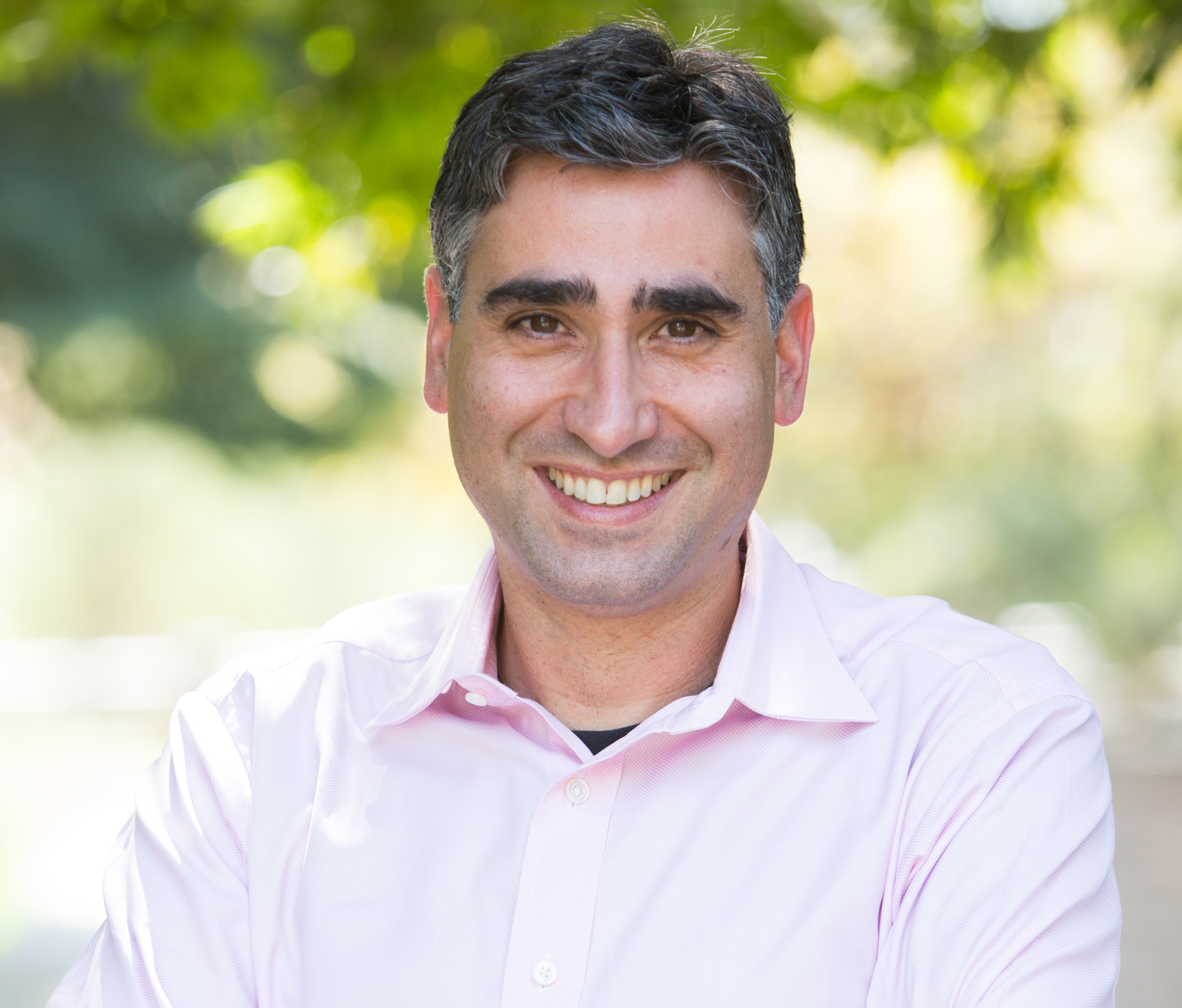
Martin Casado sits on 15 boards. He runs a $1.25 billion fund. He shows up to packed TechCrunch conferences to tell regulators they're wrong about AI. And somewhere in all that, he still maintains a Stanford personal website with a quotes page, like a grad student who never quite left the lab.
That website tells you everything. The man who convinced the world that networks could be software never wanted to sell anything. He wanted to stay at Lawrence Livermore National Laboratory, running defense simulations in peace. But Stanford had other plans.
Here's what happened: After 9/11, Casado shifted his research to intelligence community network security. The problem was simple - data moved through networks like trains on tracks. Fixed routes. Physical constraints. No flexibility. His PhD dissertation asked a better question: what if data could move like airplanes instead?
The answer became OpenFlow, the protocol that birthed software-defined networking. Casado decoupled data from physical infrastructure. Suddenly, networks were programmable. The implications were seismic - and nobody wanted it for free.
So in 2007, fresh out of his PhD under the powerhouse trio of Nick McKeown, Scott Shenker, and Dan Boneh, Casado co-founded Nicira Networks. Five years later, VMware paid $1.26 billion for it. That's $252 million per year of existence. Not bad for someone who didn't want to be an entrepreneur.
Most people would take the money and disappear into angel investing or Tesla collecting. Casado did the opposite - he stayed at VMware and proved he could scale. As SVP and GM of the networking and security business unit, he managed thousands of engineers and grew the portfolio from zero to $600 million in annual revenue. Customer base increased 6x in three years.
The pattern repeats: build something impossible, prove it works, scale it bigger than anyone thought possible.
In 2016, Andreessen Horowitz made him their ninth general partner. Not to write checks and show up to board meetings. To lead the entire infrastructure practice. To find the next generation of companies that would remake computing infrastructure the way he did with networking.
The bet is working. Casado's portfolio reads like a who's-who of the next wave: World Labs (co-founded by Fei-Fei Li), Cursor, Ideogram, Braintrust, Fivetran, Netlify. Companies building AI development tools, data infrastructure, and enterprise software that didn't exist five years ago.
But here's where it gets interesting: While other VCs were quietly building AI portfolios, Casado was standing in front of TechCrunch Disrupt crowds arguing against California's SB 1047. The bill would have required large AI models to meet safety testing and risk mitigation requirements. Casado called it wrong. Standing room only. No apologies.
His AI thesis is counterintuitive: "Professionals tend to use AI for the things they're not professional at." Translation - the tools won't replace experts. They'll free experts to do more of what they're actually good at. And he's betting $1.25 billion that the infrastructure enabling that shift will be worth trillions.
The technical depth is still there. He maintains a GitHub account. A YouTube channel. That Stanford website. When he talks about AI models, he doesn't hand-wave - he notes that "we've basically exhausted all human-created data, within a factor of two." When he discusses AI adoption, he observes that "the more of an opinion and taste you have, the harder time you're going to have using it."
These aren't investor talking points. They're researcher observations from someone who built his career on seeing infrastructure problems before they became obvious.
The awards piled up: ACM Grace Murray Hopper Award in 2012 for pioneering software-defined networking. NEC C&C Award. Inductee of Lawrence Livermore Lab's Entrepreneur's Hall of Fame. Honorary doctorate from Northern Arizona University in 2017 - a full circle moment for someone who got his bachelor's there in 2000 before the Stanford PhD.
But the most telling detail? He completed both his Master's and PhD from Stanford in the same year - 2007. That's not normal. That's someone in a hurry to build things.
And before Nicira, there was Illuminics Systems, an IP analytics company he co-founded while still at Stanford. Acquired by Quova in 2006. So Nicira wasn't even his first exit. It was just the one that changed an industry.
Born in Cartagena, Spain around 1976, Casado immigrated to the United States and became a cornerstone of American technology innovation. From running defense simulations at Lawrence Livermore to reinventing networking at Stanford to scaling VMware's security empire to deploying billions at a16z - the through-line is infrastructure.
Not the sexy consumer stuff. The pipes. The protocols. The invisible systems that make everything else possible. Software-defined networking enabled cloud computing at scale. His next bets are on the infrastructure that will enable AI at scale.
In August 2026, he'll participate in the Agentic AI Summit at UC Berkeley. Five thousand people in person, hundreds of thousands on livestream. The topic: autonomous agents. The infrastructure: still being built. The investor leading the charge: still the guy who didn't want to leave the lab.
Casado's Instagram has over 1,200 posts. His LinkedIn shows nearly a thousand followers despite being a senior VC. He's not hiding from the technical community - he's still part of it. That's the strange specific that matters. He's not a VC who used to be technical. He's a technologist who happens to deploy capital.
The venture model might be broken, as he's argued on podcasts. VCs might need to run Wall Street differently. Open source might pose national security risks with China. But the infrastructure opportunities? Those are just getting started.
The man who made data fly is now teaching the next generation how to build runways. Fifteen boards. One fund. Zero interest in slowing down. And somewhere on a Stanford server, there's still a website that says "yuba.stanford.edu/~casado/" - a reminder that you can take the researcher out of the lab, but the lab never really leaves the researcher.
That's Martin Casado. Accidental entrepreneur. Intentional empire builder. Still maintaining a quotes page like it's 2007.