McKinsey Senior Partner. PayPal EVP. Now holding two of the hardest jobs at America's biggest wireless carrier - simultaneously.
It's February 2026, and Alfonso Villanueva is running two of the most consequential jobs in American telecommunications at the same time. He came to Verizon in November 2025 as EVP and Chief Transformation Officer - a role built specifically around him by new CEO Dan Schulman. Three months in, the Consumer Group CEO departed, and Schulman handed Villanueva that portfolio too. One resume, two corner offices, 100,000 employees, 150 million customers.
The logic is not hard to follow. Villanueva spent 15 years at McKinsey, including four years running the entire Asia-Pacific Telecom, Media & Technology practice from Singapore. He knows what a carrier's insides look like at the cellular level. Then he spent nine years at PayPal as EVP of Strategy, Corporate Development and Data Science, sitting on the Management Committee and building PayPal Ventures into a portfolio of more than 80 investments. He has seen transformation from the consulting seat, from the startup seat, and from the corporate venture seat. What Verizon needed was someone who had sat in all three chairs.
Schulman and Villanueva go back. They worked together at PayPal. When Schulman took the top job at Verizon, he didn't post a listing - he made a call. That kind of hire says something about what Schulman thinks transformation actually requires: not an outside fixer, but a specific person whose judgment he already trusts.
The transformation agenda is concrete. A $5 billion operational savings target for 2026. That means workforce reductions (13,000 roles eliminated in late 2025), real estate consolidation, contract renegotiations, and automation rollouts. It also means standing up a $20 million reskilling and career transition fund for the employees who are leaving - a detail that doesn't make headlines the way the job cuts do, but reveals something about how Villanueva thinks about the human side of restructuring.
Alongside the cost work, he is running Verizon's data and AI strategy, procurement, supply chain, and sustainability programs. At the Consumer Group, he oversees the company's largest customer base in the United States - wireless plans, Fios, home internet, and all the retail and digital touchpoints that come with it.
The interesting thing about Villanueva's career arc is not that he has held big jobs. It's that each job has added a different lens. McKinsey gave him the playbook. SingTel gave him operational command of a digital launch inside a legacy telecom. PayPal gave him the venture investor's view - learning to bet on what's next rather than just optimize what exists. Verizon is where all of it gets applied at scale.
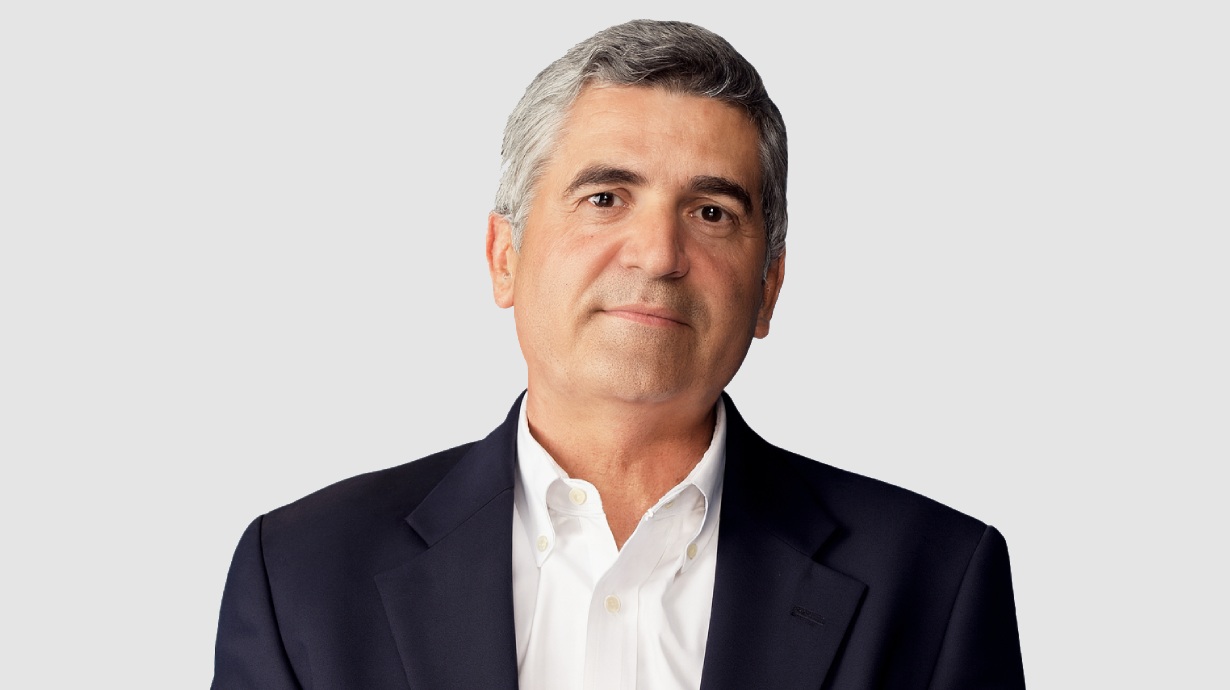
"Alfonso has played a key role in our transformation efforts since he joined our team. He is at the center of our change - scaling the innovations, technologies and investments that are improving our end-to-end customer experience and ushering in our next era of value creation."- Dan Schulman, CEO, Verizon
Verizon's transformation is not a pivot. It's a rearchitecting. Under Villanueva's direction, the company set a $5 billion operational expenditure savings target for 2026 - one of the most aggressive efficiency mandates in recent telecom history. The levers are familiar to anyone who's watched corporate transformation close-up: headcount reduction (13,000 positions in late 2025), real estate rationalization as remote-work habits permanently reshape office needs, vendor contract renegotiations that leverage Verizon's scale, and automation deployments that replace manual processes across operations.
What separates Villanueva's approach is the AI and data dimension. He oversees Verizon's data analytics and AI strategy directly - not as a separate technology initiative, but as a core instrument of the transformation itself. Customer experience improvements, predictive network maintenance, intelligent procurement decisions: the thread running through each is the same analytical discipline he spent years building at PayPal.
Restructuring at scale generates two narratives. One is the efficiency numbers. The other is the 13,000 people. Villanueva authorized a $20 million reskilling and career transition fund specifically to support employees leaving the company - a program that doesn't show up in the OpEx savings headline but reflects a particular philosophy: transformation is easier to sustain when the people affected by it believe the organization is being honest with them.
It's a small percentage of the total cost savings, but it's a public statement of intent. At companies where transformation is purely a financial exercise, these funds don't get created. The fact that this one did tells you something about how Villanueva thinks the work gets done - and about what he's seen fail at other companies over his 25-year career.
Before Verizon, there were nine years at PayPal. Villanueva joined in 2015 when Dan Schulman was already running the company, taking the EVP slot covering strategy, corporate development, and data science. He sat on the Management Committee - PayPal's equivalent of an executive committee - and shaped how the company thought about where it was going next.
The M&A work was substantial. PayPal made significant acquisitions during this period to expand its capabilities in payments, credit, and data infrastructure. Villanueva's team drove much of that deal activity. Alongside it, he built out PayPal Ventures, the corporate venture arm that grew under his watch into a portfolio of 80+ investments across nearly 50 active companies - covering fintech, commerce technology, and data infrastructure. It was named to the Global Venturing Powerlist in 2023, recognizing it as one of the world's most consequential corporate venture programs.
That combination - running M&A while also running a venture portfolio - is unusual. Most organizations separate those functions. Running both gave Villanueva a view across the full spectrum of how large companies acquire capability: by buying it, by investing in it early, or by building it. That breadth shows up now at Verizon, where the transformation agenda spans all three approaches.
External Independent Director at one of Spain's leading banks. Appointed to the board, bringing international technology and digital strategy expertise to a traditional financial institution.
Board member of the multinational insurance and assistance services group. Chairs the Audit Committee - a governance role that demands precision on financial controls and risk management.
Founded in 2024 as a personal vehicle for strategic technology investments between his PayPal chapter and Verizon. The name suggests Spanish roots; the strategy reflects 25 years of pattern recognition.
PayPal Ventures named to the annual list of the world's most impactful corporate venture programs under his leadership - recognition from the corporate venture community of sustained, serious investing.
One of the more telling stretches of Villanueva's career is the time he spent in Singapore running McKinsey's Asia-Pacific TMT practice. This was 2011-2013, when Southeast Asian telecoms were moving faster on digital transformation than most Western carriers were even acknowledging as a priority. He was in the room when companies like SingTel, Telstra, and others were rebuilding their business models around mobile data, digital content, and platform revenue.
The SingTel overlap is particularly interesting. Villanueva helped stand up Digital Life - a new business unit inside a legacy telecom - and its venture fund. This is exactly the problem Verizon faces today: how does a company built on network infrastructure become competitive in customer experience, digital services, and AI-driven operations? Villanueva already ran that play once, on a smaller scale, in Singapore more than a decade ago.
The Asia experience also gives him a global frame that most U.S. telecom executives don't have. He has watched what happens when large incumbent carriers move too slowly on digital transformation, and what's possible when they commit to it seriously.
"Alfonso and his team will help us see beyond where we are today and build the next wave of opportunities into lasting competitive advantage."- Dan Schulman, CEO, Verizon
When Dan Schulman arrived at Verizon as its new CEO, one of his early moves was personal: recruit the person he had worked alongside at PayPal. That kind of hiring - a CEO calling a trusted former colleague for a role built around transformation - is unusual at this level. It's not a search firm shortlist. It's a judgment call based on direct experience.
Schulman's public comments about Villanueva are not vague. "Extraordinary colleague," "at the center of our change," "build the next wave of opportunities" - this is specific language from a CEO who has worked closely with the person he's describing. It tells you something about the nature of the relationship and the weight Schulman places on Villanueva's judgment.
The dynamic also explains some of Villanueva's speed at Verizon. He didn't spend his first year learning the culture. He walked in with a mandate, CEO backing, and a clear remit. Three months later, he picked up the Consumer Group leadership on top of it.
Villanueva earned his MBA with Highest Distinction from London Business School, specializing in Finance, graduating in 2000. He also holds an MA with Highest Distinction from Northeastern University.
Two degrees, both with the highest academic honors. This is not coincidental. The discipline required to perform at that level reflects the same analytical rigor visible throughout his career - whether modeling M&A deals at PayPal, running strategy consulting for major telecoms at McKinsey, or now mapping a $5B savings agenda at Verizon.
He holds two postgraduate degrees, both with highest distinction - from London Business School and Northeastern University.
He built PayPal Ventures from scratch into a portfolio of 80+ investments across nearly 50 companies - more than many dedicated venture funds.
He sits on the board of Bankinter, a major Spanish bank - suggesting deep personal ties to Spain alongside his global career.
He spent years in Singapore running McKinsey's Asia-Pacific tech practice before most Western executives were paying serious attention to the region's digital transformation.
He is simultaneously the company's transformation chief and its interim consumer division CEO - effectively running two of Verizon's most critical mandates at once.
The Verizon CEO who recruited him - Dan Schulman - was his direct colleague at PayPal. A rare case of a Fortune 10 CEO personally headhunting a former colleague for a bespoke C-suite role.
The transformation playbook Villanueva is running at Verizon isn't just a cost-cutting exercise. The savings create room for something else: investment in the capabilities that will determine what Verizon looks like in 2030. That means AI-driven network management. It means customer experience infrastructure that competes with digital-native companies, not just other carriers. It means data and analytics capabilities that turn Verizon's scale - 150 million customers - into a genuine competitive asset.
His broader career arc points toward a conviction that the best transformation leaders combine strategic vision with operational discipline and the ability to spot what's coming next through the venture investor's lens. He has demonstrated all three at McKinsey, at PayPal, and in Singapore. Verizon is the largest canvas yet.
Whether the interim tag on the Consumer Group title eventually becomes permanent, or whether a new consumer chief arrives while Villanueva concentrates on the transformation mandate, is an open question. What isn't open is that the work he's overseeing at Verizon - $5 billion in efficiency, AI strategy, 100,000 employees, 150 million customers - is among the most consequential corporate transformation projects currently underway in American industry.