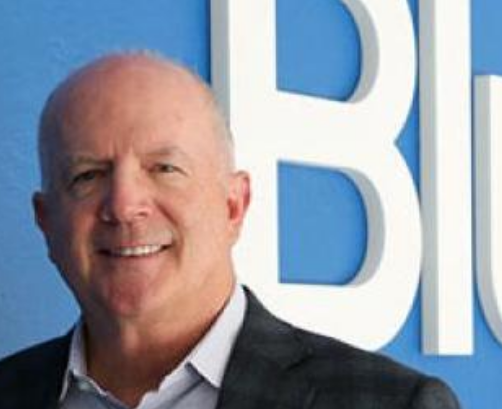
The Quiet Architect of Four Billion-Dollar Exits
Somewhere in Pacific Heights, there is a 6,400-square-foot home with Golden Gate Bridge views and a basketball court that Quentin Gallivan bought in 2002 — when he was already EVP at VeriSign and already thinking about the next company to run. He later listed it for $14.25 million, rented it to two families for four years while he was busy running BlueJeans, and when he finally sold it, bought something grander one block away. That's essentially his professional pattern, too. Build it, hand it off, move to something bigger.
Gallivan spent his formative years at General Electric under Jack Welch's famously demanding management philosophy — twelve-plus years across Hong Kong and Maryland, building the operating discipline that would later make him the CEO other CEOs call when a company needs scaling, not starting. By the time he left GE for Netscape, the internet economy was just discovering what enterprise software could do. He saw it early and has been ahead of that curve ever since.
His career reads like a ledger of Silicon Valley inflection points: cloud security before it had a name (Postini), SaaS business intelligence when spreadsheets still ruled (PivotLink), big data analytics when Hadoop was a novelty (Aster Data), commercial open-source analytics at scale (Pentaho), and enterprise video when Zoom was still a startup (BlueJeans). Each company arrived at the right moment. Each exit went to the right buyer.
"It's taking the foundation we have and building off of that and completely focusing on the enterprise space."
Quentin Gallivan, on BlueJeans strategyAt VeriSign in the late 1990s and early 2000s, Gallivan ran worldwide sales and field operations as Executive Vice President. The company had about $20 million in revenue when he arrived and over $1.5 billion when the machine he helped build was running at full speed. He was part of the team that took it through its IPO. That experience of scaling from nascent revenue to public markets became the template he applied again and again across half a dozen companies.
In 2005, Postini tapped Gallivan as President and CEO — notable because Postini was pulling executives from within VeriSign's orbit to run a cloud-based messaging security company that most people hadn't heard of yet. He grew Postini to 35,000 customers, over 10 million users, and more than $100 million in annual revenue across 25 countries. Google acquired it in 2007. That was exit number one.
PivotLink followed, where he grew a SaaS BI platform to over 15,000 business users serving Fortune 1000 companies — before "SaaS BI" was common vocabulary. Then Aster Data in 2010, a big data analytics company whose growth he accelerated before Teradata acquired it in April 2011. That was exit number two, completed less than eight months after he joined.
Four Acquisitions. Four Different Buyers.
Pentaho was the longest of the four — Gallivan spent more than five years there as Chairman and CEO, growing revenue by over 600 percent and transforming what was an open-source BI tool used by small businesses into a market-leading big data analytics platform serving large enterprises. Hitachi Vantara acquired it. Exit number three.
By the time BlueJeans founder Krish Ramakrishnan started meeting with Gallivan in 2016 and 2017, the pattern was already visible. Gallivan had never worked in video conferencing. Ramakrishnan didn't care. He wanted someone who could operate at scale, think in enterprises, and close a deal. He persuaded Gallivan over a period of roughly nine months of informal conversations. In August 2017, the announcement was made.
The Day Everything Changed
By January 2020, BlueJeans had just crossed $100 million in annual recurring revenue. Gallivan appeared on the TalkingHeadz podcast and spoke about enterprise focus, Verizon acquisition conversations that had been quietly ongoing since mid-2019, and the company's position in an increasingly crowded video market. Fifteen months into his tenure, the strategy was working. Then COVID-19 changed the calculus for everyone.
March 16, 2020: BlueJeans traffic surged 300% in a single day.
When companies sent workers home at the start of the pandemic, BlueJeans went from a well-performing enterprise video platform to critical infrastructure overnight. The acquisition conversations with Verizon, Gallivan later said, "changed dramatically" that same day. The deal — announced April 2020, closed May 2020 — valued BlueJeans at approximately $400 to $500 million.
The timing looked prescient. It was also a decade of work. BlueJeans had spent years building enterprise-grade reliability, security, and interoperability — with Cisco, with Polycom, with LifeSize. It had invested in Dolby Spatial Audio, in real-time transcription, in HIPAA compliance and GDPR frameworks. When 300 million people suddenly needed to video conference from their living rooms, the companies that had prepared for enterprise use cases found themselves holding infrastructure that mattered.
"As we have all learned during this pandemic, video conferencing is a powerful medium for connecting people so they can collaborate and work productively."
Quentin Gallivan, 2020Gallivan remained at Verizon post-acquisition to continue running BlueJeans, as founders and operators often do after a close. He stepped down in May 2021, described at the time as recently retired. He had been CEO for nearly four years, had grown the company to nine figures of ARR, and had navigated one of the stranger acquisition timelines in recent enterprise software history — a deal that was in negotiation before COVID, accelerated because of it, and closed in the middle of a global pandemic.
What He Leaves Behind
Across six companies, the recurring theme isn't sector — it's stage. Gallivan joins companies that have product-market fit but need commercial scale. He builds the enterprise sales motion, expands internationally, and positions for acquisition. The buyers are always strategic, never purely financial.
Pentaho is perhaps the best case study. In October 2011, Gallivan was appointed Chairman and CEO of a commercial open-source analytics company that primarily served small and medium businesses. Over five-plus years, he rebuilt the go-to-market for the enterprise segment, added big data integration capabilities, grew the customer base to approximately 1,500 production deployments, and expanded the team to 35 salespeople. Revenue grew by more than 600 percent. Hitachi Vantara acquired it, integrating Pentaho into its industrial IoT and data analytics stack.
The Orbus Software chapter — which began in September 2022 when Gallivan joined as CEO — fits the same logic. Orbus is an enterprise architecture and digital transformation platform. It was already a Gartner Magic Quadrant Leader. Gallivan brought the commercial scaling muscle, handed the CEO seat to Steve Fulton in December 2025, and stayed on as Chairman. The playbook does not require him to stay forever.
What Gallivan Says
The combination of BlueJeans' world class enterprise video collaboration platform and trusted brand with Verizon Business' next generation edge computing innovation will deliver highly differentiated and compelling solutions to our joint customers.
On the Verizon acquisitionI am passionate about Analytics and appreciate the challenges that companies have in gaining insight from the massive amounts and diversity of data.
On joining Pentaho, 2011Cloud computing is moving forward, away from a single application focus. Customers now expect easy, fast access to information for analysis and reporting, and they expect it from anywhere at any time.
As PivotLink CEO, 2009Pentaho is the one company that can bring together — in an integrated and low-cost platform — the traditional world of transaction data with the new world of web, social media and device data.
On Pentaho's differentiation25 Years of Enterprise Moves
What Makes Gallivan Unusual
When BlueJeans founder Krish Ramakrishnan was looking for a successor, he didn't search the video conferencing industry. He spent nine months in informal conversations with a big data analytics executive who had never made a video product in his life. That choice says something about what Ramakrishnan valued — and about the kind of operator Gallivan is. He moves between industries because the enterprise motion is the same regardless of what the software does: identify the right segment, build the right sales infrastructure, and position the company for a strategic acquirer who will pay for what you've built.
The GE background is underrated. Twelve years inside one of the world's most demanding corporate training grounds — across two continents, in Hong Kong and in Maryland — gave Gallivan the operating vocabulary that startup CEOs often lack. He arrived at VeriSign already knowing how to manage a global team, how to hold a pipeline review, how to think about market-by-market expansion. That's not a talent you develop running a seed-stage startup. It's what you carry out of GE after a decade.
The TalkingHeadz podcast hosts, after their January 2020 interview, described Gallivan as "analytically strong while maintaining a well-rounded perspective in conversation." That phrasing is precise. He doesn't perform charisma; he performs clarity. In a market crowded with visionary types who don't hit numbers, that's a differentiator.
He also has a consistent pattern with timing. He joined Aster Data in September 2010 and Teradata acquired it by April 2011 — seven months later. He joined Pentaho in October 2011, stayed five-plus years, and built for a longer exit. At BlueJeans, he joined in August 2017, spent three and a half years scaling to $100M ARR, and closed the Verizon deal in May 2020. He's not a short-timer; he's someone who reads when a company is ready and who doesn't hold on past that moment.