Shannon King has spent her career arriving when the explanation is still under construction. The product works. Engineers understand why. Customers who have felt the pain understand why. Everyone else needs a bridge, preferably one that can carry a sales forecast, a product brief, and a skeptical finance leader without collapsing into buzzwords.
Her route to the chief marketing officer’s chair at Panther runs through a particularly technical stretch of business software: software supply-chain security at Sonatype, open-source sustainability at Tidelift, developer intelligence at Sourcegraph, monetization infrastructure at Stigg, and finally cloud security operations. These are products with nouns that need footnotes. King’s public work suggests that she enjoys the footnotes, but insists they eventually report for duty.
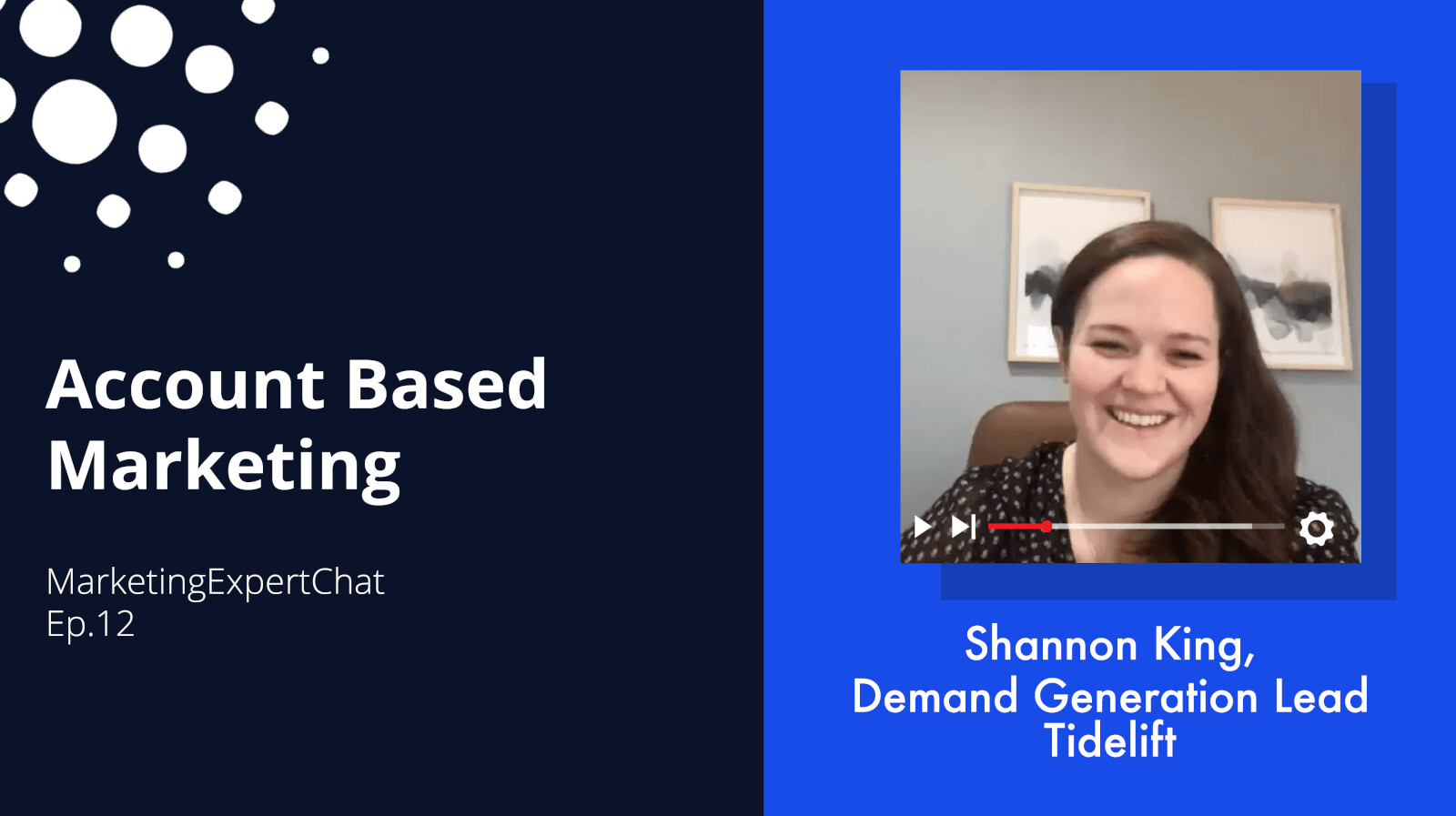
That instinct was visible years before Panther. In 2021, while leading demand generation at Tidelift, King appeared in a short interview about account-based marketing for small B2B companies. The setting was modest, the subject notorious for jargon. Her answer was plain: an account-based strategy cannot belong to marketing alone. Product needs to know which accounts matter. Sales needs to work from the same structure. Engineers need to understand how their decisions connect to the audience. With that alignment, she said, a marketing team of one can begin to scale to the size of the organization.
“It needs to be a full organizational strategy, not just a marketing program or a sales program.”Shannon King, on account-based marketing
The campaign is the company
The line contains her operating philosophy in miniature. Marketing is not the colorful carriage bolted to the back of the train. It is a set of connections among what a company builds, whom it chooses to serve, how a salesperson recognizes demand, and how everyone measures progress. The trick is not convincing every department to become a marketer. It is giving each department enough shared context to pull in the same direction.
King’s advice on measurement was equally revealing. She warned against walking into a cross-functional conversation speaking only in click-through rates, conversion rates, and acquisition costs. Translate the work into the funnel and into dollars, she argued, because those are terms the whole organization can use. The marketer’s private dialect may be precise, but it is useless if precision stops at the border.
Her proposed experiment was beautifully free of chest-thumping. Imagine a sales representative working 100 accounts. Marketing targets 50 with an account-based program and leaves 50 as a comparable cohort, while sales continues to work both groups. Then look for three changes: more opportunities, greater dollar value, and faster closes. King also watched engagement lift, seeking roughly 40 to 50 percent more activity as an initial health signal. As successive programs added lift on top of lift, she expected the benchmark to come down.
This method solves a political problem as well as an analytical one. Announcing that marketing closed an account is an efficient way to irritate the salesperson who spent months calling it. A cohort comparison makes a humbler claim: the coordinated program appears to have changed behavior. Credit remains shared. Evidence gets sharper. Nobody must perform a ceremonial surrender of the pipeline.
A career in translation
King began in nonprofit marketing at the Side-Out Foundation in 2013, then joined workforce-management software company Natural Insight. Old company announcements place her on media contacts while Natural Insight was expanding a cloud platform used to coordinate tens of thousands of mobile workers. The job was already close to the pattern that followed: make a system of labor, data, and business outcomes comprehensible to the market.
She moved to Sonatype in 2016 and rose from marketing manager to senior manager of digital marketing. A published Drift customer report attributed a concrete result to her team: a tailored account-based welcome message converted 30 percent better than a generic version. A former colleague’s LinkedIn recommendation praised King’s direction and transparency across teams, alongside a string of adjectives - passionate, determined, driven, organized, motivated - that read like the packing list for a demand-generation leader.
After Tidelift came a vice presidency at Palantir Technologies, followed by Sourcegraph in 2023. At Sourcegraph, King led demand generation and later served as interim head of marketing. A public hiring process for an account-based marketing manager put her in both the résumé deep dive and the marketing working session, a small procedural clue about her taste: examine the record, then watch the work happen.
In 2025 she joined Stigg, whose product separates pricing and entitlements from billing infrastructure. Her public posts there kept returning to flexibility: pricing experiments should not be trapped behind engineering debt, and an expanding product should not require a company to disturb the billing code every time the commercial model changes. Again, the marketing story was embedded in the architecture. Modularity became speed. Infrastructure became optionality.
Writing for the second reader
King arrived at Panther as CMO in February 2026. In her announcement, she praised the company’s detection-as-code foundation, cloud-scale security data, and emphasis on operator control. Her distinction around AI was precise: she valued that it was embedded in detection, investigation, and response workflows, with trust and transparency preserved, rather than presented as an ornamental feature.
A month into the job, she wrote about Panther’s company kickoff in San Diego. What impressed her was not a single presentation but the shared conviction in the room. That may sound like the familiar glow after an off-site, except King tied it to the practical work ahead: build the go-to-market motion, hire into demand generation, and make the product’s evolution legible to a market crowded with AI claims.
Then she noticed a new audience. During a major Panther launch, the marketing team was still producing its usual internal materials: messaging documents, enablement, product briefs, FAQs. But colleagues were no longer the only readers. AI tools were interpreting those documents, summarizing them, and surfacing pieces across sales, engineering, product, design, and marketing.
“Every team now has two audiences: the people doing the work, and the systems helping them do it.”Shannon King, writing during a Panther launch
The observation extends her old lesson about common language. In 2021, marketing had to explain its work so a colleague outside marketing could understand the value. In 2026, the document also had to carry enough structure and context for a machine to retrieve it faithfully. If the writing was vague, the ambiguity could be reproduced everywhere. If context remained unwritten, the system behaved as though it did not exist.
There is a sharp practical idea here. Companies have spent years treating internal prose as disposable scaffolding. A brief only had to survive the meeting. A messaging document could rely on the author hovering nearby to explain the clever shorthand. Once AI tools mediate company knowledge, every missing assumption becomes a tiny operational tax. King’s prescription was simple: structure the information, make it precise, and write down the context.
The data beneath the story
Panther’s own category made this idea especially apt. The company began with cloud-native security monitoring and detection as code, using software-engineering practices to make detection logic testable and versioned. It evolved toward an AI SOC platform grounded in a security data lake. The story was about context at scale: alerts mean little without the surrounding telemetry, history, and organizational knowledge that help an analyst decide what happened.
In June 2026, Panther announced an agreement to be acquired by Databricks. King had been there only a few months. Her reaction joined the product narrative to the deal logic: security’s future runs on data, and Databricks provides that foundation. She also returned to the human details - the talent, craft, and pace of the Panther team, and the path from detection as code in 2018 to an AI SOC platform.
Databricks completed the acquisition in August. Panther’s SOC workflows, more than 100 integrations, and detection capabilities moved alongside Lakewatch, Databricks’ open security lakehouse. It was a corporate ending with the shape of King’s career thesis. The technical substrate and the market promise had become one story.
Her tenure at Panther was brief before the deal closed, but brevity can expose a method. King joined because she believed the product had been built with rigor. She organized its distinction around control, context, and embedded AI. She hired for a scalable demand engine. She reconsidered internal writing for machine readers. Then the company’s data architecture became central to an acquisition by a data platform.
There is no need to gild this into a solo triumph. King did not build Panther, and her own posts are generous about founder Jack Naglieri and the wider team. Her contribution is easier to see as connective tissue: the ability to recognize a technical choice, give it commercial language, install measurement around it, and help a company repeat the explanation without losing the plot.
What the operator leaves behind
The stealable part of King’s playbook is not a channel tactic. It is the sequence. First, agree on the customer across functions. Second, compare behavior instead of fighting over attribution. Third, translate the result into terms the organization shares. Fourth, document the context so both colleagues and their tools can use it. The work compounds because each stage makes the next one less fragile.
It is also a humane system. Sales receives evidence without losing credit. Engineers see how product decisions reach accounts. Marketers are asked to explain, not merely announce. AI gets context instead of a pile of polished fragments. Complexity remains, as it should. Confusion loses its job.
King’s career has moved through companies whose products sit below the visible surface of work: components, code, entitlements, telemetry, detections. Her own craft has a similar quality. A growth engine is rarely the thing in the photograph. When it works, the company can recognize its customer, explain its value, and learn from what happens next. The spotlight arrives later. By then, the wiring is already in the walls.