A name in a spreadsheet has a peculiar power. It looks like progress. Add a job title, a company and an email address, and a marketing team has something it can count. Whether a salesperson can do anything with it is another question. UnboundB2B has built its business around that distance: the space between finding a person and starting a useful commercial conversation.
- A B2B agency combining brand work, targeted media and lead qualification.
- Its products separate finding buyers from engaging them and preparing a sales handoff.
- The useful test: what happens after the contact enters your database?
The company serves enterprise technology businesses and growing B2B firms. Its raw materials are familiar: audience data, content, email, advertising and people who qualify prospects. The interesting choice is how it arranges them. A campaign can begin with a list of desirable accounts and extend through repeated exposure, content engagement and a meeting. Each stage has a different job.
A pilot with six contenders
Consider Delphix. Its European team already had conferences, user groups and field events. What it needed was more contact with particular buyers in the UK, France and Germany. Broad visibility would not solve a targeting problem. Nor would a pile of contacts that could not be used within its data-compliance requirements.
According to UnboundB2B’s case study, Delphix tested the agency alongside five other vendors. Annabelle Ross, then a senior global campaigns manager, described looking beyond cost per lead to later activity, meetings, opportunities and pipeline. The comparison followed people after their names entered the database.
“UnboundB2B drove the best results for us.”Annabelle Ross, Delphix
In the agency’s published customer story
The published account reports a 25% year-over-year increase in marketing-sourced opportunities. Its most instructive detail is quieter: prospects taking a second action, such as registering for an event or downloading more content. A second action gives the next conversation context. That is a useful evaluation method for any buyer comparing lead suppliers.
Three verbs, three different jobs
Unbound Initiate handles discovery. The agency defines an ideal customer profile, then uses its databases and publications to bring matching prospects to the client’s content. It promises an agreed number of leads. That makes delivery easier to plan, provided both sides agree on what qualifies.
Unbound Promote adds repeated exposure through account-based campaigns, programmatic advertising and lead scoring. A target account can encounter a brand across channels while the agency assesses engagement. The proposition suits marketers who need both recognition and identifiable contacts from the same campaign.
Unbound Activate addresses the next problem: interested people who remain somewhere in the middle. It combines tailored email, advertising and behavioral tracking with BANT qualification. Budget, authority, need and timeline become questions to investigate before a handoff. The client’s sales team still has work to do; qualification supplies a more useful starting point.
When the buyer has never heard of you
Burckhardt Compression’s US business presented a different constraint. The industrial company needed recognition among target buyers and access to senior decision-makers. UnboundB2B’s published account describes programmatic display advertising, personalized email sequences, industry content distribution, qualification calls and appointment setting.
The agency reports more than 97 appointments between October 2024 and January 2025. Meetings are an intermediate result, and their commercial value depends on what follows. Still, the sequence explains the intervention: introduce the company, give technical buyers something relevant to examine, then establish whether a sales conversation makes sense.
Vendor-reported, October 2024 - January 2025
North Atlantic Networks needed a more consistent supply of suitable prospects beyond direct outreach and field sales. Its customer story describes intent-based content distribution and account targeting, with 650 leads delivered over 12 weeks and a reported three-times return on investment. Data ownership and speed of delivery helped determine its vendor choice. The company continued nurturing the database after the initial engagement.
The agency behind the machinery
Founded in 2017 by Rameshwar Sahu and Nishant Agrawal, UnboundB2B grew around enterprise sales and marketing work. In a July 2019 announcement, it reported expanding from two people to 150 in two years. A larger Pune office brought sales, operations and data teams into a setting designed for collaboration.
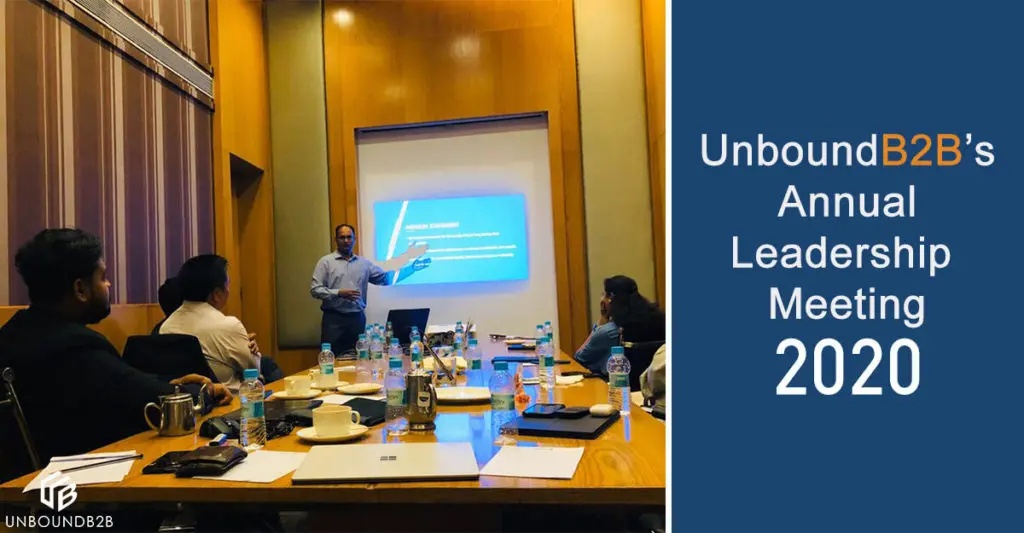
That operational side matters. In October 2024, the company announced a Guadalajara office for North American demand generation and sales development support. In April 2025, it announced David Hayes as executive vice president of GTM Solutions. Both moves support a business that needs campaign execution and client coordination as well as targeting technology.
The expertise being sold is partly editorial: choosing content that makes sense for a particular audience. It is also operational: matching accounts, coordinating channels and arranging follow-up. Those jobs explain why the offering is a managed service. A company with a capable internal team could perform them itself; an agency supplies additional audience access and execution capacity.
What the buyer should copy
BrandGen, its broader framework, starts with positioning, moves into campaign creation and activation, then measures and adjusts. The company’s argument is that capturing existing demand cannot carry the whole growth plan. Buyers must also recognize the brand before they are ready to speak. This puts UnboundB2B between specialist lead suppliers and broader B2B marketing agencies.
Its commercial pitch includes pay-for-performance delivery. One unusually concrete reference appeared in its October 2024 event promotion: up to 200 Promote leads, valued at $10,000. Treat that as a promotional valuation, rather than a rate card. The buying discipline is to define the audience, accepted qualification, follow-up responsibilities and measurement before assigning a price to volume.
Readers can copy the Delphix pilot: compare suppliers against the same audience, then track the second action and eventual opportunity. The approach needs useful content, patient follow-up and agreement between sales and marketing. A team seeking immediate purchases from unfamiliar prospects would be asking this machinery to skip its essential work. The spreadsheet becomes useful when someone knows what to do with the next name.