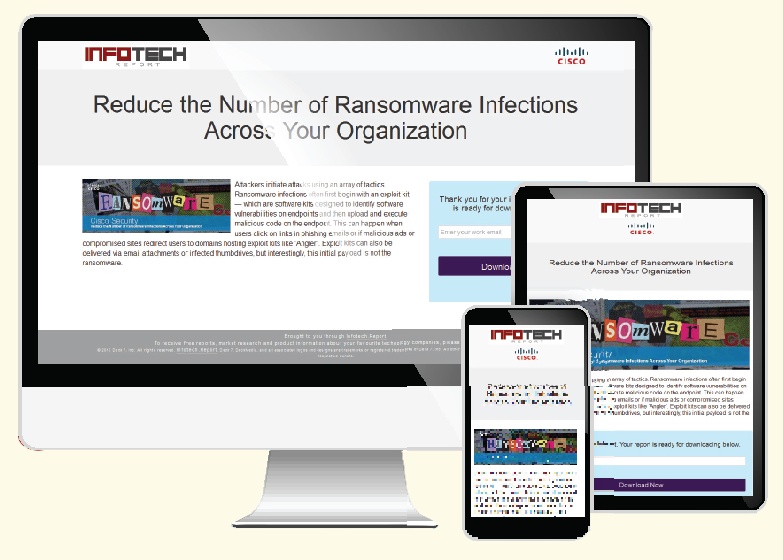
A Cisco security campaign needed something less cinematic than a cyberattack: the attention of people who might buy protection. Machintel’s account of the work describes whitepapers distributed through the InfoTech Report and other technology publications, individual landing sites, retargeting and telephone checks on the resulting contacts. Before those names entered Cisco’s customer-management systems, someone had to verify them. The machinery behind a digital campaign included a phone.
- Machintel supplies B2B campaigns to brands and to agencies that resell the work.
- Its pitch combines audience data, owned publications and campaign execution.
- The useful test: follow a lead all the way to the sales conversation.
That small detail helps explain Machintel. The company occupies the space between having an audience and giving a sales team a useful reason to call. Its work connects content, distribution, qualification and delivery. A marketer can buy those pieces separately. Machintel wants to make the connections between them part of the purchase.
01 / The name missing from the campaign
Founded in 1999, Machintel supplies agencies as well as brands. An agency can keep the client relationship and strategy while handing campaign execution to Machintel. The finished work carries the agency’s name. For the buyer, the company doing the delivery may remain invisible.
That arrangement makes commercial sense. Agencies gain capacity without building every specialty themselves. Machintel gains customers through firms that already have relationships with brands. Its services for platforms include both disclosed partnerships and arrangements where the end customer never sees its name.
Now its public pitch puts greater emphasis on direct access. The company says brands can work with the underlying provider and see more of how campaigns run. This is a change in emphasis, rather than an abandonment of agencies: both routes remain on offer. The interesting tension is that visibility becomes a selling point for a business that has also sold discretion.
“We own the stack.”
Machintel’s explanation of its delivery model
02 / A publisher with a sales assignment
Machintel reports a network of 33 publications covering 16 industries. These outlets carry news, business resources, whitepapers and events. They also provide places to distribute a client’s content and advertising. Publishing gives the campaign a setting: technology material can appear before a technology audience, rather than begin life as an undifferentiated email blast.
In the Cisco example, the company reports meeting lead-volume targets before the deadline and achieving full acceptance of delivered marketing- and sales-qualified leads. Acceptance matters because it tells the operator whether delivery met the agreed criteria. It remains a different measurement from a sale. A verified contact can be entirely real and still decide to buy nothing.
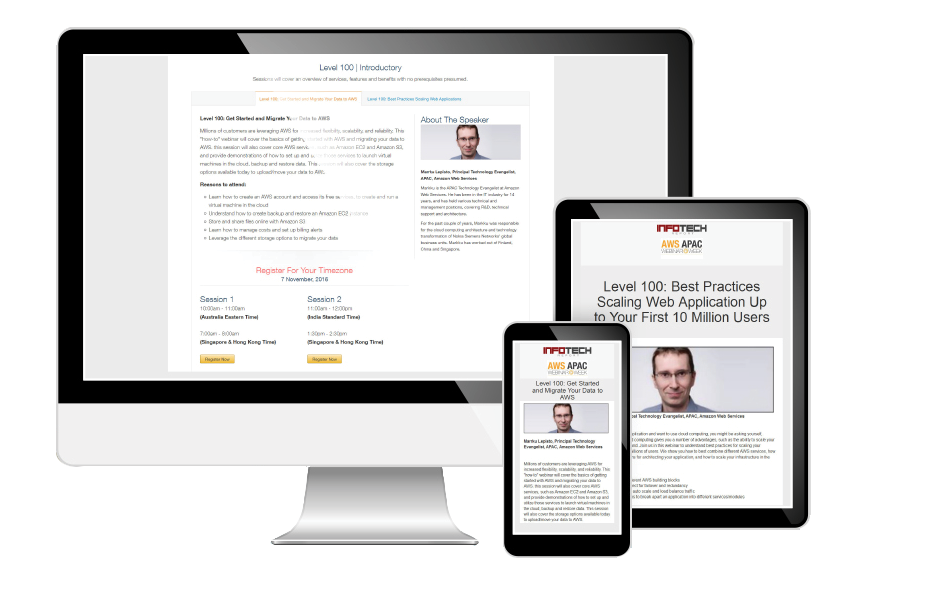
The AWS APAC case study follows a related pattern. Webinar content aimed at financial and insurance decision-makers travelled through email, publications and social communities. Microsites collected attention; retargeting encouraged another visit. Machintel reports on-time lead delivery and full acceptance. The workflow is more revealing than the percentage: repeated contact, distributed across several surfaces, followed by a defined delivery standard.
- 01Find the audienceIndustry and account targeting
- 02Earn attentionContent, publications, landing pages
- 03Check the contactQualification and verification
- 04Equip salesDelivery with usable context
03 / More than another list
The service menu extends from targeted lists and content creation to appointment setting, product demonstrations and event recruitment. Account-based marketing narrows the focus to selected companies, with tailored messages and coordinated outreach. Audience services add segmentation and enrichment. Web development reaches into the landing pages and systems that make those campaigns usable.
Software adds another layer. Congrexo provides intelligence about industry events and competitor participation. PartnerExplorer addresses channel and partner networks, including decisions about marketing development funds. These are adjacent planning problems: where should a company show up, and which relationships deserve investment?
Machintel therefore sits among demand-generation service providers, publishers and marketing intelligence vendors. Its alternative is often a collection of purchases: a database, media placements, an agency and internal coordination. Consolidation can simplify that workload. It also makes the buyer’s questions more specific. Which audiences can the provider actually reach? How are contacts checked? What information arrives with each lead?
04 / The price of fewer handoffs
The commercial offer is flexible: buy selected services or a larger campaign, directly or through a partner. Clutch lists a minimum project size of $1,000+, a directory indication rather than a standard campaign price. Machintel advertises a satisfaction-first guarantee for leads. Buyers still need a written definition of acceptable delivery, scope and payment terms before treating that promise as a budget.
Betterworks supplies a concrete example of the direct relationship. A May 2024 announcement described audience targeting and content syndication, particularly for EMEA. Its senior growth marketing manager, Jasmeet Saini, pointed to the ability to “eliminate the need for middleman resellers.” The stated attraction was operational as well as financial: bring marketing requirements together and work closer to execution.
Partner relationships also require scrutiny. On March 18, 2026, a New Jersey federal court granted a motion for default judgment against Machintel in a dispute with Specialists Marketing Services over unpaid referral fees. Machintel had not responded to the complaint. The opinion reserved the damages amount pending further documentation. It is a specific contractual record, separate from whether a campaign generates useful leads.
05 / What happens after the download?
Machintel’s October 2026 writing identifies a particularly ordinary failure: marketing produces engagement, but sales receives little usable context. Its proposed remedy is a short account brief naming who engaged, what they read and the next action. Qualification criteria should be agreed before launch. That is something a reader can copy without purchasing anything.
The approach depends on a buyer who can define target accounts, supply relevant content and follow up appropriately. More distribution cannot compensate for an unwanted offer; verified contacts cannot repair a sales team that ignores them. Machintel’s most useful idea is to inspect the whole journey. At the end of the whitepaper, beyond the form and the dashboard, someone still has to start a worthwhile conversation.