In October 2022, Zeeshan Shaikh asked one of his MIT instructors to become his business adviser. Shahid Azim agreed. Shaikh was working on TitanPayAI, a payments venture, and wanted someone who had already taken a company through the awkward passage from an idea to an enterprise. It was an ordinary request in an unusually useful classroom. Within months, that classroom would help produce another business: C10 Labs.
The small exchange is a good place to begin with Azim. His career contains the familiar titles of venture capital - founder, CEO, managing partner - but the adviser’s chair keeps reappearing. He has occupied it in university labs, in entrepreneurship courses, and beside founders trying to work out what to build. A meeting can be a modest thing. Repeated often enough, with the right people, it begins to look like an institution.
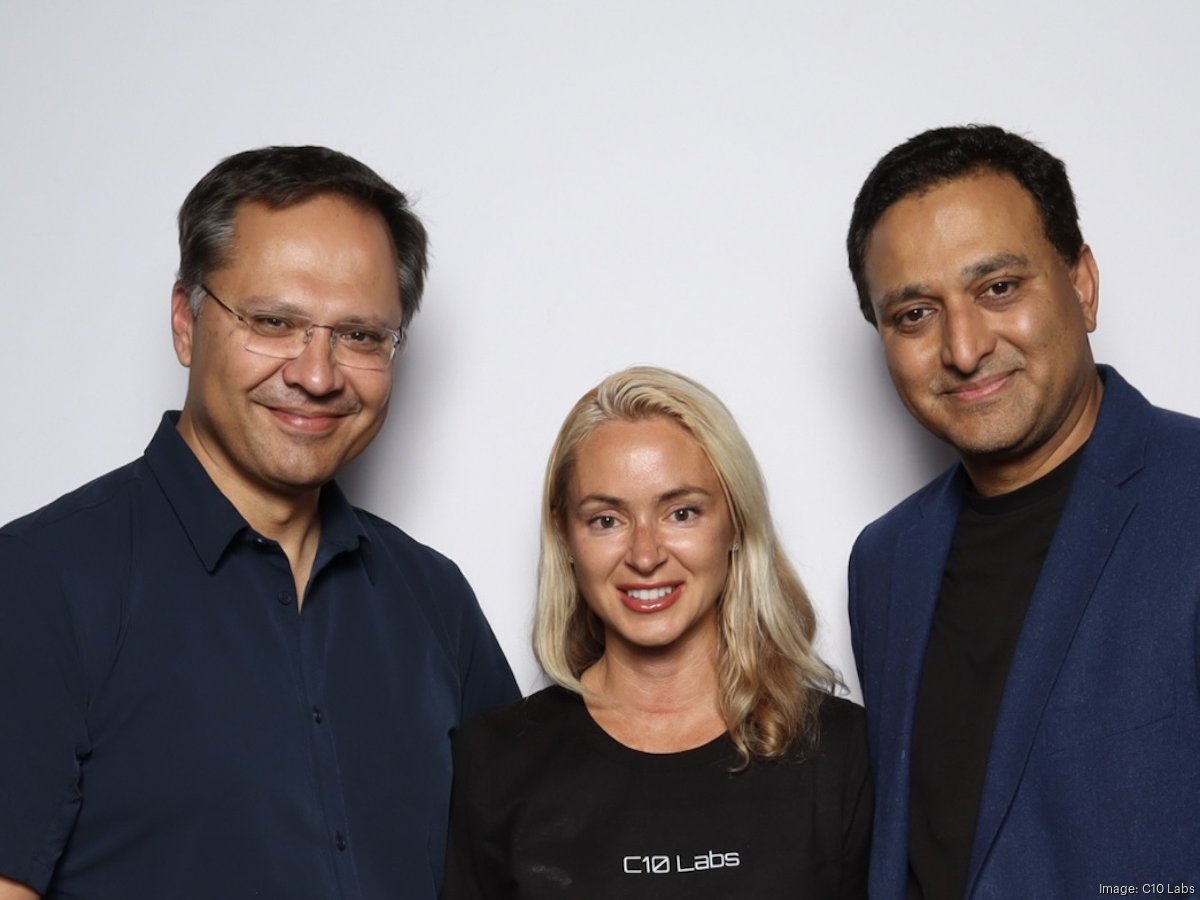
C10 Labs, which he co-founded with Patricia Geli and MIT professor Ramesh Raskar in 2023, makes that work explicit. The Cambridge venture fund and studio brings technical expertise, business support, and investment into the process of creating AI companies. Its origin gives it a particular character: three people who had been teaching venture creation decided to undertake it together. The homework acquired a payroll.
A classroom with consequences
Azim’s connection to MIT predates the current rush of AI businesses. He graduated from the Sloan Fellows MBA program in 2009. He also co-founded Lantos Technologies with mechanical engineering professor Doug Hart while at Sloan. That put him close to a question that would recur through his career: how does something developed in a university become something people use?
There are several jobs concealed inside that question. Someone has to understand the invention. Someone has to understand the customer. Someone has to recruit a team that can make the two understand each other. Azim’s subsequent roles as a founder, operator, investor, and adviser span those responsibilities. The titles change; the need to get people working on the same problem persists.
By the spring of 2023, he was among the co-instructors of MIT’s AI and Web3 for Impact venture studio course. On May 11, fourteen teams presented at the Media Lab. Each received three minutes to pitch and two minutes for questions. Five minutes is a bracing amount of time in which to explain a future business. An elegant diagram can consume half of it before anyone asks who will pay.
The projects included a travel companion, robots offered as a service, a voicebot for public safety professionals, and an AI system for employee learning. The course put students in contact with investors, executives, and mentors. It offered a place to encounter the questions that a technical demonstration can leave unanswered: who needs this, how will it work outside the classroom, and what must happen next?
Azim, Geli, and Raskar carried their teaching relationship into C10 Labs. The timing mattered. ChatGPT’s arrival in late 2022 had given a much wider audience a direct encounter with generative AI. In his later account of C10’s beginnings, Azim linked that moment to the decision to create a studio and fund for AI-first companies. They had a setting in which people were attempting to turn the technology into businesses.
The candy store had business problems
Several years earlier, Azim had joined the first group of entrepreneurs-in-residence in Harvard’s Office of Technology Development. The program began in 2017, bringing experienced business builders into contact with research teams. He met and mentored groups across the university. Asked about the experience, he reached for an image more cheerful than most investment language: “a kid in a candy store.”
His enthusiasm came with a practical observation. Researchers working deep inside a specialty often lacked access to industry leaders and decision-makers. An experienced entrepreneur could help make those introductions. The work involved business models, fundraising, and the assessment of whether a technology could support a company. Curiosity got people into the conversation. Commercial judgment gave the conversation somewhere to go.
That combination helps explain the appeal of an adviser like Azim. A researcher can have a promising result and still need another person to ask an inconvenient question about its use. The question need not diminish the research. It can identify the next piece of work. There is a certain kindness in asking it before a founder has ordered the stationery.
“a kid in a candy store”
Shahid Azim, on exploring research at Harvard
The Harvard role belongs to the period before C10’s founding, but it provides a useful connection. Azim was already spending time at the point where research, people, and a possible business came together. C10 gives that meeting place a continuing organization. A studio can keep assembling the people and resources that each new company otherwise has to find separately.
A studio needs neighbours
In November 2023, C10 Labs and Cambridge Innovation Center announced a partnership to create an AI hub in Kendall Square. CIC supplied a physical setting and an existing community of businesses; C10 brought its approach to building ventures. The partnership connected founder programs with workspace, events, academic relationships, and potential corporate customers.
It is tempting to describe an AI venture entirely in terms of software. Azim’s bet also involves rooms. People need places to meet a potential co-founder, test a proposition, and discover that another team has already wrestled with a similar problem. Shared space cannot guarantee a useful encounter, but it can make the encounter easier to arrange.
By March 2024, C10’s inaugural winter cohort of ten teams had reached Demo Day. Their work included applications in legal research and worker safety. Those are useful examples of what applied AI asks of a founder: the technology has to enter a particular working environment, with people who have particular expectations. A general demonstration is only the beginning of that conversation.
For Azim, Kendall Square was familiar territory. C10’s founding team had longstanding ties to MIT, CIC, and the surrounding community. Starting there made it possible to draw on existing relationships while testing a new venture model. The wider ambition was present, but the first hub had an address and neighbours.
An adviser’s yes, a founder’s next step
Shaikh’s experience supplies a more personal view of those relationships. After Azim agreed to advise TitanPayAI in 2022, the venture joined C10’s second cohort in May 2024. An instructor became a business adviser; a classroom connection continued inside a studio. Shaikh was still doing the work of developing a product, talking to banks, and seeking a pilot. Mentorship accompanied that work rather than concluding it.
The distinction matters when considering what a venture studio can accomplish. Advice has to reach a specific decision to be useful. A founder might need an introduction, a challenge to an assumption, or help choosing the next product milestone. The benefit sits in the subsequent work, which can be less photogenic than a Demo Day and rather more consequential.
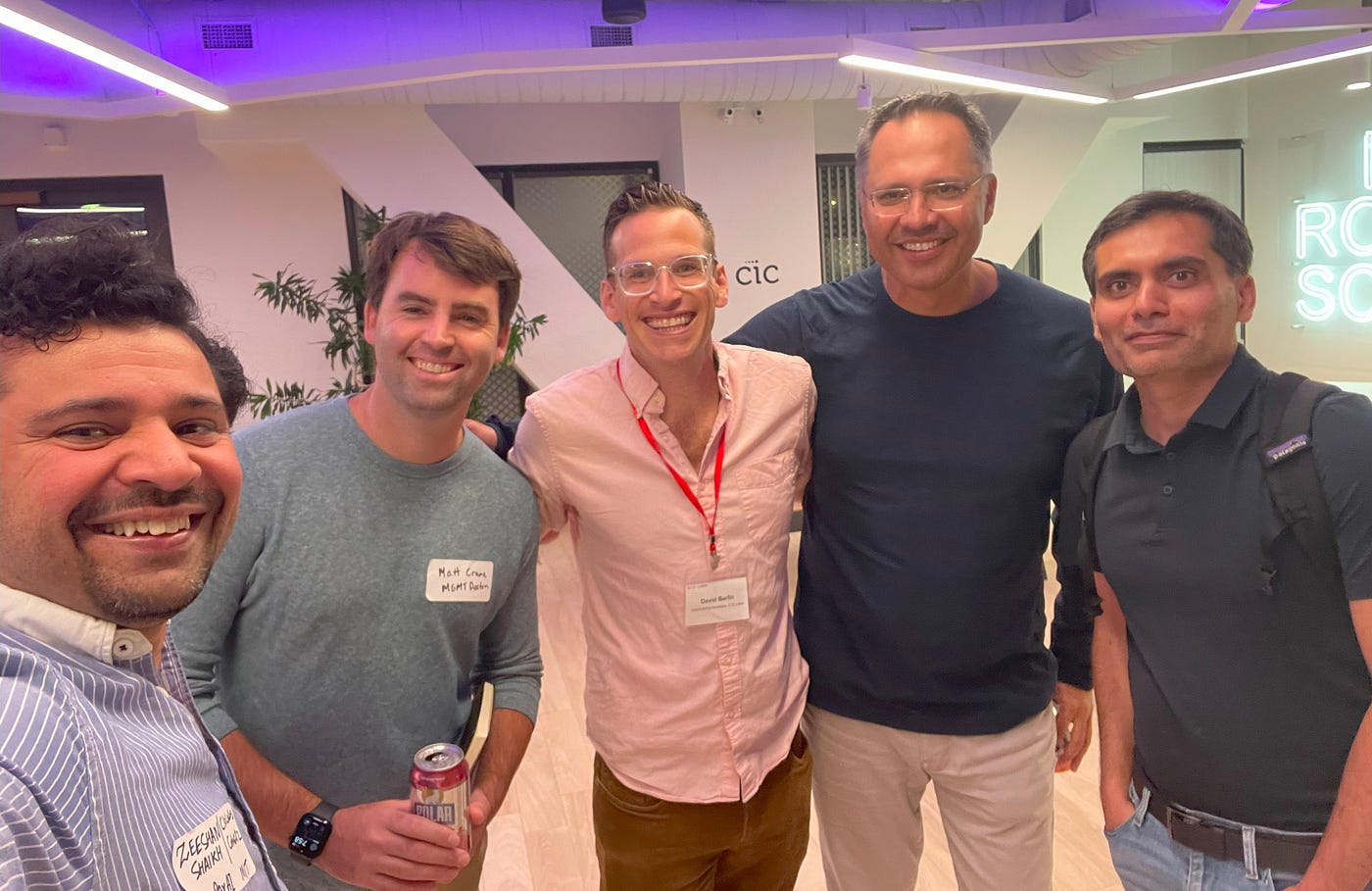
That August, Azim gave the opening presentation at a C10 Labs and MGMT Boston event. Shaikh attended and described seeing advisers, entrepreneurs, and fellow cohort founders together. The setting fits the earlier story: the same relationships appear across teaching, advising, and public gatherings. People return with a venture a little further along and a different set of questions.
The model takes the train
On October 7, 2025, New York City Economic Development Corporation announced C10 Labs and Plug and Play as operators of NYC AI Nexus. The initiative linked startup acceleration with industry connections and pilots. C10’s remit includes climate and energy, robotics, and advanced manufacturing. The Cambridge studio had a new setting in which to test its approach.
Azim described the underlying change plainly: “AI is fundamentally changing how companies are built and scaled.” His emphasis was on bringing engineers, scientists, entrepreneurs, and investors into contact. In New York, that ambition became part of a city-backed program. It adds a different kind of counterpart to the university relationships that had helped shape his earlier work.
- Harvard entrepreneur-in-residence
- C10 Labs co-founded; CIC partnership announced
- NYCEDC announces C10 as an AI Nexus operator
- Fall NYC accelerator and cohort launch planned
As of October 2026, C10’s New York program describes a two-and-a-half-month core accelerator in Manhattan, with a Demo Day planned for December. A fall cohort launch event is scheduled for October 15 with NYCEDC and Pegasystems. These are program plans, with their results still to come. The next chapter will depend on what the participating founders build and what their customers decide to use.
The other Cambridge institution
There is another institution in Azim’s public record, away from accelerator applications and venture pitches: the Cambridge Public Library Foundation. Its board roster includes him, and its fiscal 2024 report lists him as treasurer. A library board is a quieter place to encounter a technology entrepreneur. The work concerns an institution serving a city, with a purpose that extends well beyond startup formation.
That civic role gives his Cambridge ties some breadth. Universities and studios gather people around specialized ambitions. A public library gathers people with all manner of purposes, including the pleasant possibility of having no business plan at all. It is a welcome detail in a career so often organized around the next company.
Azim continues to write about AI through his Intelligence Brief. His recent public commentary on robotics has turned to the cost of doing a task, including integration and supervision. The attention to economics sits comfortably beside the earlier classroom questions. A machine can be capable of doing something while a business still has to determine whether doing it makes sense.
The thread through these roles is visible in that first request from Shaikh. Someone building a venture needed an experienced person to join the work. Azim said yes. C10 Labs has made a business of assembling more such encounters, with rooms in Cambridge and New York, co-founders beside him, and new teams arriving with their own problems. The class has ended. There is still plenty of homework.