Victor Dong noticed the teaching assistant. In a reflection on his January electives at MIT Sloan, he singled out a 16-year-old who had already been accepted into MIT. The courses included Negotiation, Disciplined Entrepreneurship, and Deploying AI in Corporations. An experienced professional had returned to the classroom, and there was a teenager helping teach it. Education has a pleasant habit of rearranging the seating chart.
The detail makes a useful opening to Dong's recent story. Around him are the familiar nouns of the venture world: founders, capital, artificial intelligence, strategy. His own account adds classmates, group projects, and the people he met before they went onstage. Follow those encounters and a more personal picture emerges. Dong is learning about venture building while taking part in its ordinary, social work.
Based in Greater Boston, he belongs to MIT Sloan's Fellows MBA Class of 2026 and lists himself as a founding partner of TwentySix Ventures. He has also described his mentoring connection to C10 Labs. ClarityNorth Partners now lists him as an Executive Strategy and M&A Advisor. These roles put him near several different decisions: which ideas deserve support, which people should meet, and how a company prepares for its next move.
A classroom with something to contribute
Returning to study gives an established professional an unusual double assignment. Experience is useful, but it must leave room for revision. The classroom asks for both. A familiar problem can look different when a classmate brings another market, another profession, or another set of assumptions to the same table. That is part of the attraction of a cohort. The person beside you may have a better question.
Dong's account of the fall term includes finance, venture capital, entrepreneurship, and competitive strategy. He also credits his classmates for helping with study and group projects. The combination matters more than a long list of course titles. Finance asks how resources get allocated. Strategy asks where to compete. Entrepreneurship asks what can be built. A group project then supplies the small but unavoidable question of who is actually going to do the work.
TwentySix Ventures gave that cohort another way to work together. Dong lists his founding-partner involvement from June 2025. The organization describes itself as an independent student-run investment club, created by students at MIT. Its connection to the university is through its participants; it is not officially affiliated with or endorsed by MIT. The distinction leaves the initiative where it belongs: with the people assembling it.
For Dong, the classroom and the venture network appear side by side. He has made both part of his public professional life. That is a more concrete account of continuing education than a certificate alone can provide. Learning acquires a second audience when a founder needs a useful introduction or a group of classmates has an event to put together.
Different rooms. A practical next step.
A map of Dong's public activities, not a sequence of exclusive appointments.
An introduction before the applause
On October 22, 2025, TwentySix Ventures held its FutureMakers final in New York. More than 550 applications had produced eight finalists. Dong had promoted the launch beforehand, inviting people to ask him for more information. His announcement was enthusiastic and practical at once: here was a new venture initiative, here was an event, and here was a way to get involved.
He also worked with Ido Levy and C10 Labs' Shahid Azim on a virtual semifinal. Levy publicly named Dong as a co-host and partner. It is a useful piece of the story because organizing creates obligations that attending does not. Someone must bring participants together and help an idea move from an invitation to an actual exchange. The glamorous photograph comes later.
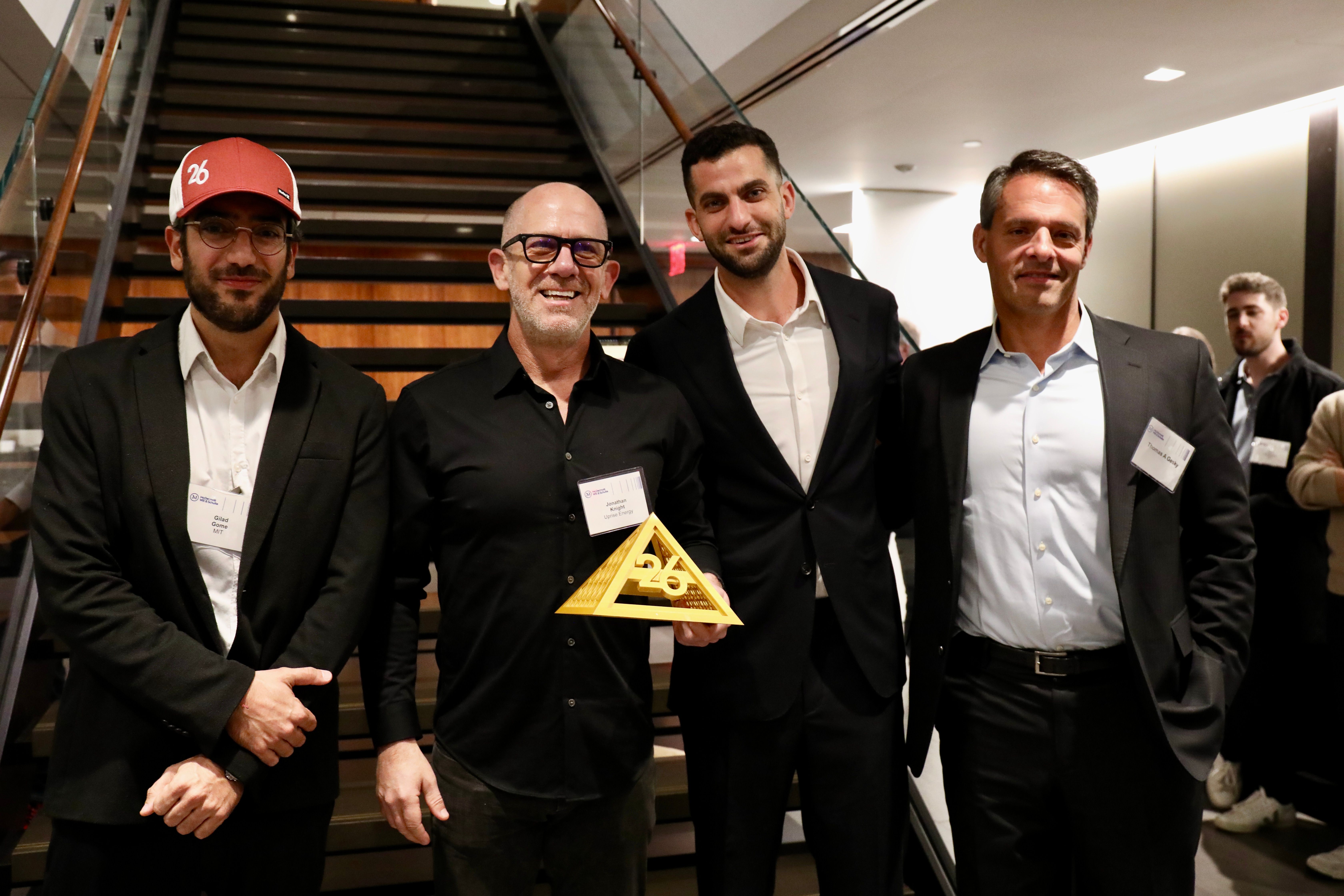
Dong met Jonathan Knight, Uprise Energy's co-founder and CEO, before Knight pitched at the final. By the end of the evening, Uprise had won first place. In Dong's recollection, the excitement preceded the result. Knight had come from California, and Dong remembered his gratitude to the people bringing the event together. The trophy made a tidy ending to the evening; the introduction had already happened.
That order is worth keeping. A competition sorts entrants into winners and everyone else. An introduction has a less tidy afterlife. It can lead to a conversation next week, a question about a market, or a contact who knows something useful. Those are possibilities rather than promises. They explain why the minutes around a pitch can matter as much as the minutes allotted to it.
What comes home from New York
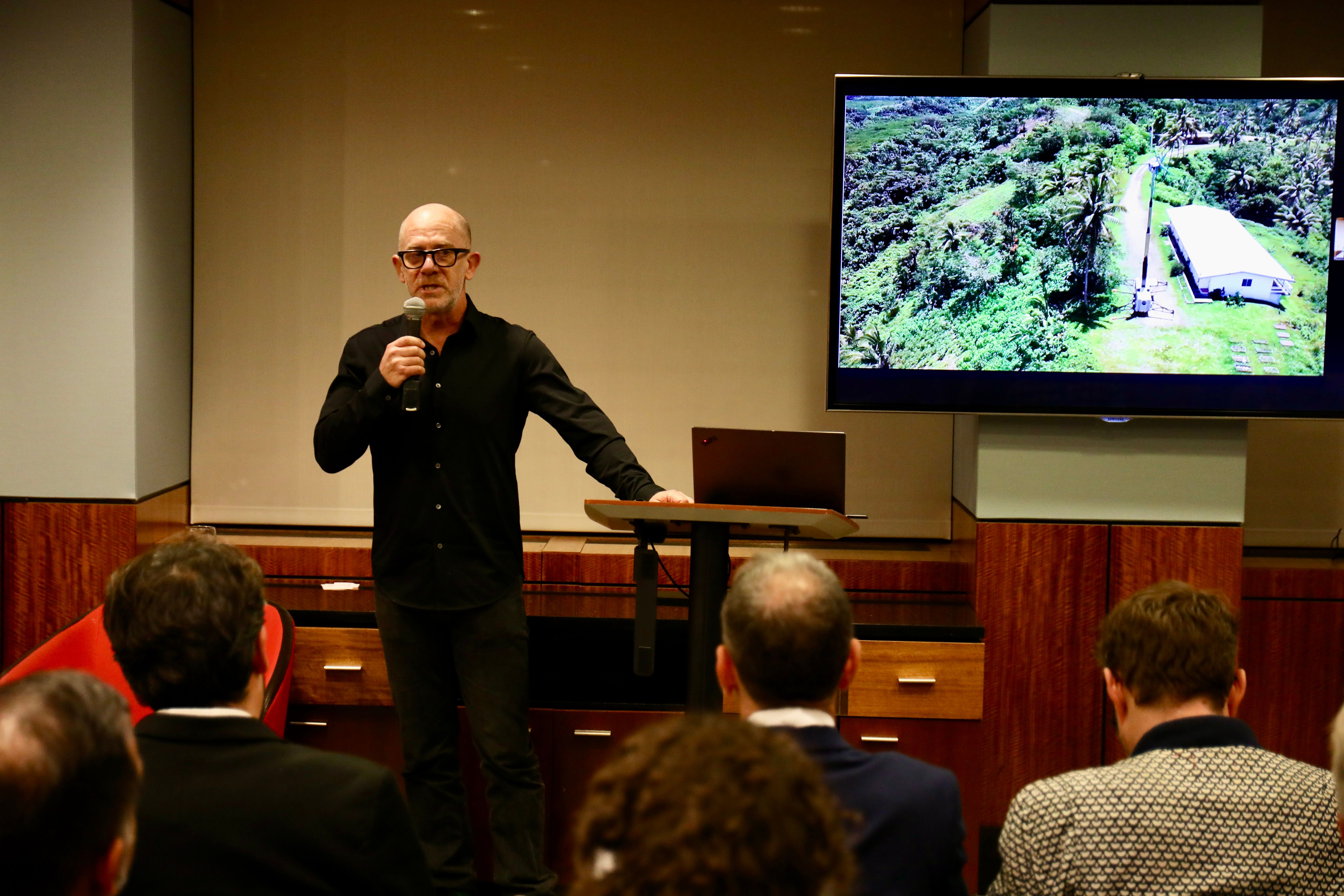
Uprise's own account of FutureMakers dwells on the access the event provided. Amazon had connected the company to the competition at short notice. It prepared a new pitch, advanced through a virtual semifinal, and came to New York with its portable wind turbine technology. Afterward, the company described projects and investment opportunities growing out of conversations at the event.
That account gives Dong's organizing work a concrete setting. It also places a sensible limit on what an evening can accomplish. Winning a competition and building a business are separate events on the calendar. A trophy travels well. A partnership needs another meeting. Capital needs a decision. A product still needs to reach a customer. The photograph records the celebration without completing the work.
The FutureMakers format made the encounter brief and specific: a four-minute pitch followed by two minutes of questions. Six minutes is enough to introduce an argument. It leaves very little room to hide behind an elaborate preamble. For an organizer, the task is to make those minutes useful; for a founder, it is to give the audience a reason to continue the conversation.
Dong's place in this episode is a connecting one. He helped with a competition, welcomed participation, and later wrote about the founders and classmates he encountered. The account does not require him to own the winning technology or take credit for its result. There is plenty of work in bringing people into the same conversation. Venture building has more jobs than the one at the microphone.
Competition format - FutureMakers 2025
The mentor takes a seat
Dong's connection to C10 Labs has another revealing detail. In a public exchange with Helia Jalili, he described being a mentor at C10 and expressed interest in her experience in venture capital and the MIT 100K competition. It is a small exchange, but a specific one. The mentor was asking about someone else's experience.
C10 describes itself as an AI venture fund and studio operating from Cambridge and New York. Dong has publicly congratulated Shahid Azim on extending its reach along the East Coast. His participation also includes a learning session hosted by Google's startup team. Afterward, he thanked the hosts and said he had learned from other founders incubating at C10.
The session covered questions of model selection, platforms, security, and cost. Those topics sit close to the practical business of an AI company. A founder can admire a demonstration and still need to ask what it costs to run, how quickly it responds, and whether it fits the intended use. The answers affect the product long after the demonstration has finished.
Here the roles of mentor and learner fit comfortably together. Advice becomes more useful when it can absorb new information. Dong's comment about learning from other founders makes that exchange visible. The venture studio offers a setting for both sides: people bringing experience to a young company, and people discovering something through the effort of building it.
“I learned from other Founders also incubating at C10!”
Victor Dong, after a Google learning session
A deal needs a day after
At ClarityNorth Partners, Dong's title places strategy beside mergers and acquisitions. The firm's work includes capital readiness, transactions, integrations, and portfolio decisions. These are situations in which a company must decide what to do next and then organize itself to do it. A signature is a milestone. The next morning still arrives with a calendar full of work.
This advisory setting adds another scale to the story. The pitch competition begins with a compressed presentation. A transaction can ask for a much longer examination of priorities, commitments, and execution. The common question is whether a promising plan can survive contact with an organization. People have to understand their responsibilities. Resources have to match the decision. Someone has to keep track of what happens next.
Dong's public activities suggest an interest in that passage from possibility to execution. The interpretation rests on the roles themselves: student, founding partner, mentor, organizer, advisor. Each puts him in a different part of the process. Together they show a professional life being extended through new settings, with the work of learning still present.
There is a pleasantly ungrand detail in his list of commitments: the Sloan Fellows Class of 2026 BBQ Committee. Alongside it sits service on the class gift committee. Neither needs an elaborate theory of leadership. Classmates have things to arrange, and somebody joins in. A venture network may promise access across borders; a barbecue offers the more immediate prospect of getting people together.
The teenager helping teach a course, the founder met before a pitch, the fellow mentor with experience to share: these encounters give Dong's recent work its shape. His education continues through the people around him. For a venture builder, that is a useful habit to keep. The next person at the table may bring the question that makes the whole plan better.
Follow the conversation
Continue with the people, organizations, and events in this story.