At Nextstars, an entrepreneur could turn up without the one possession entrepreneurs are supposed to treasure: an idea. The Paris startup factory had an entrance for that person. Inside, analysts studied opportunities, teams tested promising concepts, and founders could join projects already taking shape. An idea and its entrepreneur did not have to arrive together.
- Two entry routes: bring a startup, or join an internally developed project.
- A historical average seed cheque of €10,000, alongside practical support.
- Customer testing before the investor presentation.
- The French legal entity was deregistered in March 2024.
That arrangement makes Nextstars an interesting historical case. Startup folklore tends to begin with inspiration striking one unusually determined individual. A factory asks a less romantic question: which parts of company creation can be organised? Nextstars assembled research, working space, professional advice and investor access around that question. The person with the brilliant notion was welcome. So was the person prepared to work on somebody else’s.
The idea could arrive first
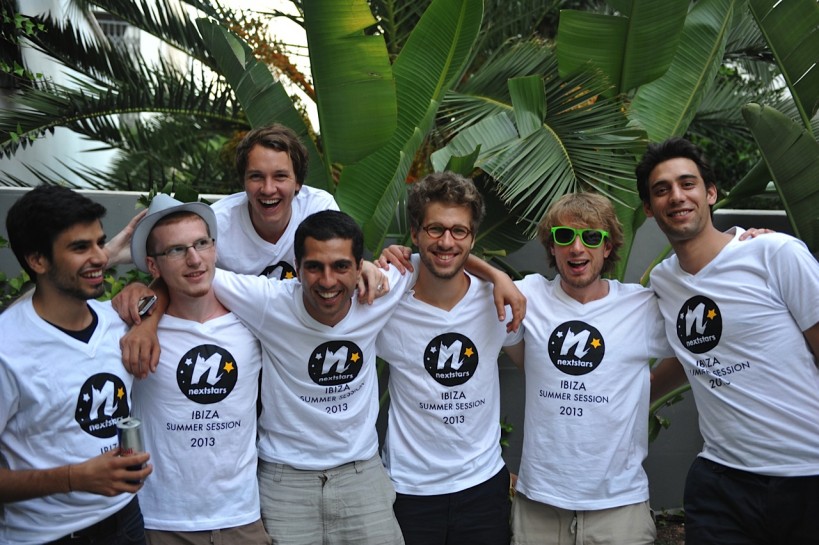
Nextstars launched in September 2012, founded by entrepreneurs and business angels. Published studio mappings identify Sohrab Heshmati, Hatime Araki and Walter Belluco as its co-founders. Its own team pages assigned complementary expertise: business strategy and finance to Heshmati, technical and marketing questions to Araki, and Lean Startup methods to Belluco. This was a business-building operation with several kinds of judgement in the room.
The distinction between its two routes was practical. An established team entered the accelerator with a project to improve. In Le Labo, its startup studio, opportunities could come from internal research or assets supplied by partner organisations. Analysts examined them; internal teams developed selected concepts; customer panels helped test the proposition. Entrepreneurs then took responsibility for building the venture.
The recruitment bargain deserves attention. A 2013 brief sought people available full time, financially independent and willing to assume entrepreneurial risk in exchange for equity. Previous startup experience was desirable. “Without a project” did not mean without responsibilities, living expenses or exposure. The factory supplied an opportunity; the recruit still needed the means to pursue it.
A cheque with people attached
The early accelerator was selective. January 2013 reporting described eight teams chosen from 190 applications for four months of intensive support. Each startup had six mentors, including one responsible for following its progress. That last detail matters: a founder can collect excellent advice and still lack anyone who remembers what was agreed last Tuesday.
Teams selected from applications.
About 4.2% admitted - selection, not a success rate.
The historical programme offer included average seed capital of €10,000, workspace during acceleration and access to lawyers, accountants, consultants and technical expertise. It also advertised more than €70,000 in partner services, benefits and discounts. Those two figures should stay in separate mental drawers. A discount has value when you need the service; a cheque can pay a bill.
Nextstars took equity positions in startups and described its ambition as being a short-term shareholder, while remaining involved during its ownership. For founders, the economic bargain therefore involved ownership as well as time. The attractive part was the assembled support: fewer professional tasks to solve alone, introductions to people with relevant experience, and help preparing the next financing conversation.
Partners could contribute in several ways. The published partnership model distinguished mentoring, discounted professional services, financial sponsorship and the contribution of partially developed projects. That last category widened the supply of ideas: an organisation with an unfinished opportunity could hand development to the studio. This explains why the factory needed more than investors. It needed people who could evaluate an asset, shape a service and help a new team deliver it. For a participant, the useful question was concrete: which of these people could remove the next obstacle? A large address book becomes valuable through the particular introduction it produces.
Five minutes to meet the money
On 11 July 2013, seven startups from the second cohort presented to investors after four months of preparation. Nextstars reported an audience exceeding 150 people and five minutes per pitch. The event ended with a cocktail reception. A business needed to survive the presentation, then become interesting enough for a conversation over a drink. The company’s event account captures both stages.
Fundraising was also a separate service. Nextstars described coaching on pitches, financial paperwork and legal documentation, backed by a network of more than 150 angels and investment funds. Investors were another constituency: they received access to filtered opportunities rather than an unexamined pile of proposals. Its investor page said only 1% of the lab’s initially listed projects reached presentation. That was its stated filter, not evidence of eventual returns.
- 01InvestigateIdentify an opportunity
- 02TestMeet prospective customers
- 03AssembleBuild the founding team
- 04PitchSeek outside capital
Ordinary problems, investable businesses
The historical portfolio offers a pleasantly untidy set of examples. Légalife helped people personalise legal documents. Deways connected car owners and renters. Cookit supplied ingredients and recipes in cooking kits. Mailin offered self-service email and SMS campaigns. These businesses addressed recognisable inconveniences. Their prospective customers could explain the problem without first attending a seminar on the technology.
Nextstars sat between incubation, acceleration and venture creation. In 2015, Le Monde Informatique placed it alongside French alternatives including Le Camping, The Family and DojoBoost. Its distinctive feature was the internal lab alongside support for outside teams. A conventional accelerator improves the company that walks in. Nextstars also worked on the opportunity before a complete founding team existed.
Borrow the sequence
The copyable lesson is a sequence of decisions. Define the customer’s problem, test a proposition, give someone responsibility for following progress, and prepare financing documents after the business has encountered the market. Nextstars’ philosophy tied Lean Startup methods to quantified objectives. Advice becomes more useful when the next meeting has something concrete to examine.
“mises sur le marché, succès ou échecs”
Walter Belluco · Nextstars partnerHis message: early incubation should move quickly, including launches, successes and failures.
There is a boundary to that logic. As an editorial inference, a rapid testing cycle fits less comfortably where scientific development or regulatory approval must precede meaningful customer use. Financial independence also narrows who can accept an equity-based opportunity. The invitation to build may be broad in spirit while demanding considerable personal runway.
The company’s legal chapter has ended: NEXTSTARS was deregistered on 25 March 2024. Its historical offer remains instructive because it made the earliest work visible. Before the polished investor pitch came research, practical help and an encounter with customers. The idea could arrive first. It still had to earn its place.