Before Shahar Erez sold a company to Fiverr, he had discovered a useful property of freelancers: they could get things moving when a young business could not afford employees. His early venture used about eighteen of them, scattered from the United States to South Asia. The venture did not deliver the result he wanted. The experience supplied something more durable: a problem he would keep returning to.
The attraction was speed. The complication was everything that followed. A company could find someone capable of doing the work, then spend an absurd amount of effort arranging for that person to begin. Talent had become available across borders. The machinery of the employer had rather less enthusiasm for travel.
Erez eventually co-founded Stoke Talent with Hilik Paz in 2019. Fiverr announced its purchase of the business for $95 million in November 2021. By 2023, Stoke had become Fiverr Enterprise. That sequence makes a tidy entrepreneurial biography. It also leaves out the question that makes Erez interesting: what happens inside an organization after it decides to try something new?
The engineer learns to read the organization
Erez’s career passed through Mercury Interactive, HP, VMware and Kenshoo, with responsibilities spanning engineering, product and marketing. These are different vantage points on the same company. Engineering sees what can be built. Product decides what deserves to be built. Marketing discovers whether anybody else agrees.
At Mercury and VMware, his work included application performance management and cloud application products. Those fields require attention to what happens after software has left its creators’ desks. A feature can be impressive in isolation and troublesome in use. Someone has to understand the surrounding system, including the people operating it.
His education joined technical and commercial subjects: a bachelor’s degree in computer science and entrepreneurship at IDC, now Reichman University, followed by an MBA at the Technion. The combination fits the career that followed. He moved between making a product and explaining why an organization should change its behavior to use it.
There was an earlier company, TheOrg, before Stoke. There were also advisory roles with AppsFlyer and Guesty. By the time Erez began selling freelance management software, he had spent years inside businesses large enough to possess both specialist talent and elaborate ways of preventing that talent from getting started.
His argument about freelancers sharpened while he was at Kenshoo. He saw their potential and the internal bureaucracy surrounding them. The opportunity, as he described it, lay in anticipating how much larger that organizational problem would become as companies relied on more independent workers.
A different contract with life
In 2019, Stoke raised a $4.5 million seed round led by TLV Partners. Backers included Bogomil Balkansky, formerly of Google, and Boaz Chalamish, then CEO of Clarizen. Balkansky had encountered the contractor problem in both a small startup and a very large technology company. The paperwork, it seemed, was admirably democratic.
Erez’s early explanation reached beyond procurement. Younger workers wanted flexibility and continued learning, he argued, while businesses needed specialist knowledge without waiting through a conventional hiring cycle. Stoke would connect those needs through a system that could find, onboard and manage independent talent.
In an essay published in January 2020, he framed freelancers as a response to the slow pace of corporate innovation. A team could bring in expertise for a specific task rather than wait months to recruit a permanent employee. His emphasis was on matching the work to the available skill, then removing the delay between deciding and doing.
He also argued for greater freedom inside companies. Leaders should allow teams to make reversible decisions without repeatedly seeking permission. That belief belongs alongside the freelance thesis: both give people closer to the work more room to act. A flexible workforce has limited value if every decision still needs to climb a staircase of approvals.
“Fiverr was one of our potential competitors and now we’re becoming its B2B arm.”
Shahar Erez, on Stoke’s acquisition
Yet Erez’s advice to would-be freelancers was more careful than a recruitment slogan. In a 2021 conversation with career coach Kathy Caprino, he encouraged people to consider their appetite for uncertainty, their ability to motivate themselves and their reasons for wanting independence. Early clients might be imperfect. The freedom to choose attractive projects generally had to be earned.
That qualification matters. Selling companies a way to work with independent professionals does not make independence suitable for everyone. Erez acknowledged the work required to build a reputation and a customer base. Even a career organized around freedom has administration, compromises and Tuesdays.
When the back office becomes the business
Stoke’s product addressed the activities that rarely make a career sound exciting: onboarding, invoices, budgets, contracts and worker classification. Each was a necessary part of employing outside expertise. Together they could become a barrier large enough to defeat the original reason for hiring a freelancer.
By June 2021, Battery Ventures was leading a $15.5 million Series A, bringing Stoke’s total funding to $20 million. The company said it had more than doubled its customer base and tripled total revenue in the first quarter of that year. These were company-reported growth figures, evidence of demand rather than a complete account of its finances.
The design problem was coordination. A manager wanted work completed. Finance needed to see the spending. Other teams needed the appropriate documents and records. Putting those activities into one system meant that a business could rely on a distributed workforce without distributing its memory across a collection of inboxes.
Fiverr’s interest followed that logic. Its marketplace helped people discover and buy services. Stoke supplied tools for companies managing ongoing freelance relationships, including relationships established elsewhere. An acquisition could connect the supply of talent with the less visible work required to use it across a larger organization.
Erez had deliberately maintained relationships with possible competitors. Fiverr was among them. His account of the sale placed those conversations at the center of the outcome. A network was useful because it created familiarity before anyone arrived with a transaction to discuss.
The announced deal left Stoke operating independently at first. Erez would continue pursuing the same problem with Fiverr behind it. The change in ownership expanded the possible reach of the product; it did not magically remove the practical questions that had made the product necessary.
- 01 Find talent
- 02 Onboard
- 03 Manage work
- 04 Pay & record
Erez and Paz found Stoke Talent.
Fiverr announces the acquisition.
Stoke becomes Fiverr Enterprise.
Erez, Paz and Salmona found Arato.
Arato announces its $10M seed round.
The name changes. The ambition gets larger.
In spring 2023, Erez announced that Stoke Talent was becoming Fiverr Enterprise. He described discussions with Fiverr CEO Micha Kaufman and CFO Ofer Katz that had begun before the acquisition closed. The work afterward involved mapping the market, the opportunity and the product offering.
His language stressed continuity. The mission had expanded around organizational agility through flexible talent. The business was moving into a setting where a company might already know its freelancers and need help managing them, rather than need a marketplace to introduce everyone.
The relaunch also put Erez in the role of translating a product into a broader business strategy. A founder’s job after an acquisition can involve showing how an existing idea fits a larger organization’s ambitions. In his announcement, the connection was explicit: Stoke’s approach would contribute to Fiverr’s move toward larger customers.
That October, he appeared in TED’s The Way We Work series with a short talk about building a freelance career. The audience had changed from the business buying talent to the person selling a skill. Both sides were part of the same problem he had spent years discussing.
The next customer is a machine that improvises
In 2024, Erez started Arato with Paz and Tal Salmona. The field changed to AI. The founders brought shared experience in software testing, monitoring and cloud infrastructure. Erez became CEO, Paz CTO and Salmona head of research and development.
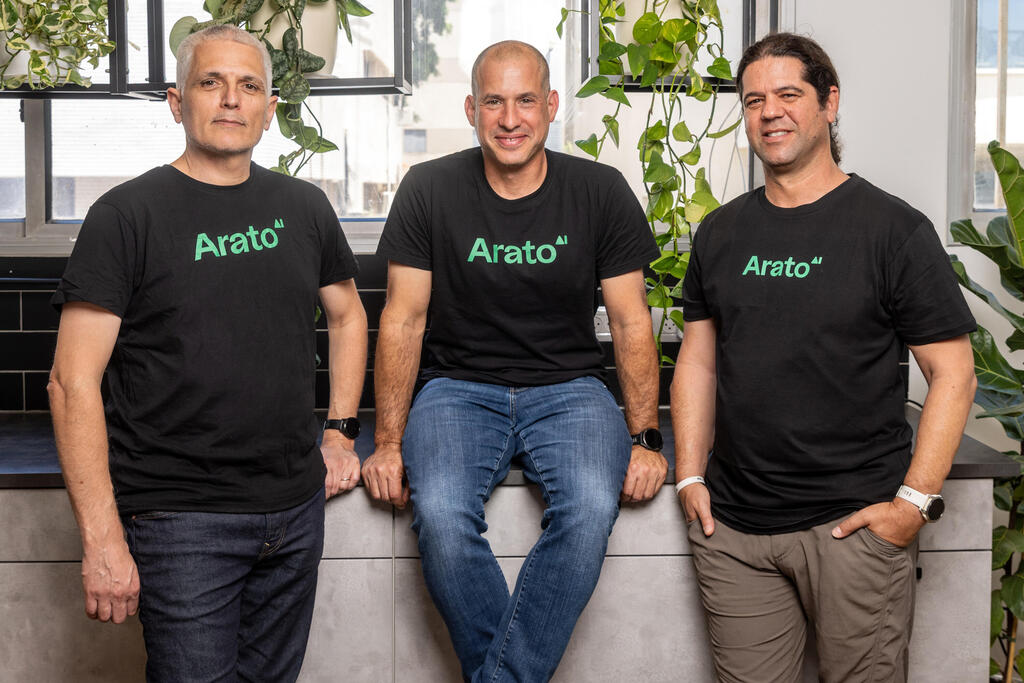
Arato applies simulated user interactions to AI applications. Its purpose is to expose how a system behaves across many situations before customers encounter the failures, and to keep evaluating behavior after deployment. The focus is on the experience a business can actually deliver when people begin asking unexpected questions.
In June 2026, Arato announced $10 million in seed funding led by TLV Partners, with participation from Jibe Ventures, Raghu Raghuram and Marianna Tessel. At the time, it employed 23 people in Israel. The repeat appearance of TLV Partners gave the new venture a financial connection to Stoke’s beginnings.
Erez’s writing explains the engineering concern underneath the pitch. Large language models can respond inconsistently, fail to follow instructions or change behavior as models evolve. In an April 2025 article, he advocated separating the LLM portion of an application from its main logic and giving that part its own development practices.
His current argument has the same operational bent as the earlier one. A successful demonstration cannot answer every question about daily use. A company needs a way to examine the awkward cases before it entrusts the product with more consequential work. The demonstration gets the applause; the awkward cases get tomorrow morning.
The people who make the next attempt possible
Erez’s public biography includes three children, amateur cycling and a fondness for reading. They are modest details beside the acquisition figure, but they provide a little perspective on a career spent asking organizations to move faster.
He has also admitted that celebrating success does not come naturally. Asked what he would tell his younger self, he answered: “Have more fun.” The advice carries some weight from someone who has already discovered how quickly one business goal can be replaced by another.
When he discussed Arato’s funding publicly, he thanked co-founders, colleagues, investors and mentors, including Boaz Chalamish. He described the people taking the journey with him as the good part of startup life. After years of advocating flexible organizations, he was still putting long-standing human relationships near the center of his own work.
Stoke made the administrative consequences of freelance work visible. Arato is trying to make the consequences of AI behavior visible. Read together, the two ventures suggest a consistent interest: giving companies enough understanding to use a new capability responsibly. Erez keeps arriving at the moment when enthusiasm needs an operating procedure. Someone has to stay for that meeting.