Joey Frasier has a useful answer to the startup world's appetite for fresh money. It contains seven words: “You have to pay the money back!” Coming from someone discussing financing for software companies, this is almost indecently practical. There is no glorious escape hatch in the sentence, no suggestion that an impressive funding announcement will do the work of a business. There is an obligation, and somebody has to keep track of it.
That small observation is a good entrance to Frasier's career. He co-founded Worksuite with Martin Konrad, helping build software for companies that depend on freelancers. His subject is the work surrounding the work: finding a familiar contractor, getting an agreement signed, collecting the right documents, approving an invoice. These are the details that rarely make a company's founding legend. They do, however, decide whether somebody gets paid.
There is another kind of accounting in his public life. In his personal biography, Frasier describes raising two children while trying to remain attentive to his husband. The priorities appear together, without much ceremony: a company, children growing up, a marriage deserving attention. A founder's calendar can be an ambitious work of fiction. His biography at least acknowledges its other readers.
Before the startup, the systems
Born and raised in Wisconsin, Frasier worked in information technology, sales and strategy across publishing and logistics before building Worksuite. His professional background includes DP DHL Group and TAG Worldwide. Those are useful industries in which to encounter a recurring organizational difficulty: the person promising a result and the person arranging its delivery may inhabit quite different parts of the business.
His career also took him into regional leadership. A former colleague, Richard Murray, describes working with him when his responsibilities included Japan and sales, solutions and systems across Asia-Pacific. Another, Todd Handcock, remembers him as a trusted member of a leadership team. The recollections emphasize judgment, delivery and relationships. Taken together, they suggest why operations, rather than a consumer app or an advertising idea, became his entrepreneurial territory.
The connection is an interpretation of that record, rather than a claim about a single moment of inspiration. Frasier had spent time inside businesses where systems had to serve people across functions and places. Worksuite would take on a smaller-sounding problem with similarly awkward boundaries. A freelancer could belong to a creative team's network, procurement's records and finance's payment queue, with nobody enjoying a complete view.
A name in a spreadsheet is only the beginning
Frasier and Konrad founded the business as Shortlist in 2015. A year later, Frasier was already writing about the advantages of freelancer management systems over Excel. The subject has the modest charm of an argument about filing cabinets. It also reveals a consistent interest: what happens when a tool that was convenient for one person becomes the shared memory of an organization?
The company eventually became Worksuite. Its platform brought together recruiting, onboarding, managing and paying freelance workers. A manager could maintain a network of people the organization already knew, while other departments handled the agreements and transactions necessary to engage them. The ambition was to make those stages connect, rather than leave each team to reconstruct the relationship from its own inbox.
Frasier's 2022 writing on freelance networks paid attention to their upkeep. He recommended looking at engagement, assignments and inactive records, communicating with network members and keeping the directory current. It is a distinctly unromantic view of a talent pool. A collection of names acquires value through use and maintenance; left alone, it becomes a rather elaborate way to remember people who may no longer be available.
- 01FindKeep a usable talent network.
- 02OnboardConnect people and paperwork.
- 03ManageGive the assignment a record.
- 04PayClose the loop on the work.
The money needed its own paperwork
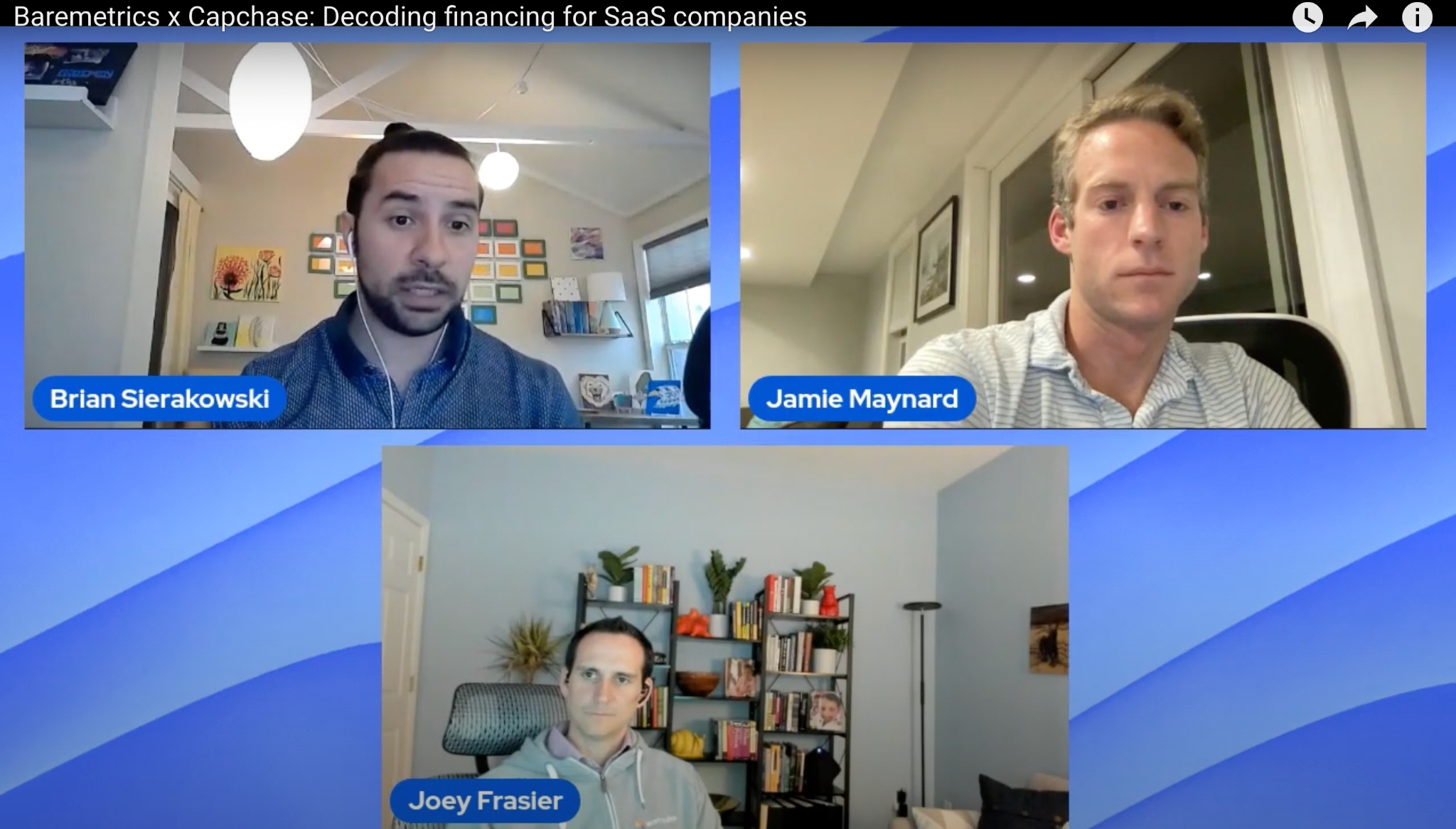
By 2022, Frasier was discussing another sort of operational connection: the one between a company's revenue and its ability to finance growth. In a webinar with Baremetrics and Capchase, he joined Brian Sierakowski and Jamie Maynard to examine funding choices for subscription businesses. Worksuite had used Capchase, whose financing offered a way to access capital without giving up additional company ownership.
His advice centered on establishing reliable data early. A founder seeking financing should be able to produce a history of business performance, rather than begin assembling one after the conversation starts. He also urged founders to decide where borrowed money would go. This is the context of his reminder about repayment. Keeping ownership comes with its own responsibilities; the terms do not disappear because the announcement sounds attractive.
There is a revealing parallel between this advice and the product he helped build. Both depend on having records before a consequential moment arrives. A contractor relationship needs its documents before payment. A business needs its financial history before a lender asks. The paperwork becomes more interesting precisely when it has been neglected. By then, everyone involved would generally prefer to be doing something else.
Two deals that did not happen
The next chapter was less tidy than a transaction announcement might suggest. In a public testimonial about advisers Shane and Zach, Frasier describes two earlier late-stage investments that failed. That detail gives the eventual outcome some proportion. An announced deal has a date. The effort preceding it can contain negotiations that went a considerable distance and still produced no agreement.
He describes initially questioning the need to pay advisers, having already experienced transactions himself. His eventual assessment was favorable: they helped evaluate alignment with the company's culture and vision, supplied analysis and gave him a sounding board. The useful detail is his change of mind. Experience had made him capable of asking difficult questions, including whether he could handle the process himself. Further experience persuaded him that outside help had value.
On August 14, 2023, H.I.G. Growth Partners announced a strategic growth investment in Worksuite. At that point the company served more than 200 customers, including Disney, Microsoft and The Home Depot. The announcement described a business that had grown profitably since its founding. Frasier was identified as co-founder and CEO, alongside a company whose software had become part of established organizations' daily operations.
In March 2024, Worksuite appointed Ray Grady CEO. Frasier later described his own journey as building, scaling and selling the company. These are successive stages of the story: the founder who led the business into the 2023 transaction, the appointment of a new chief executive, and a founder beginning to put his experience to use elsewhere. A title captures one stage. A career continues moving.
The office hours after the exit
In November 2024, Frasier announced that he would host office hours through Ben Lang's next play network. He offered to help founders and operators with enterprise sales, customer organizations and decisions about fundraising. Students and job candidates could bring questions about careers, résumés and interviews. The invitation was broad, but the business topics were specific to problems he had spent years working through.
He also admitted making plenty of mistakes during the company's nearly decade-long journey. It was a more useful introduction to an advice session than a catalogue of victories. His proposed subjects included when to raise money and when to refrain. That second question carries some weight after the financing discussions and the unsuccessful investment processes. Getting access to capital is one decision; deciding whether to pursue it is another.
“pay it forward”
Joey Boothe, announcing next play office hours, November 2024
Frasier now uses the name Joey Boothe on LinkedIn, identifying himself there as Joey (Frasier) Boothe. The familiar profile address still carries Frasier. The change makes his public record a little less straightforward to follow, but the career connects clearly across the names. So does the interest in helping people make decisions about the next piece of work, whether that is an enterprise sale or a first serious interview.
The twins, the books, the actual people
Worksuite's 2023 employee spotlight supplied details that a transaction release would have had little reason to include: Frasier raises twins and enjoys history books and spy novels. It also called him Chief Employee Success Officer, a deliberate expansion of CEO. An employee, Alex Anaya, responded by praising the way he made people feel valued and appreciated. That is one colleague's assessment, and a concrete glimpse of how the title landed.
The books make a pleasing companion to the career. History offers decisions whose consequences are already visible; spy fiction supplies a less orderly system of incentives and incomplete information. His taste in reading does not explain his management style. It does give a person with a software company and a transaction history something more recognizable than an uninterrupted interest in quarterly growth.
His more recent writing returns to the systems surrounding work. An April 2026 Worksuite article under his name examines freelancers building artificial intelligence tools inside businesses. The concern is familiar: organizations need to understand assignments, access, contracts and payments when outside contributors become involved in important internal systems. The technology has changed; the need to know who is doing what remains.
That continuity is the interesting part of Frasier's story. He moved from established operations into a company of his own, through financing decisions and a sale, then toward helping others navigate the same terrain. Along the way, the questions stayed practical. Who owns the next step? What record will they need? Has somebody arranged the payment? A surprising amount of ambition depends on having sensible answers.