On a busy weekend, FloSports might have to screen 400 freelance contractors. The live sports producer knew the kind of people it needed. The difficulty was finding the right names in a swelling collection of Google Sheets, checking where they lived, remembering how they had performed, then getting a job and a payment organized before the event arrived. Over five years, the company estimated it had worked with between 20,000 and 30,000 contractors. At that size, the spreadsheet was still technically working. So is a filing cabinet, if you are willing to spend Saturday in it.
- Worksuite is software for companies that hire and rehire their own freelancers at scale.
- Its core system joins a searchable talent directory to onboarding, contracts, assignments, invoices and payments.
- FloSports, Jack Morton and Apartment Therapy show three ways contractor administration can become a business problem.
- The company sells tailored SaaS plans and adds global payment and compliance services where needed.
Worksuite began life as Shortlist in 2015. The old name makes sense: a shortlist is what a resource manager wants when a project lands. But a useful list soon becomes a longer question. Is the person available? Has their agreement expired? Which entity hired them last time? Are their tax and bank details current? Can the team pay them in their country? The company says the name Worksuite followed its expansion from a talent list into a broader workforce platform. It is a rare rebrand that describes an actual product problem.
The list remembers everything, if the list is any good
FloSports began its Worksuite implementation in November 2019. According to its published account, Worksuite imported the existing contractor database, then helped create workflows for sourcing, posting jobs, onboarding and payment. A contractor could see available work through a job board. A manager could search by geography and experience instead of leaning on someone's memory of an old assignment. The change was mundane in the best way: the information acquired a place to live.
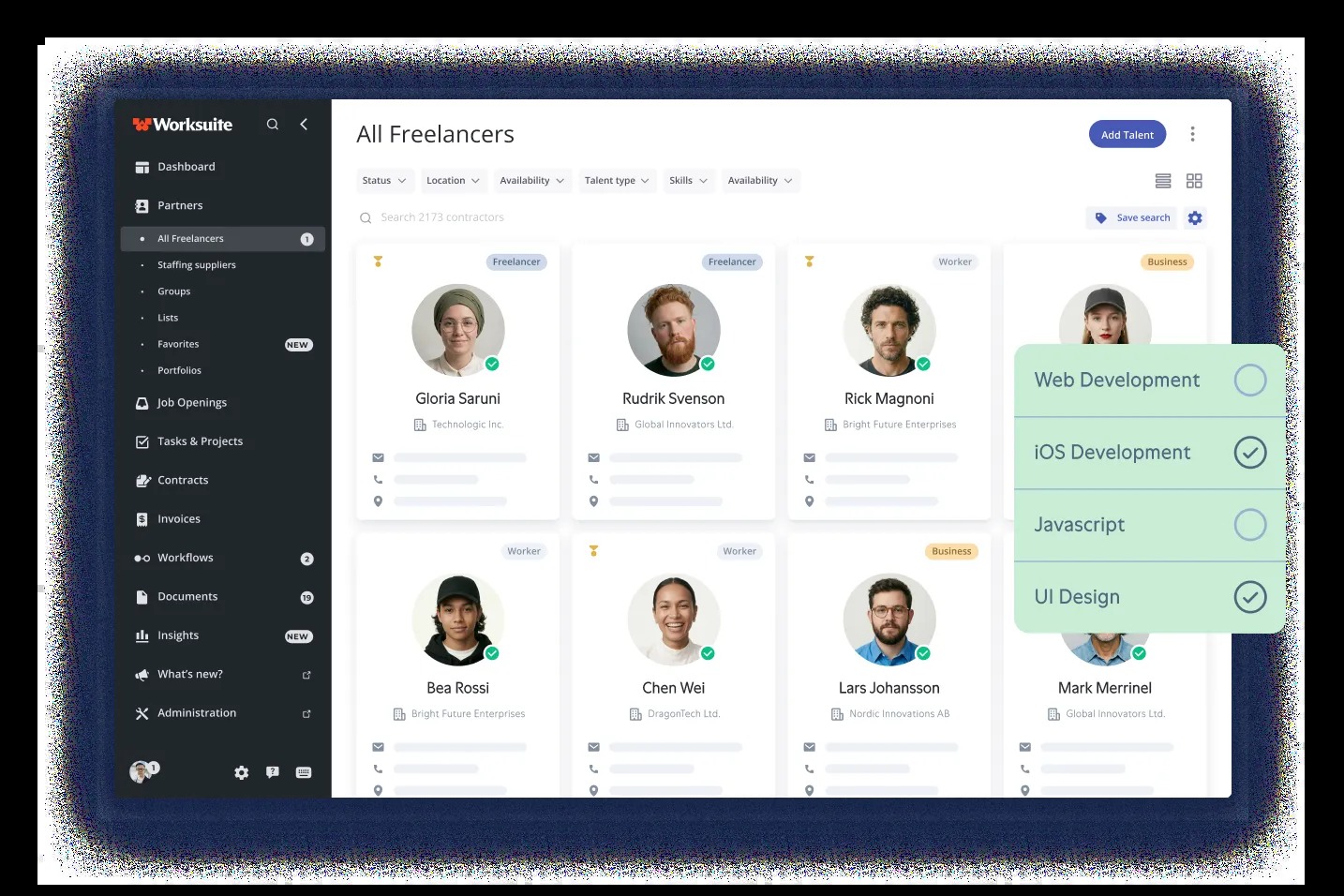
The company also had roughly 2,000 W-9 forms sitting in email, its operations director told Worksuite. Those files were not merely messy; each one represented a moment when accounting had to ask someone else for a document before closing the loop. FloSports' case study says the consolidated record reduced errors and saved staff time. It does not attach a dollar amount to the savings. That matters: the credible claim here is a changed process, with the precise return dependent on a customer's volume and labor costs.
Then the bounced emails began
Jack Morton, the events company, had a different version of the same predicament. It had managed hundreds of freelancers with sheets and an existing platform that lacked the search and portfolio views its resource team wanted. Allen Larson, its vice president of talent acquisition and resource director, described getting bounced emails and learning that some people in the roster had held full-time jobs for three years. A database can be large and still be out of date.
“I got bounced emails all the time. And I had people telling me they'd been in a full-time job for three years now.”Allen Larson, Jack Morton Worldwide
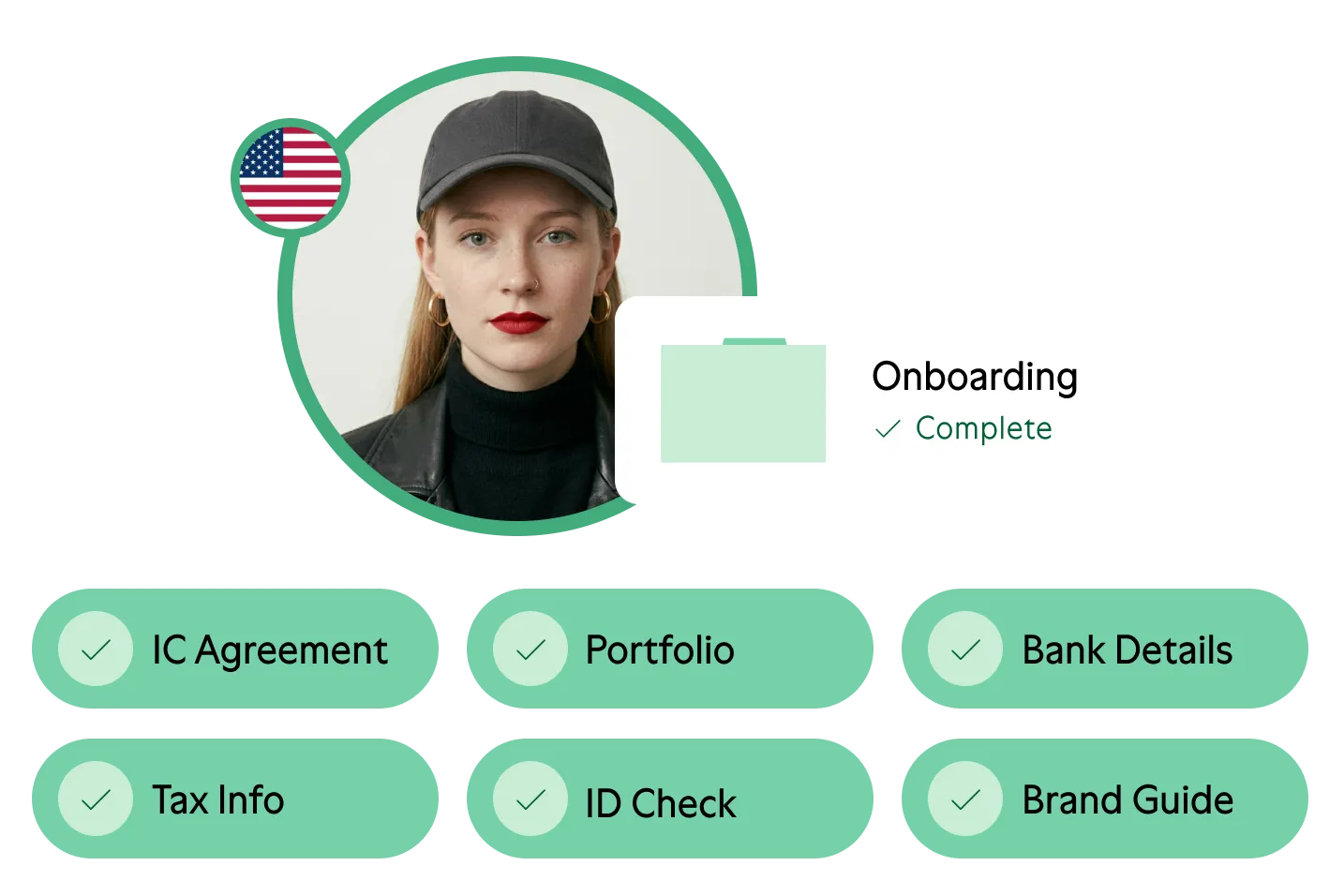
Worksuite and Jack Morton brought more than 600 existing freelancers into the new platform; the customer's case study later reported a pool above 1,500. The resource team set up branded onboarding and let freelancers maintain their own profiles, rates, availability and portfolios. The reported payoff was 80 hours a week saved and eight hours saved per new onboarding. Those are customer-reported figures, best read as a measure of what the old process demanded rather than a promise to every buyer.
Apartment Therapy offers a useful caution from another angle. Its previous freelancer platform gave roughly three weeks' notice before shutting down at the end of 2020. In the gap, the publisher went back to spreadsheet invoices and manual tracking while it migrated a list of about 400 active contractors to Worksuite. What failed first was not the editorial ambition. It was the unglamorous infrastructure beneath it. The episode makes portability and records just as important as a handsome dashboard.
A private network, with machinery attached
Worksuite's position in the market is specific. A talent marketplace helps a company meet workers it may not know. A vendor management system is often built around staffing suppliers. Worksuite's main product is a freelancer management system for a company that wants to operate its own network. It offers search, custom onboarding, contract templates and renewals, task assignment, timesheets, budget visibility, invoices and reporting in one record. HR, legal, procurement, operations and finance can each work from the same contractor trail.
That record is the company's edge. A freelancer can update a profile, while internal teams keep work history and feedback. When the next assignment appears, the firm can search its own past instead of beginning a fresh hunt. Publicis' production arm, Prodigious, used Worksuite to share specialist production talent across a network that spanned 37 locations. Correlation One used it to bring scattered Google documents, email and Slack communication into one contractor workflow. The common buyer is an organization with enough recurring external work to justify keeping the relationship itself.
The expensive part starts after yes
Worksuite also sells Global Pay and Agent of Record services. It says Global Pay reaches more than 190 countries and 120 currencies, and reports processing $2 billion in contractor payments. Agent of Record is a different commitment: Worksuite becomes the legal contracting party for qualifying contractor engagements and handles classification, localized agreements, tax processes and payments. Through a separate NEO partnership, the company can connect customers to Employer of Record infrastructure when a worker needs an employment route. The distinctions matter because an elegant directory alone cannot solve a cross-border legal question.
The business model follows that complexity. Worksuite offers Core and Premium plans, but its public pricing pages ask buyers to discuss their use case, budget and configuration rather than showing a universal subscription number. The company's Agent of Record page describes percentage fees as a common structure in the category, with flat monthly fees as another option. For a prospective buyer, the useful calculation is broader than a software line item: count onboarding hours, payment exceptions, missed reuse of known talent and the cost of maintaining disconnected systems.
There are costs to adopting a central system, too. FloSports had to import a large database and help define custom features. Jack Morton had to design its own questions and work streams. Apartment Therapy had to move quickly because its old provider was closing. None of these examples works by buying a login and hoping the spreadsheets transform themselves. The transferable move is to map the contractor journey first, decide which records belong to whom, then automate the repeated handoffs. The software earns its keep when the same people and processes recur often enough for each clean record to pay off again.
The name on the invoice
Worksuite's founders, Joey Frasier and Martin Konrad, built a company that now says more than one million people use its platform. It is remote-first, with staff across 12 countries, and has H.I.G. Growth Partners as an investor since 2023. Its visible customers range from sports and live events to publishers, agencies and education businesses. That mix suggests the company is less about one industry's fashion than a recurring operations headache: many capable people outside the payroll, all needing to be found, trusted, engaged and paid.
A perfect spreadsheet would still have a weakness. It can tell you a freelancer's name. It cannot, on its own, tell you whether the agreement is signed, the worker is available in the right city, the budget permits the assignment and the payment will arrive. Worksuite sells the connective tissue between those questions. For a team hiring ten contractors once, that may be excessive. For one screening 400 over a weekend, the old shortcut has become the long way around.