The phone books arrived from cities across the country. Jeffrey Leventhal and his colleagues had ordered them to find local IT service firms, call them, check their skills and assemble a network. Their promise was wonderfully specific: when a customer discovered a technology problem at a distant office or shop, someone could be there within four hours. The machinery behind that promise included plenty of paper.
This was Remote Lojix, the business Leventhal built after selling his network-monitoring company, LANSafe, in 1995. He had discovered an awkward limitation of diagnostic software. It could tell a company that something was wrong. Getting a qualified person through the door to repair it was another matter. A warning on a screen does very little cabling.
That gap became a recurring subject in his working life. Leventhal would go on to co-found WorkMarket with Jeff Wald in 2010, serving as its founding CEO. But the company makes more sense when you begin with those directories. Long before freelance management became a software category, he was working through the practical difficulty of sending people somewhere useful.
A useful education in unfinished things
Born in Florida and raised on Long Island, Leventhal had already tried business before university. In high school, he started a home-improvement company and later said he sold it for about $100,000. There is something pleasingly literal about that beginning: the future builder of workforce platforms first ran a business concerned with improving homes.
He attended Binghamton University’s School of Management from 1988 to 1990 but did not graduate. In 1990, he went to New York City to write software at Information Builders. His account of leaving college is practical, shaped by resources and personal circumstances. He has resisted turning it into a prescription for other people. A choice that suits one person can close doors for another.
LANSafe followed. It used software to monitor networks, charging according to the servers or devices under observation. Leventhal described the venture as entirely bootstrapped. He and two partners sold it for just over $500,000 after roughly three years. That was an exit worth celebrating, although divided among three founders it also retained a certain educational quality.
The customer bought ten hours
Remote Lojix addressed what LANSafe had exposed. A company with scattered sites could have a sophisticated view of its network and still struggle to find local help. Leventhal assembled the people as carefully as the information. “We ordered the phone books from every single city that would send them to us,” he recalled.
The initial sale was deliberately modest: a block of ten service hours. A customer could try the network without making an enormous commitment. If the service worked, there was a straightforward reason to buy more. Leventhal said the company reached $12 million in revenue in about two years and employed 130 people. Those figures belong to his account of that business, rather than a forecast for anyone else’s.
His description of selling is unusually unromantic. Call the infrastructure manager. Offer useful backup. Deliver a few hours. Ask how it went. Offer a larger block at a lower hourly rate. The glamorous part, presumably, was having a telephone that worked. His confidence came from learning what customers actually consumed and where they needed people.
An exit with 23 percent for the employees
In 1998, Leventhal sold Remote Lojix for $6.5 million. He was 28. He said he had not issued stock options, but gave employees 23 percent of the money he received from the sale. The detail stands out because it joins two subjects often treated separately in founder stories: the person who builds the company and the people who make its promises possible.
A five-year non-compete followed the sale. He did consulting and advisory work, travelled, and spent time on his personal life. He also began thinking about online marketplaces. The possibility of matching buyers and sellers suggested another arrangement for IT work: give customers direct access to qualified providers and charge for the transaction.
When the restriction expired in 2003, he started OnForce. He put in the first $1 million himself; two other investors subsequently contributed $1.8 million. He returned to familiar customers with a different commercial proposition. Software would handle the exchange between the buyer and the worker. Years of organising services had supplied the question, and a marketplace offered a new answer.
First, call the wrong customer
Familiarity did not spare him a mistake. His old customers wanted somebody to solve their problems; the marketplace asked them to manage the work themselves. They declined. One suggested he speak to its service company, which wanted precisely what he was offering. Service businesses and resellers became the important buyers, and the product changed to fit them. An experienced founder had found the right problem and initially called the wrong people.
He also learned which side of the marketplace needed attention first. For OnForce, it was the workers. A buyer could hardly be persuaded by a network without people ready to do the assignment. Once the right customers were identified, cold calling remained part of the sales effort. The web supplied a new mechanism; the telephone remained employed.
Leventhal said OnForce exceeded $100 million in transaction value, with a 20 percent share for the platform. The distinction matters: money flowing through a marketplace is different from the revenue the marketplace keeps. In 2005, the company raised $15 million in venture capital. His priority for that capital was staffing the business across operations, sales and engineering.
“I put team ahead of product.”
Jeffrey Leventhal, on investing in OnForce
WorkMarket takes on the rest of the job
WorkMarket broadened the ambition. Co-founded with Wald in 2010, it combined a marketplace with software for managing a freelance workforce. Finding somebody was one step in a longer sequence. Companies also needed to verify people, organise assignments, manage the work and arrange payment. Each handoff created another opportunity for a perfectly capable person to spend time waiting.
Union Square Ventures and Spark Capital backed the venture at the beginning. Early descriptions already showed that its intended reach extended beyond IT: customers included businesses managing freelance writers and legal staffing. Companies could use individual modules rather than adopt everything at once. Leventhal’s experience in field services had become a way into a broader organisational problem.
In May 2013, WorkMarket announced $10 million in additional financing, led by SoftBank Capital with participation from its existing investors. The announcement described more than 250 clients and named Omnicom, Adecco, NCR and Lockheed Martin among the businesses using the platform. The sale had grown from a trial block of service hours into enterprise software procurement, with rather more people likely to attend the meeting.
Leventhal stepped aside as CEO at the end of 2014. Stephen DeWitt succeeded him. ADP acquired WorkMarket in January 2018, after that leadership change; its later filing recorded approximately $125 million in cash for the company. The founding and the acquisition are separate chapters, with years of work by other people between them. A company can continue developing after its founder moves on.
The next problem, close at hand
WorkRails brought him back to another obstruction in services: buying software often meant finding additional help to implement it. The company sought to let software vendors package professional services alongside their products. The work had moved closer to the purchasing decision, but the underlying inconvenience would have been familiar to anyone holding a new tool and wondering who would make it useful.
He also took on the investor’s role, joining boldstart as a venture partner in 2015. His advice to founders seeking funding included looking for capital, conviction and contacts, and understanding whether an investor’s interests matched the business. Later, through S12F and his work with Mill Point Capital, he continued working around software and services. In 2023, Mill Point named him executive partner for its investment in Core Technology Solutions and incoming executive chairman of the company.
For someone so involved in operations, he allows a surprisingly artistic description of the initial idea. He has compared showing a business plan to showing a painting or a piece of music. The comparison admits vulnerability. A founder can understand margins and still feel exposed when somebody looks at the thing they have made and shrugs.
The distance gets longer
His current work takes the question of connecting people and jobs across borders. Vanteo lists Leventhal as its CEO. The company works in international hiring, workforce mobility and cultural exchange. In October 2025, he appeared alongside Elizabeth Kumbhari, its president of cultural exchange, at Politeknik Pariwisata NHI Bandung in Indonesia. Their subject was American workplace culture.
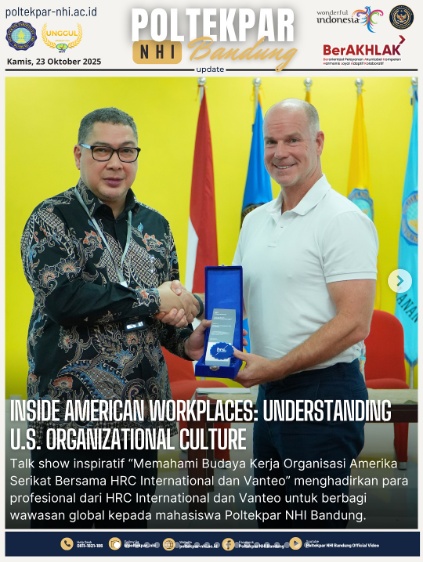
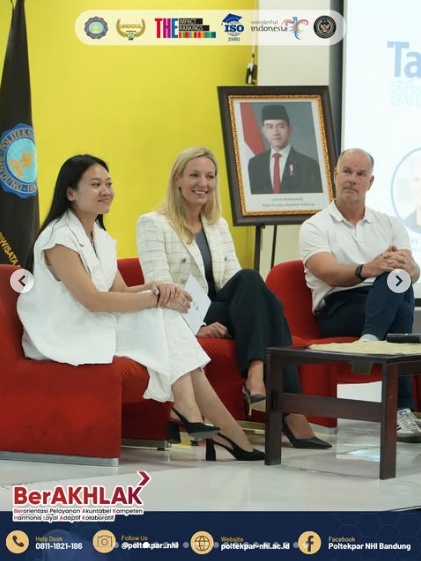
The setting adds a human scale to a career easily compressed into company names and transactions. A discussion with students about organisational culture concerns what happens after the matching is done. Arriving with the necessary skills still leaves the task of understanding a workplace, its expectations and the people already there. Getting somebody to a location is the beginning of a working relationship.
There is a steady curiosity in Leventhal’s choice of problems. A monitoring tool revealed a service gap. A service network suggested a marketplace. A marketplace led to the administrative machinery around freelance work. He has repeatedly stayed near an inconvenience long enough to encounter the next one. The phone books have retired from the operation. The question that justified ordering them still has work to do.