The auto-parts supplier had an impressive inventory and a much less impressive safety net. Its commerce application offered thousands of routes through products, prices and availability. A few dozen manually written tests, run irregularly by two people who had other jobs, covered about 15% of its code. Customers were noticing the bugs. The company wanted to launch two new brands and seven more commerce applications. More software was coming; more testers were not.
- Appvance sells AIQ, a platform for generating, running and analyzing software tests.
- Its pitch is broader exploration of an application with less script maintenance.
- In one published customer case, an auto-parts distributor reported more than 95% application coverage across eight apps.
- The machine needed human training: rules, test data and decisions about what mattered.
That last detail matters. Appvance, the Santa Clara company behind the AIQ platform, often describes its technology in autonomous terms. Yet the best account of its work shows a partnership between a tireless explorer and a human who knows the territory. The supplier ran AIQ through small sections of its site, a few pages at a time. A trainer reviewed what actions a visitor could take, supplied data and specified business rules. Within a few hours per application, the company says, it had a working blueprint. New builds then triggered incremental runs in its delivery pipeline.
The first thing to fail was coverage
Traditional test automation has an awkward bargain. Write a script and the computer will repeat it beautifully. Change the interface, rename a field or alter the route through checkout, and a person may have to repair the script. The test suite can grow while its useful reach barely moves. For the supplier, the problem was visible in production: agents complained, performance faltered and the planned expansion made a thin testing habit untenable.
These percentages measure different things. Code coverage asks which code ran; application coverage, as Appvance uses it, describes explored paths through the application. They should not be read as a direct before-and-after percentage.
The new regime had a practical rhythm. A code deployment started an AIQ blueprint run. It took roughly one or two hours, according to Appvance’s case study. Bugs flowed into the ticketing system for developers to see in the morning. The same generated scripts also supported load and performance checks. Human-written scripts remained for targeted cases. AIQ did not abolish the test plan; it made the plan less dependent on one person imagining every click.
“Appvance makes it possible for us to run our business.”Unnamed auto-parts CIO, in Appvance’s case study
A map before the journey
Appvance was founded in 2012, with Kevin Surace and Frank Cohen identified as founders. The business began as PushToTest, tied to the older TestMaker open-source project, before taking the Appvance name. Its early offer was unified testing: write or record a journey once and reuse it for functional, performance and other checks. A $5 million round led by Javelin Venture Partners in 2016 backed that idea. By 2022, a $13 million Series C led by Arrowroot Capital was funding expansion of a more ambitious one: a system that could devise journeys itself.
Today AIQ brings together web, mobile, desktop and API testing with execution and reporting. Appvance’s central idea is an application model it calls a Digital Twin or blueprint. The platform learns screens, states and flows, then generates tests that traverse them. Its 2024 release added a coverage map so teams could see where the robot had gone. GENI, announced in 2025, added another doorway: give it test cases written in English and it turns them into runnable scripts. Later additions generate API tests and synthetic data from OpenAPI specifications, and let testers describe visual outcomes in ordinary language.
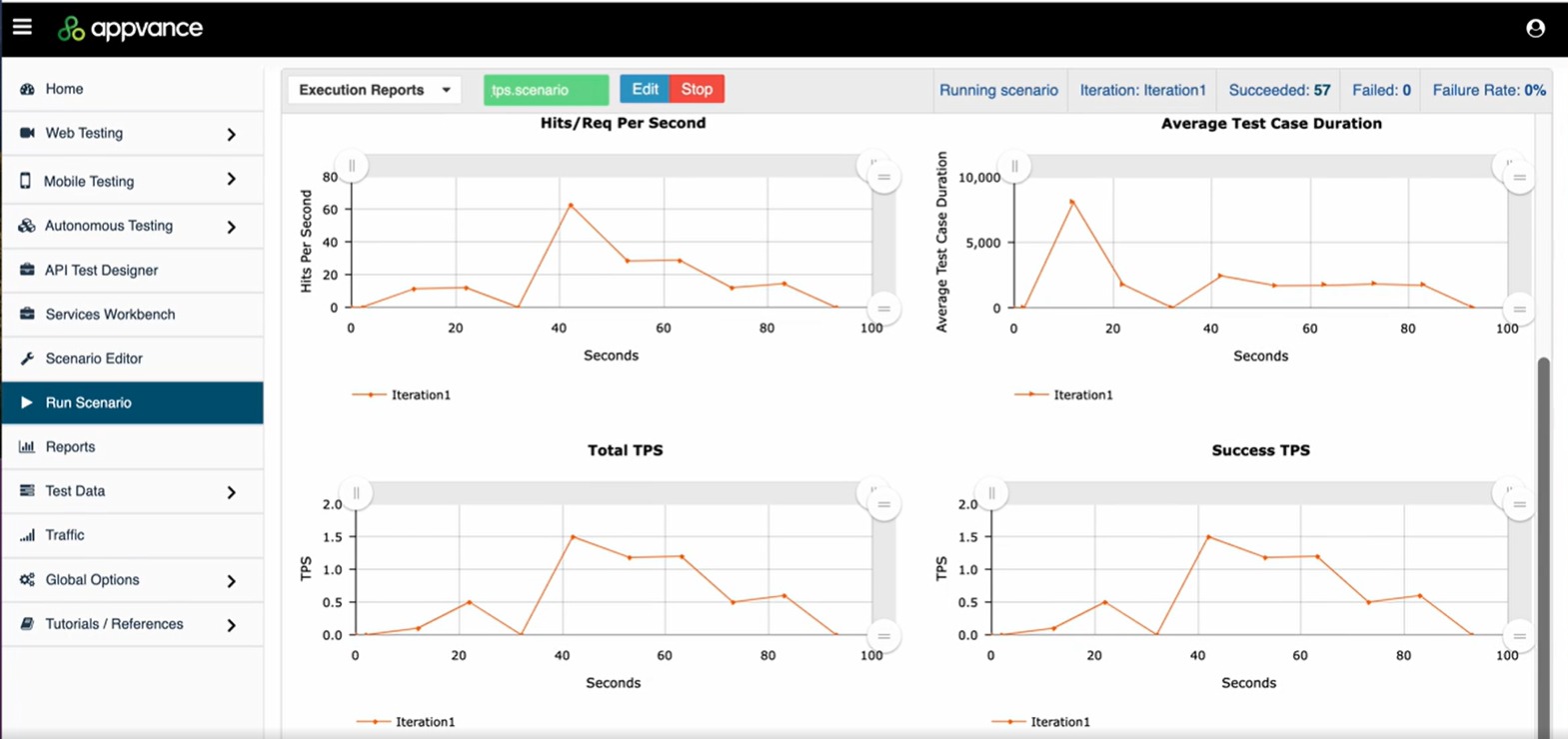
The screen is plain, almost stubbornly so. That suits the job. The value of a test platform is not a cinematic bot roaming a digital city; it is a defect, with enough context for a developer to reproduce it before the next release. AIQ’s reporting, scenario editor and integrations are the less glamorous half of the product, and probably the half a team lives in.
The people who still know the rules
Another customer story puts a useful limit on the word “autonomous.” A European health agency had a Salesforce application for COVID-era visitor registration. Quarantine rules changed almost daily. Manual testing could not keep up, but its governance team required exact checks for certain regulated flows. Appvance says AIQ produced more than 800 unique tests within two days and more than 3,000 flows after a week. The agency also wrote over 200 targeted scripts to satisfy those acceptance criteria. A robot can explore; it cannot decide on its own what a government rule ought to mean.
For an insurer with more than 5,000 applications, the question was scale and consistency. Its teams had been mixing manual work with open-source tools. Appvance says the insurer deployed AIQ on AWS, connected Git repositories and began with two applications. The published case reports 97% code coverage and error resolution shrinking from days to hours. Those are customer results described by the vendor, not a promise that any application will do the same.

This mix explains who buys the software. Large QA and engineering organizations have many applications, frequent releases and expensive test maintenance. Some must test web pages, mobile apps and APIs in the same release. Some need on-premises deployment or private models. Appvance sells through enterprise agreements and integrators; its 2025 GENI announcement described per-application pricing beginning at coverage for ten applications. PwC Australia, DMI and GAVS have each announced partnerships to bring the platform into client work.
A better question for the next release
The market is crowded with recorders, scripted frameworks and newer tools that use AI to help write or repair tests. Appvance argues for a different starting point: model the application, then generate and maintain many journeys from that model. Its sales language sometimes claims complete coverage or an end to manual testing. The customer cases tell a more interesting story. The auto-parts supplier still trained the system and kept targeted human tests. The health agency still needed explicit checks for official rules. In both cases, automation widened the search while people decided what counted as correct. Where test data are missing, key paths are inaccessible, or acceptance rules must be exact, that human preparation becomes the condition for the system to work at all.
There is a useful practice here even for a team that never buys AIQ. Start with the paths your current tests miss. Make business rules and test data explicit. Let each build trigger a repeatable run. Route failures to someone who can fix them, with enough evidence to act. Reuse a journey for performance checks when the tool allows it. Count coverage carefully and say which kind you mean.
Software changes faster than the document that once described it. Appvance’s wager is that the test suite should be able to follow. Its most persuasive proof is not a claim that machines will replace the tester. It is the sight of a modest team teaching a machine where to look, then waking up to a shorter list of surprises.