The Family That Wired the World's Stages - And Then Sold the Headphones
Fritz Sennheiser started a lab in a farmhouse in 1945. Eighty years later his grandsons run the microphone company that quietly powers your favorite show - and made a hard call about the headphones on your head.
In 1945, in the small German village of Wennebostel, an engineer named Fritz Sennheiser set up a laboratory in a farmhouse because there was no work anywhere else. He called it Lab W. The first thing it built was not a microphone or a speaker - it was measuring instruments, sold to Siemens. Eighty years later, the company that grew out of that farmhouse is run by his grandsons, and the odds are very good that you heard its work today without ever seeing its name.
Sennheiser is one of those companies whose products are everywhere and whose logo is nowhere you'd notice. The wireless pack clipped to a Broadway actor. The shotgun microphone hovering just above the frame in a film. The in-ear monitors feeding a singer their own voice on a stadium stage. The ceiling array in a boardroom that somehow makes a hybrid meeting sound like a conversation. That's the business. Not the headphones on the shelf at the electronics store - the sound gear that professionals cannot afford to have fail.
01 / The businessWhat Sennheiser actually sells
Today the Sennheiser Group is a professional-audio company. It designs and manufactures microphones, wireless transmission systems, monitoring gear and conferencing hardware, and it sells them to the people who run sound for a living: touring productions, broadcasters, film and TV crews, recording studios, houses of worship, universities and corporations. It also keeps a foot in high-end audiophile listening, where its reference headphones exist mostly to prove a point.
The portfolio is deeper than the name suggests. The Evolution Wireless line handles everyday live sound and corporate events. The Digital 6000 and Digital 9000 systems run the high-stakes broadcasts and world tours. The MKH microphones are film and broadcast staples - one of them, the MKH 816 shotgun, earned an Academy Scientific and Technical Award in 1987. And since 1991, the group has owned Neumann, the Berlin studio-microphone maker whose gear sits in front of half the vocals you've ever loved.
02 / The hard callSelling the headphones
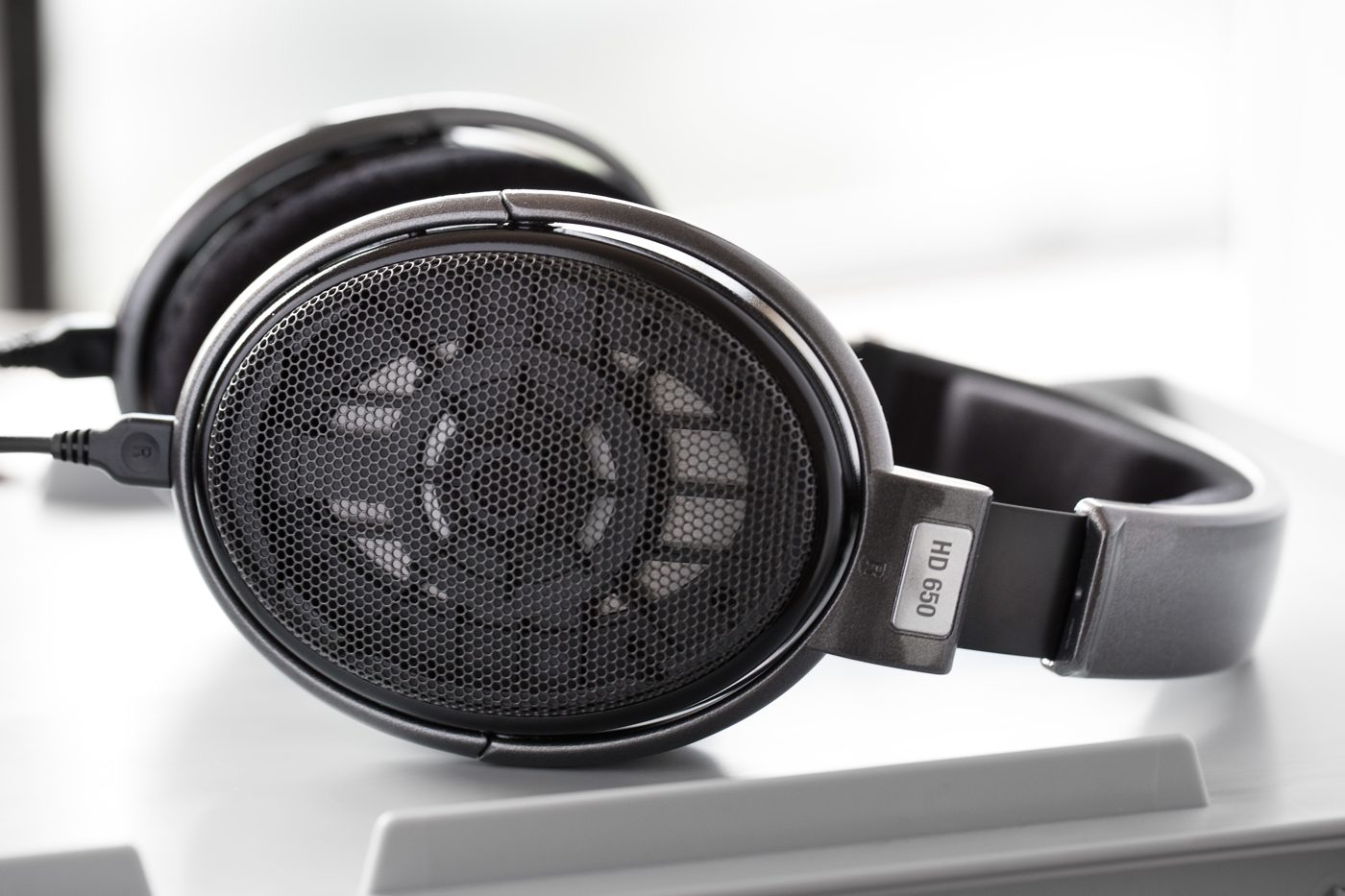
For most people, "Sennheiser" means headphones. Which makes the company's biggest recent decision look, at first, like heresy: in 2021 it agreed to sell its entire Consumer Division - headphones, earbuds, the Ambeo Soundbar, the whole shelf-facing business - to the Swiss hearing-technology group Sonova for around 200 million euros. The deal closed in 2022. Sonova now sells those products under a licensed Sennheiser brand.
The family did not sell because the headphones were bad. It sold because the consumer headphone market had become a brutal, high-volume, low-margin war fought against Apple, Sony and Bose - a war that rewards marketing budgets and shipping scale over sound engineering. The professional business, by contrast, is smaller, quieter, stickier and far more defensible. So the family kept the part that made the company what it was, and let go of the part that had made it famous.
We would rather be the best at professional audio than average at everything.The strategic logic behind the 2021 split
In March 2026, that call looked even sharper. Sonova announced it would divest the Sennheiser-branded consumer business it had bought only a few years earlier, saying it no longer fit its long-term strategy. The headphone brand that Sennheiser exited near the top of the market was suddenly back up for sale. The family, meanwhile, still owned the microphones.
03 / The customersWho depends on it
Sennheiser's customer is rarely a consumer and almost always a professional with a problem that has to be solved before showtime. A front-of-house engineer needs 40 wireless channels that won't step on each other in an RF-saturated arena. A broadcaster needs a shotgun mic that rejects a screaming crowd and captures one voice. A house of worship needs a lavalier that a volunteer can clip on without a soundcheck. A university needs a lecture hall where a student in the back row and a student streaming from home hear the same thing.
These buyers don't churn easily. Once a rental house, broadcaster or touring production standardizes on a wireless platform, switching means retraining crews and re-buying racks of gear. That's the moat consumer headphones never had - and the reason a company with roughly 2,200 employees and under half a billion euros in sales can outlast rivals many times its size.
04 / The product betSpectera and the wireless leap
The clearest sign of where the company is headed arrived in 2024 and started shipping in 2025: Spectera, which Sennheiser calls the world's first wideband, bidirectional digital wireless ecosystem. The pitch is technical but the idea is simple. Traditionally, a performer wears a microphone transmitter and, separately, an in-ear monitor receiver - two devices, two RF systems, two things to manage. Spectera collapses that into one bidirectional bodypack that sends the microphone signal out and brings the monitor mix back on the same wideband channel.
A single Spectera unit can handle up to 64 audio channels - 32 in and 32 out - with in-ear latency the company states can drop to 0.7 milliseconds. For a large tour or broadcast, that's fewer devices, simpler frequency coordination and more resilience when the airwaves get crowded. It's the kind of infrastructure product that doesn't sell on hype; it sells on the engineer who tried it and stopped worrying.
Figures are approximate and reflect publicly reported group sales.
05 / The differenceHow it stands apart
In professional microphones and wireless, Sennheiser's main rivals are Shure, Audio-Technica, DPA, Audix and Lectrosonics. In immersive home audio it brushes up against Sony, Bose and Sonos. What separates Sennheiser is less a single feature than a posture: it is a privately held, family-owned engineering house that has never gone public in 80 years. There is no quarterly earnings pressure to chase volume, and no board demanding it defend a mass-market share it decided to walk away from.
That independence funds the unglamorous, long-horizon work - RF research, immersive-audio formats like Ambeo, the reference-grade headphones - that a public company might struggle to justify. The HE 1 Orpheus, a headphone system that has sold for around $50,000, exists mainly to show what the company can do when cost is no object. It is a statement piece, and the statement is: we still care about this more than you do.
As the third generation, our job is to make decisions that keep the company independent for the next 80 years.On family ownership and the long game
06 / The peopleA family, three generations deep
Fritz Sennheiser renamed Lab W after himself in 1958. His son Jorg took the company global. And in 2013 the third generation - brothers Daniel and Andreas Sennheiser - became co-CEOs. In 2025, as the company marked its 80th year, Daniel moved to Chairman of the group's board while Andreas continued as CEO. The headquarters is still in Wedemark, the same rural district near Hanover where the farmhouse stood.
The culture that comes with that is patient and reputation-driven. The company competes on reliability and sound rather than marketing spend, and its most demanding critics - the engineers who use the gear nightly - are also its best salespeople. When your product's failure mode is "the show stops," word of mouth is the whole game.
07 / The recordEight decades, briefly
Strip away the milestones and Sennheiser's story is really one decision made over and over: stay focused, stay private, stay in the room where the sound is being made. It sold the part of itself the public recognized so it could keep being the best at the part the public never sees. Whether that's the right long-term bet will be settled on stages and in studios, one show at a time - which is exactly where this company has always preferred to be judged.