In 1950s Tokyo, Hideo Matsushita had a peculiar front-row seat to desire. Working at the Bridgestone Museum of Art, he hosted LP listening concerts on high-quality equipment. The rooms filled. People heard detail and scale that their equipment at home could not reproduce. The emotional response was obvious; the economic obstacle was just as obvious. Hi-fi was expensive.
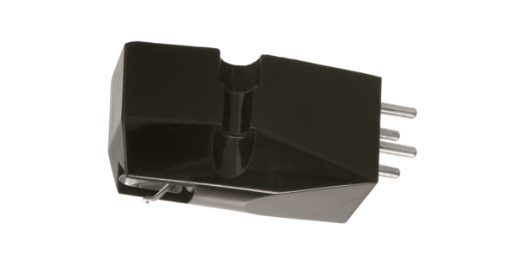
Matsushita did not start by building an entire stereo. He chose the little device sitting at the end of the tonearm - the cartridge, where a microscopic wiggle in a record groove becomes an electrical signal. In April 1962, at 42, he opened Audio-Technica in a rented one-story building in Shinjuku with ¥1 million in capital, three employees and two moving-magnet cartridges. The entry model, the AT-1, sold for ¥5,800. The AT-1 and more expensive AT-3 became hits, and Japanese audio makers began buying them as components.
The durable job
The product was a cartridge. The business was translation.
Look at Audio-Technica's catalog now and it can feel like a particularly tidy electronics store: turntables, styli, studio headphones, gaming headsets, creator microphones, wireless packs, ceiling arrays and conference systems. The connecting thread is not a lifestyle. It is transducer engineering - the difficult work of turning physical movement into electrical information, or electrical information back into movement you can hear.
That distinction explains the expansion. The company moved into headphones in the 1970s, applying precision audio knowledge at the listening end of the chain. In 1978 it introduced eight AT800-series microphones, from lavalier models to shotguns, and attacked the recording end. UHF wireless followed. So did mixers, turntables and commercial systems. Each adjacency gave the same engineering vocabulary a different customer.
The first real threat
Then the CD removed the cartridge from the shopping list.
The first products did not fail. The AT-1 and AT-3 sold quickly. What failed first was the assumption that a successful standalone component would remain a standalone component. When compact discs reached Japan in 1982, the pickup moved inside a sealed player. A cartridge maker could no longer count on enthusiasts replacing and upgrading the part themselves. By 1987, Japanese CD production had overtaken records, and many cartridge specialists disappeared.
Audio-Technica changed its mind about the customer before it changed its mind about the capability. It began developing actuators for laser-disc and CD optical pickups, components sold to equipment manufacturers rather than displayed at a hi-fi counter. It also widened its bet on headphones and microphones. The company did not need to believe vinyl would vanish forever, and it did not need to pretend digital was a fad. It simply put precision mechanics to work in both worlds.
That move is the most useful part of the story. Founders are often told to focus, which gets misheard as “sell the same object forever.” Audio-Technica focused on a difficult job and let the object change. The strategy requires genuine transferable expertise; without it, adjacency becomes a pile of unrelated SKUs.
Who pays, and why
The bedroom and the boardroom share a supplier.
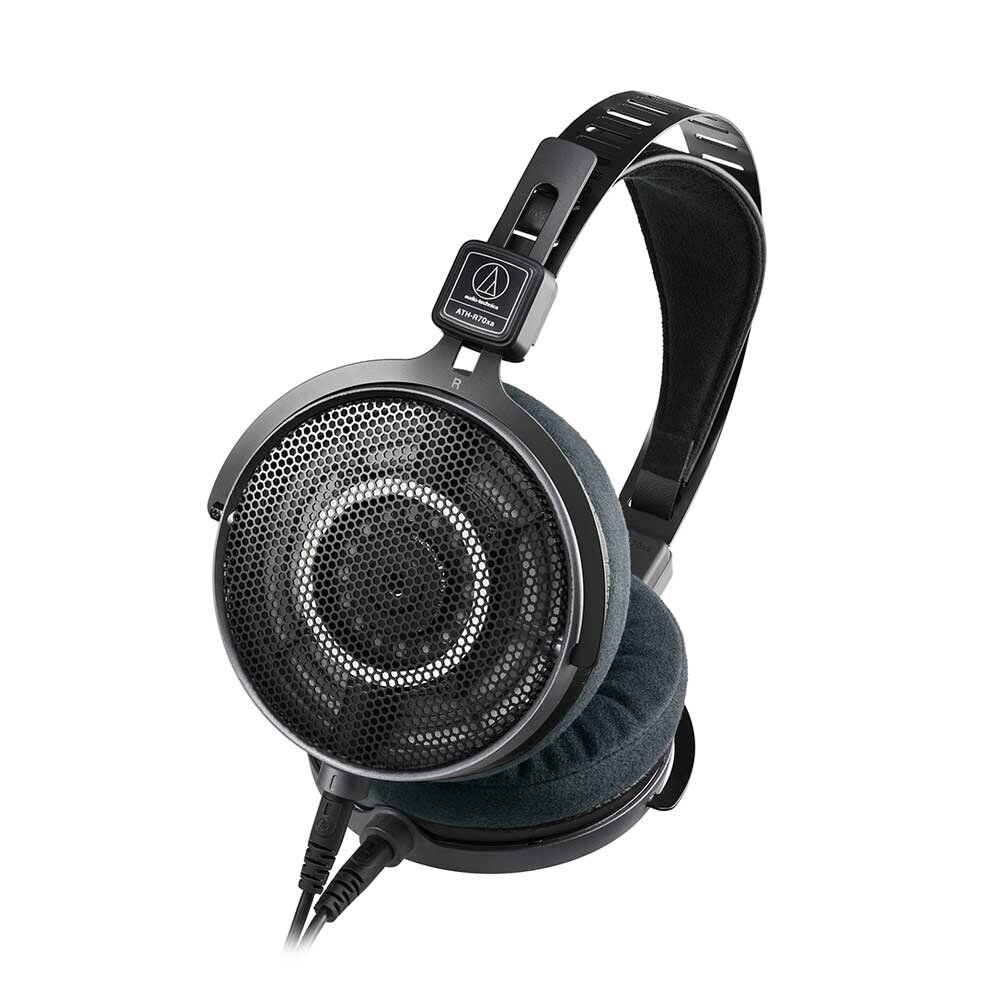
Consumer customers buy music playback and creation: automatic and premium turntables, replacement styli, wireless earbuds, gaming headsets and headphones. Creators buy familiar tools such as USB and studio microphones. Recording engineers use closed-back M-Series monitors or the newer open-back R-Series. These products move through specialist dealers, mainstream retailers, online marketplaces and Audio-Technica's own commerce sites.
Professional customers buy reliability under less forgiving conditions. A touring act needs wireless systems that coexist in congested spectrum. A university or corporate AV integrator needs ceiling microphones, Dante networking, control software and compatibility with the room's wider technology stack. A broadcaster needs a microphone to capture a motorcycle at race volume without turning its engine note into mush. Revenue comes from branded hardware, accessories and replacement parts, commercial deployments and OEM components. The company remains privately held and does not publish margin or valuation data.
Product mix reported by the Japanese company · fiscal 2026
The figures are company-reported for the standalone Japanese business and total 98% because the published categories are rounded.
The mix exposes something easy to miss: the old cartridge business is no longer the largest line, but it remains large enough to matter. Headphones and earphones account for 40 percent of the reported standalone Japanese mix; microphones and related systems contribute 28 percent; cartridges and turntables contribute 15 percent. The company can participate in vinyl's revival without depending on it.
There is also an odd industrial sibling behind the polished audio brand. The Japanese company lists dust-removal equipment and food-processing machines among its businesses. Sushi machinery sounds like a punch line beside a reference headphone, but it reveals the operating instinct: precision motion, repeatability and manufacturing know-how can travel farther than a marketing category. Audio remains the public identity; the machinery makes the underlying competence easier to see.
Private ownership gives the company room to make those long arcs, though it also leaves outsiders with less financial detail. Audio-Technica reports 33 consecutive profitable years and ¥67.7 billion in consolidated sales for the year ending March 2026. It does not disclose a valuation, outside funding history or product margins. The supplied U.S. record counts 420 employees, while the Japanese company lists 581 employees and 779 when domestic affiliates are included. Those figures describe different parts of the group, not a clean worldwide headcount.
The field laboratory
A racetrack can reveal what a quiet test room cannot.
Audio-Technica's clearest differentiation appears when hardware, placement and customer collaboration become one system. At the 1996 Atlanta Olympics, more than 1,500 of its microphones were used. Small microphones were positioned near tracks, volleyball nets, gymnastics floors and archery targets. Television viewers heard the physical event close-up rather than as a wash from the stands.
The MotoGP relationship made the feedback loop explicit. Dorna Sports believed its pictures were ahead of its inconsistent track audio. It auditioned Audio-Technica equipment late in the 2018 season, then chose roughly 265 microphones, headsets and monitoring products for rollout in 2019. Shotgun microphones faced high sound-pressure levels beside racing engines; conference microphones handled pre- and post-race rooms; monitors served commentary and production teams. Dorna's technical team reported an immediate improvement in continuity between camera positions.
For Audio-Technica, the races became an extension of the lab. Engineers could observe equipment in heat, noise, RF congestion, travel and live-broadcast deadlines. This is more defensible than a spec sheet. Shure, Sennheiser, Sony, Beyerdynamic, AKG, Rode and Technics all offer credible alternatives in parts of the market. The edge, when Audio-Technica has one, comes from matching a deep catalog to an application and learning from the deployment.
Inside the Japanese operation, the published culture looks less like consumer-tech churn and more like a specialist workshop that grew up. Average tenure is 15.8 years. Experienced employees are expected to transfer technical knowledge while younger staff get room to try things. The company reports 124 annual days off, modest average overtime and limited hybrid work for eligible roles. None of that proves every office feels the same, particularly across a global group. It does help explain how expertise in cantilevers, coils, diaphragms and acoustic tuning can accumulate across decades instead of walking out after one product cycle.
What to steal
Start with the bottleneck, then keep the skill portable.
The copyable move is not “make more hardware.” First, observe a behavior with visible emotion and visible friction. Matsushita saw people love the listening experience and reject its cost. Second, solve the smallest enabling piece. The AT-1 did not replace the whole stereo; it improved the part that read the record. Third, name the deeper capability early. Audio-Technica eventually described itself as a transducer maker, a frame broad enough to include both microphones and headphones.
Fourth, let difficult customers improve the product. A sports broadcaster or AV integrator brings harsher conditions than a showroom demo. Fifth, create an upgrade path without trapping the customer. Replaceable styli, interchangeable cartridges, modular microphone elements and system integrations extend the value of a purchase. The AT-LP8X turntable, for example, pairs semi-automatic convenience with adjustable geometry and cartridge choices for listeners who want to tinker later.
When this playbook breaks
- The original skill is not actually transferable, so every adjacency demands a new supply chain, buyer and reputation from zero.
- The company adds categories faster than it can support repairs, compatibility and replacement parts.
- A format change removes the need itself, rather than merely changing the component or customer.
- Premium engineering cannot be explained in a way that buyers can hear, measure or trust.
The latest catalog still runs the old loop. The 2025 R-Series open-back headphones target critical listening at several price points. Commercial products connect through Dante and certified control integrations. In 2026, the AT-MCD1 flagship cartridge returned to the founding category with a stylus and cantilever formed from one lab-grown diamond. It is an expensive expression of the same tiny mechanical problem Matsushita chose in 1962.
Audio-Technica's story is not that analog defeated digital. Both sit in the catalog. The sharper lesson is that format loyalty is weaker than problem loyalty. Records, discs, wireless links and network packets are containers. Somewhere at either end, physical air still has to move. Audio-Technica built a 64-year business by staying close to that movement.