In 1887, a man who fixed medical equipment for a living was asked to repair a broken reed organ at an elementary school in Hamamatsu. Torakusu Yamaha got it working - and then did the thing that turns a repairman into a founder. He looked at the instrument he had just fixed and decided he could build a better one. He was right, more or less, and the workshop he opened to try became Nippon Gakki, later renamed Yamaha Corporation in his honor. Nearly 140 years on, that hunch is the largest musical instrument company on the planet.
The tidy version of Yamaha's story is "a piano company that got big." The truer version is stranger. This is a business that makes the instrument, the amplifier it plugs into, the mixing console it runs through, the studio monitors it comes out of, and, in some cases, the semiconductor buried inside the keyboard generating the sound. Few companies own that much of a single signal chain. Yamaha owns most of the chain that carries a note from a musician's hands to a listener's ears.
What it actually isA full-line sound company, not just a piano brand
Yamaha Corporation reports across three segments: musical instruments, audio equipment, and industrial machinery and components. The first is the heart of it - pianos and digital pianos, portable keyboards and synthesizers, guitars and basses, drums and percussion, brass, woodwind and strings. If a school band, a church, a bedroom producer or a touring act needs it, Yamaha almost certainly makes a version of it. Pianos have been in the catalog since 1900, grand pianos since 1902, and the company still builds them in Japan today.
The second segment, audio, is where Yamaha stops being only a musician's brand. It builds AV receivers and speakers for living rooms, studio monitors and mixing consoles for professionals, and unified-communication gear - the microphones and speakerphones - that end up in corporate meeting rooms. In its most recent fiscal year, audio was the part growing fastest, helped by demand for business audio and a recovery in digital pianos. The third segment, components, is the quiet engine: sound-related chips and electronic devices, including the tone-generator semiconductors that power Yamaha's own instruments.
The moment it went globalThe synthesizer that ate the decade
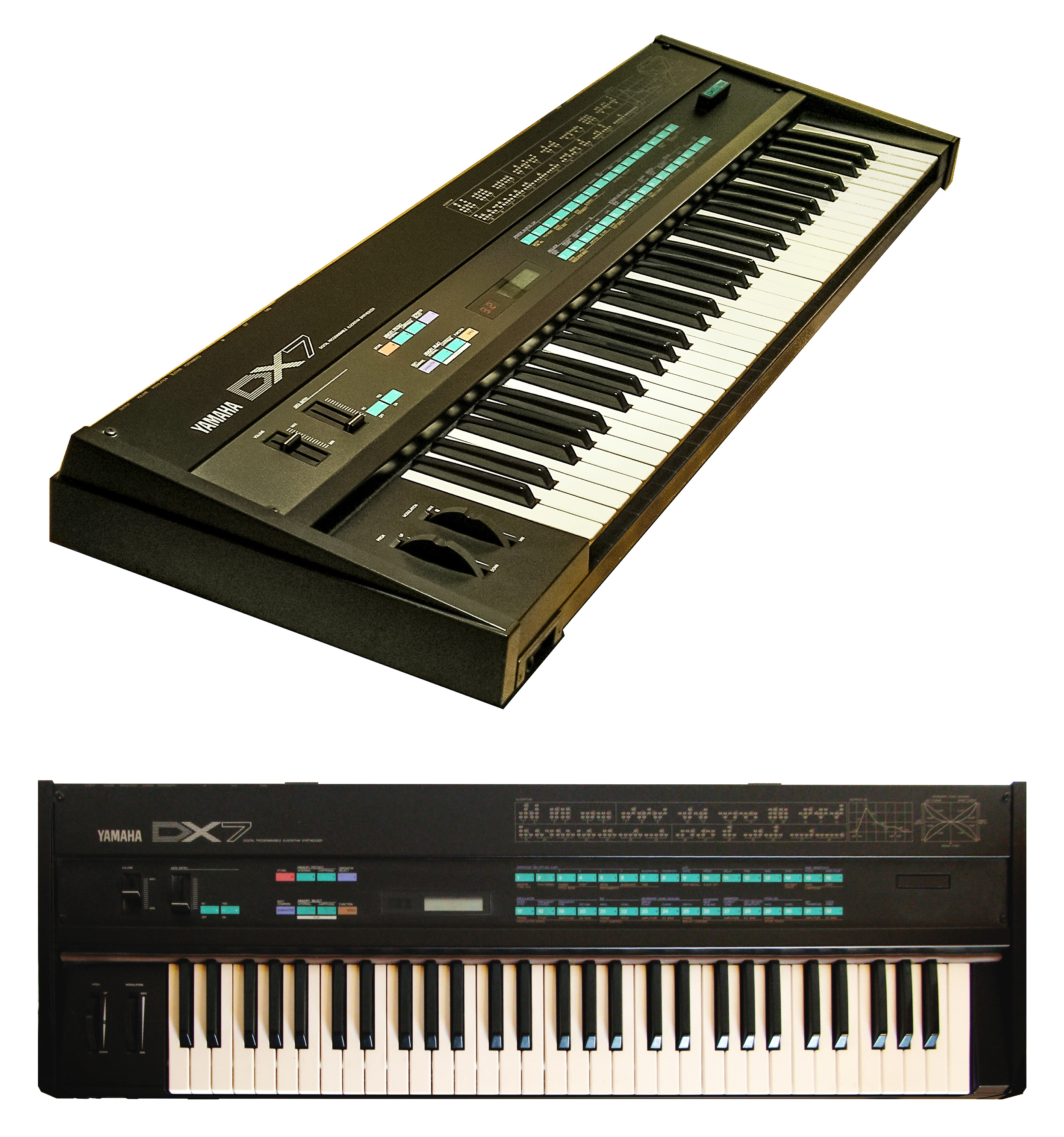
If you want one object that explains Yamaha's reach, it is the DX7. Launched in 1983 at 1,995 dollars, it was the first digital synthesizer to genuinely change popular music. It used FM synthesis - a method Yamaha licensed from Stanford's John Chowning and turned into a chip - to make sounds analog synths struggled with: bright electric pianos, glassy bells, snapping basses. It offered 16-voice polyphony when rivals managed six or eight, and, crucially, it stayed in tune. Analog synthesizers drifted; the DX7 didn't.
More than 200,000 units later, its factory presets - especially that electric piano - had become the texture of 1980s radio, turning up under everyone from Whitney Houston to A-ha to Brian Eno. It is a rare case of a mass-market product whose default settings quietly defined an era. For Yamaha, it also proved a thesis it keeps returning to: own the underlying technology, put it in a reliable box, and let musicians do the rest.
Where craft meets codePianos that play themselves - and go silent on command
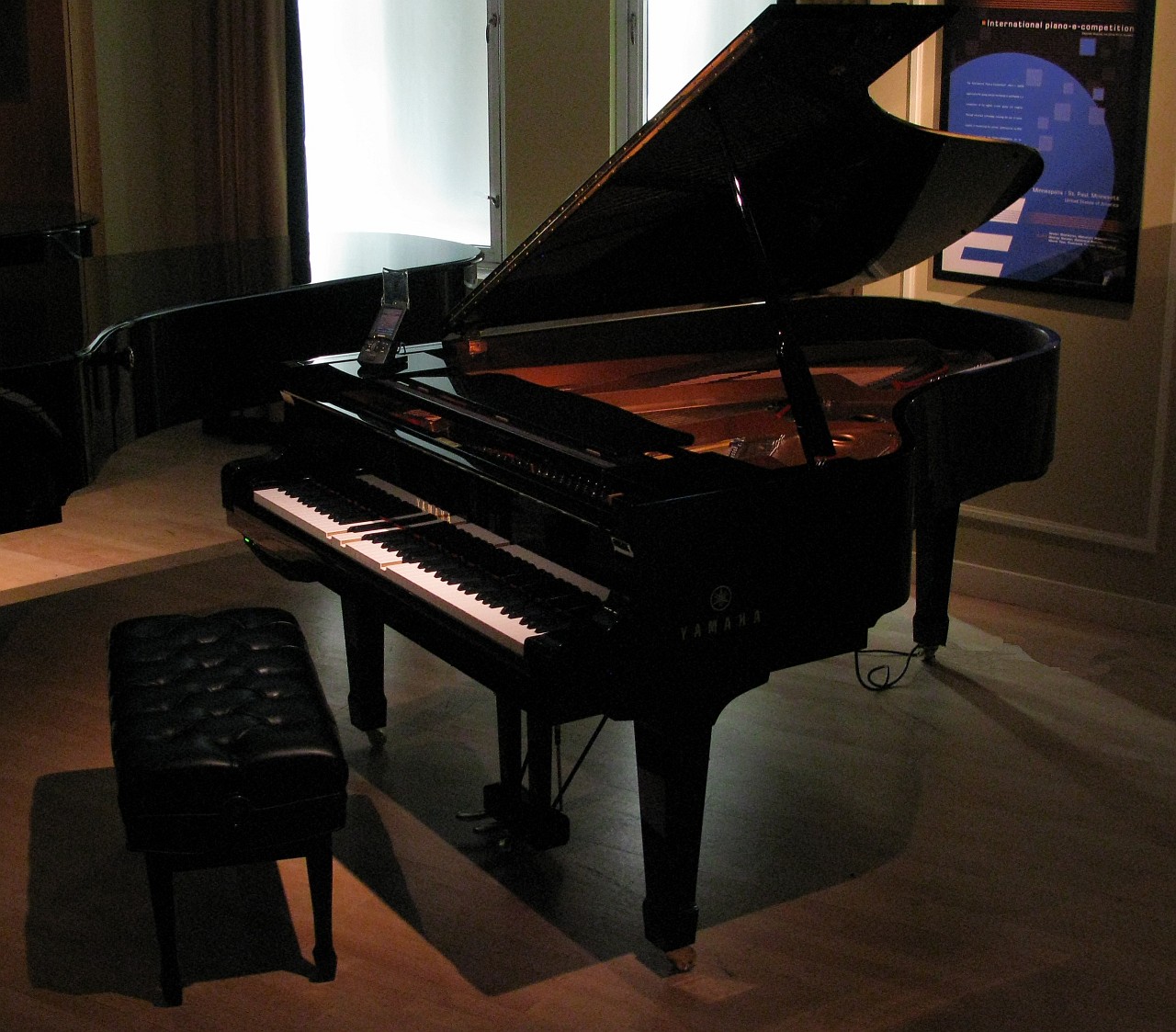
Yamaha's instinct for bolting electronics onto tradition shows up most clearly in its pianos. The Disklavier, introduced in the US in 1987, is a genuine acoustic piano fitted with sensors and solenoids: it records a performance down to key velocity and pedal position, then reproduces it exactly - the keys moving on their own. Pair two of them and a pianist in one city can perform live on an instrument in another, note for note. Music teachers, competitions and researchers have leaned on it for decades.
Then there is the Silent Piano, and its cousin TransAcoustic. The problem was old and unglamorous: acoustic pianos are loud, and apartments and late nights are not. Yamaha's answer was to keep the real action and strings but let a player mute the hammers and route a digital voice to headphones - a full acoustic feel at 2am with no complaints from the neighbors. TransAcoustic goes the other way, turning the piano's own soundboard into a speaker. Neither treats "acoustic" and "digital" as enemies, which is the whole point.
Who buys itFrom a child's first lesson to a stadium mix
Yamaha's customers span an unusually wide range for one brand. At one end: kids in Yamaha Music Schools, a global education network the company has run since the 1950s that has taught millions of beginners. At the other: professional studios, concert halls, houses of worship, broadcasters and touring productions running Yamaha consoles and speakers. In between sit tens of millions of homes with a Clavinova, a PSR keyboard, an acoustic guitar or an AV receiver.
That music-school network is easy to overlook and hard to copy. It seeds demand - a student who learns on a Yamaha often buys a Yamaha - while giving the company a direct read on what beginners actually struggle with. It is vertical integration of a different sort: not just making the whole product, but shaping the market that buys it.
The business underneathHow the money and the moat work
Yamaha is, at bottom, a diversified manufacturer. It designs and builds physical goods and sells them B2C and B2B through retail, dealers, e-commerce and direct channels worldwide. Musical instruments carry the revenue; audio is the growth line; components anchor the technology. It is publicly listed in Tokyo under ticker 7951 and sits in the Nikkei 225. Software and services - VOCALOID singing synthesis, the Steinberg DAWs it acquired in 2004, the premium Bosendorfer pianos it bought in 2008 - round out the range without redefining it.
Yamaha Corporation - revenue mix, roughly
Approximate share by segment, FY ended March 2025. Illustrative, based on public reporting.
The competitive picture depends on which shelf you're standing at. In pianos it's Steinway and Kawai; in synths and keyboards, Roland and Korg; in guitars, Fender and Gibson; in drums, Pearl; in band instruments, Selmer. In audio it runs into Bose, Sonos, Sennheiser, Shure, Sony and Harman. Almost no rival competes across every one of those shelves at once. That breadth is the moat: Yamaha can outfit an entire school, studio or venue from a single catalog, and it controls enough of its own technology - down to the chips - to keep costs and quality in its own hands.
The one-word standardKando, and what it demands
Yamaha frames its mission around a single Japanese word: Kando (感動), roughly the jolt of feeling you get from something made genuinely well. It's fuzzy on purpose, and more demanding than it sounds - you can't hit "Kando" with a spec sheet. It pushes toward long-horizon product quality over quick wins, which fits a company that has been refining the same instruments for over a century and still builds pianos in Hamamatsu, the craft town at the center of its story.
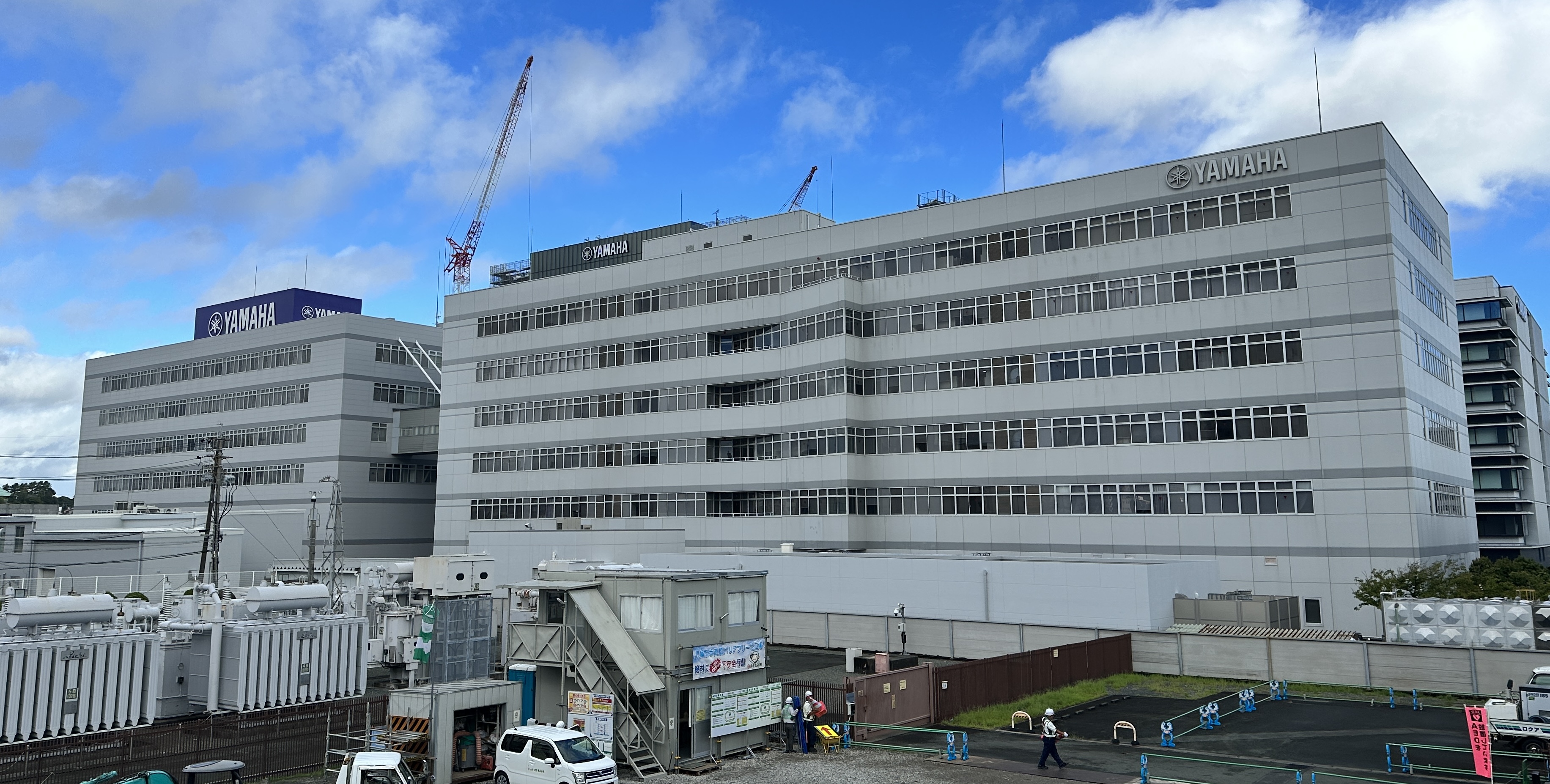
One more thing worth clearing up, because everyone asks: the Yamaha on concert grands and the Yamaha on superbikes are two different companies. Yamaha Motor split off in 1955 and builds motorcycles, marine engines and powersports gear on its own. They still share the tuning-fork logo - three interlocking forks that stand for technology, production and sales, a company that literally drew its operating model into its badge. Same DNA, very different vehicles.
What you can take from itThe playbook in one line
Strip Yamaha down and the pattern repeats at every scale: get obsessed with sound, then build every layer under it yourself. A repair job became a product. A licensed synthesis method became a chip, then a synth, then a decade's soundtrack. A loud piano became a silent one. A market for instruments became a network of schools that makes the market. It is not a flashy strategy. It is a patient one - and after 138 years, it is still playing.