Scott Farquhar wanted his computer to play games. His father had brought home an old machine, and it was incompatible with the games his son wanted. Farquhar spent hours, then weeks, then months trying to persuade it otherwise. The entertainment was elusive. The education was considerable.
There are tidier beginnings for a technology fortune. A precocious child writes a program; a teacher recognises a gift; the future arrives on schedule. Farquhar’s version involves secondhand equipment and a stubborn mismatch between what a machine could do and what a boy wanted from it. Years later, he would help build a company around another familiar frustration: getting work organised.
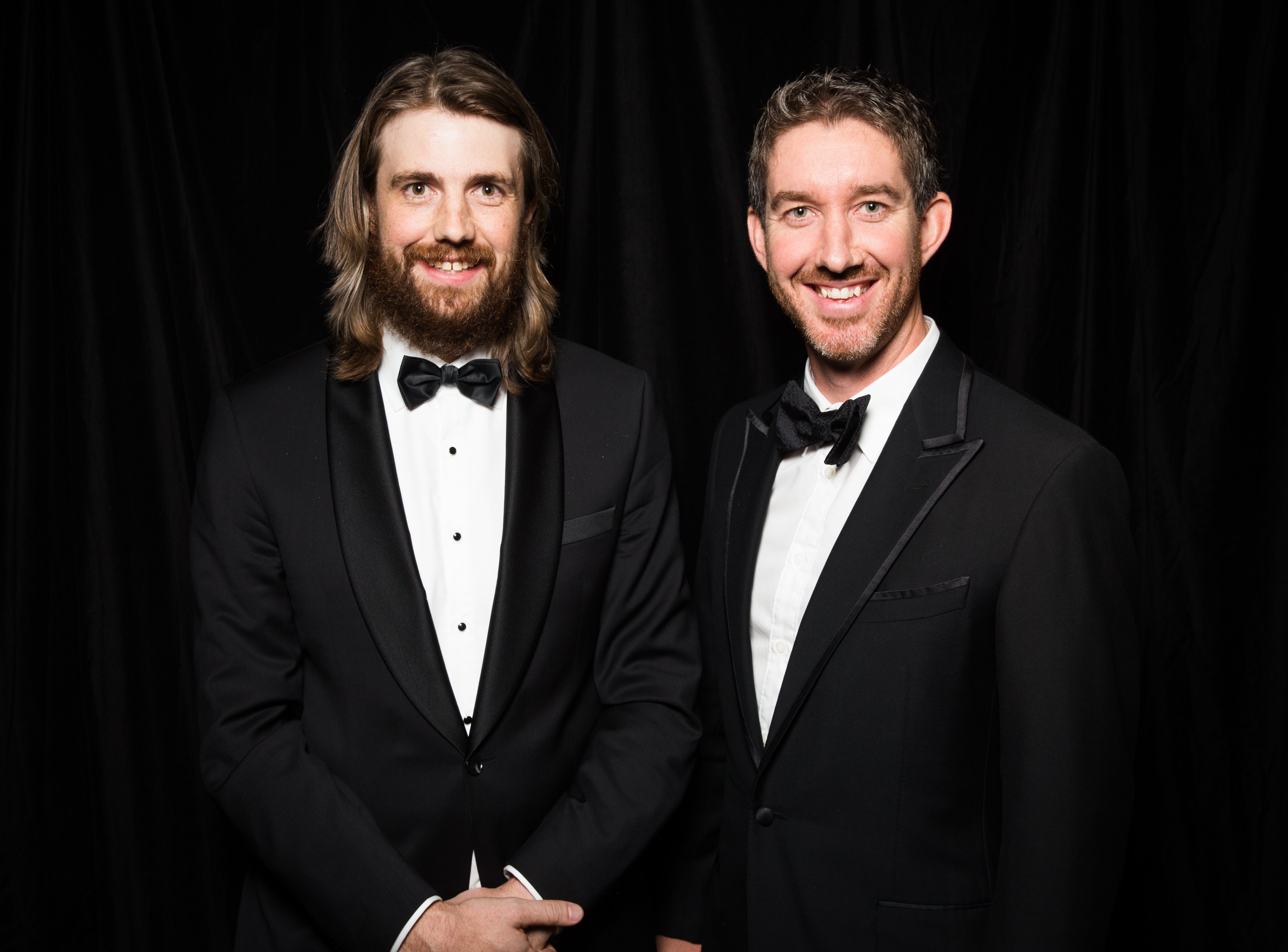
He and Mike Cannon-Brookes founded Atlassian in Sydney in 2002, financed with a $10,000-limit credit card. They sold software through a website, initially without salespeople. In August 2024, Farquhar finished his time as co-CEO. By then, the company’s customers numbered in the hundreds of thousands. His next allocation problem concerned something harder to replenish than money: his own time.
A computer that refused to cooperate
Farquhar grew up in western Sydney, attended James Ruse Agricultural High School and went on to the University of New South Wales. His mother worked at different times at Target and McDonald’s; his father worked at a service station. The computer arrived after much pleading. It was an old Wang, with considerably less enthusiasm for games than its new owner.
He later described a childhood in which the family did not feel deprived, even as he became aware that some Sydney households occupied a different financial universe. The distinction matters. His account is about wanting access to a particular thing, then working with the imperfect version that became available. The machine supplied an absorbing problem before it supplied any amusement.
At UNSW, he joined the Business Information Technology Co-op program, which combined study with industry experience and financial support. Cannon-Brookes was a fellow student. Their partnership began in an environment where an established employer offered a legible future, complete with salary. Starting a software business offered rather fewer guarantees, and much greater control over how they would spend the day.
The website did the selling
Atlassian’s first major product, Jira, tracked issues and projects. It addressed the unglamorous work of remembering what needed fixing, who was responsible and what had happened since the last conversation. Confluence followed as a place for teams to create and share information. Neither required customers to share the founders’ taste in computers. They required customers to have colleagues.
The company’s early economics helped determine its methods. A small business in Australia could hardly send an army of salespeople around the world. It could put software online, make it affordable and allow people to try it. The distance between Sydney and a customer elsewhere became less consequential when the transaction could happen on a website.
That approach later acquired the respectable industry name of product-led growth. At the beginning, it also answered a practical question: how do two people reach buyers they cannot afford to visit? The product had to explain enough of its own value to earn a purchase. A polished presentation could not rescue an experience the customer had already tried.
Outside investment came later. Accel invested $60 million in 2010, eight years after Atlassian’s founding. The company listed on Nasdaq in 2015. Those dates are useful antidotes to the compressed startup biography, in which an idea appears on Monday and a stock-market bell rings by Friday. There was a substantial business to build between the credit card and the ceremony.
Atlassian founded in Sydney
$60m Accel investment
Nasdaq listing
Farquhar steps down as co-CEO
A company gets too big for instinct
Growth changes the job. At two people, the founders can carry much of a company’s knowledge in their heads. At thousands, that arrangement becomes an expensive guessing game. Farquhar has returned to the question of how a company preserves its character while becoming too large for everyone to know everyone else.
In a conversation with founders hosted by Accel, he explained that culture initially reflects the founders’ values, but requires more deliberate attention as the business grows. The observation is less decorative than the usual talk of company culture. A founder’s habits reach only so far. Eventually, decisions need a framework that works in rooms the founder never enters.
His own management framework is similarly spare. He has described four central CEO responsibilities: choosing the senior team, setting the vision, setting the culture and allocating resources. He checks his diary against them. It is an appealingly awkward audit. A calendar can look extremely important while containing very little of the work its owner claims matters.
“We want you to leave Atlassian better than you found it.”
Scott Farquhar, a message to new starters recalled in Atlassian’s FY2024 shareholder letter
The instruction gives employees a role beyond keeping the machinery moving. It also offers a test of leadership that survives a change in title. A founder can be celebrated for starting something. Leaving it in better condition requires years of less photogenic work, shared with people whose names rarely appear beside the company’s.
Sydney was a starting point, not a perimeter
The same willingness to reconsider an arrangement appeared in Farquhar’s support for distributed work. Atlassian introduced Team Anywhere in 2020, allowing employees greater choice about where they lived and worked within its operating framework. For a business selling collaboration tools, the policy put its own assumptions about teamwork under daily examination.
By the end of its 2023 financial year, more than half of Atlassian’s hires during that year lived over two hours from an office. Employees were spread across 13 countries on four continents. These were the company’s reported figures at the time, and they describe a specific recruiting choice: location would have less power to exclude a capable applicant.
There was still a place for meeting in person. Atlassian developed intentional team gatherings, bringing people together to build relationships and advance important work. In February 2024, it reported hosting more than 1,600 such gatherings since August 2022. Remote work involved arranging contact carefully, including deciding when a journey was worth making.
of Atlassian’s hires that year lived more than two hours from an office.
For Farquhar, who helped build a global business from Sydney, the argument had a familiar shape. Physical distance had already proved a poor measure of where a useful product could be made. Team Anywhere extended that experiment to where the people making it could live.
The small percentage with a long future
Giving became another design problem. Atlassian’s early charitable commitments included employee time and software. A starter-license program offered ten licenses for ten dollars, directing the proceeds to Room to Read. A small purchase could support education while introducing a team to the company’s products. The mechanism fitted into ordinary business activity.
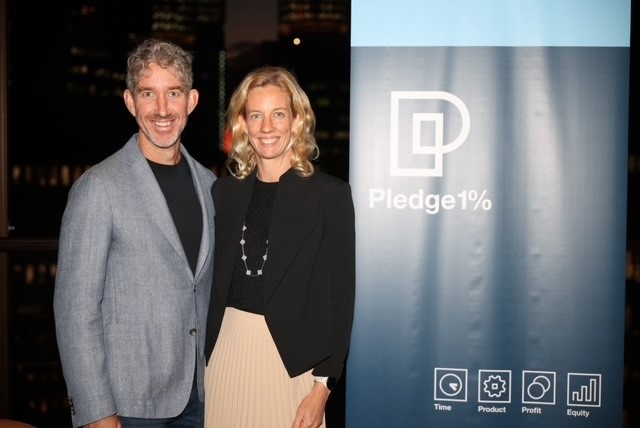
Farquhar helped establish Pledge 1%, encouraging businesses to commit a portion of equity, product, profit or employee time to social impact. The options matter. A young company might have little profit but useful software, willing employees or equity whose future value is still unknown. It can make a commitment before the balance sheet becomes impressive.
He became the movement’s board chair in May 2025. At that announcement, Pledge 1% said more than 19,000 companies across over 130 countries had joined. A founder’s early choice could now travel through other companies, each with different resources and different causes. The percentage stayed small enough to understand without a spreadsheet.
His wife, Kim Jackson, is also his co-founder at Skip Capital, the private investment fund where she is CEO and chief investment officer. Its focus spans technology and infrastructure. Farquhar’s work there includes a connection to other founders: Skip identifies him as a mentor to businesses including SafetyCulture and Culture Amp.
A different diary
When Farquhar announced his departure from the co-CEO role in April 2024, he named family, philanthropy, investing and mentoring as the uses he wanted for his time. His final day was August 31. He stayed on Atlassian’s board and became a special adviser, retaining a connection to the company while handing over daily executive responsibility.
In March 2025, he succeeded Robyn Denholm as chair of the Tech Council of Australia. The role put him more directly into the arguments about digital infrastructure, emerging technology and Australia’s economic future that he had been making for years. In February 2026, he was announcing new leadership appointments at the council.
There is continuity here with his 2014 appearance at the JJC Bradfield Lecture. Asked about technology education, he said the industry needed to make its case to government more effectively and help solve the difficulties of teaching computing. He placed some responsibility on his own side of the conversation. Knowing a subject matters does not automatically make the argument persuasive.
His career has repeatedly involved changing the conditions around a problem: putting software on a website, giving hiring a wider map, making philanthropy an early business decision. Stepping down gave him a chance to apply that attention to his own schedule. The boy once spent months trying to make an old computer do what he wanted. The adult has rather more choices, and a diary to keep honest.